
Insurance denied nerve repair? Claimable helps patients appeal
*Eligibility restrictions apply. See Terms and Conditions below.










Nerve repair is possible
Peripheral nerves run throughout the body. AVANCE (acellular nerve allograft-arwx) for surgical implantation can be used to treat nerve discontinuities in multiple applications.
See “About Avance” below for Avance indications and important risk information.
Breast

Prostate

Head & Neck

Extremities

Claimable can help you appeal the insurance company’s decision
No matter the reason you were denied, Claimable can help you appeal for coverage. If you have surgery scheduled and need answers fast, we can help you complete an evidence-backed appeal on an expedited timeline.
How it works
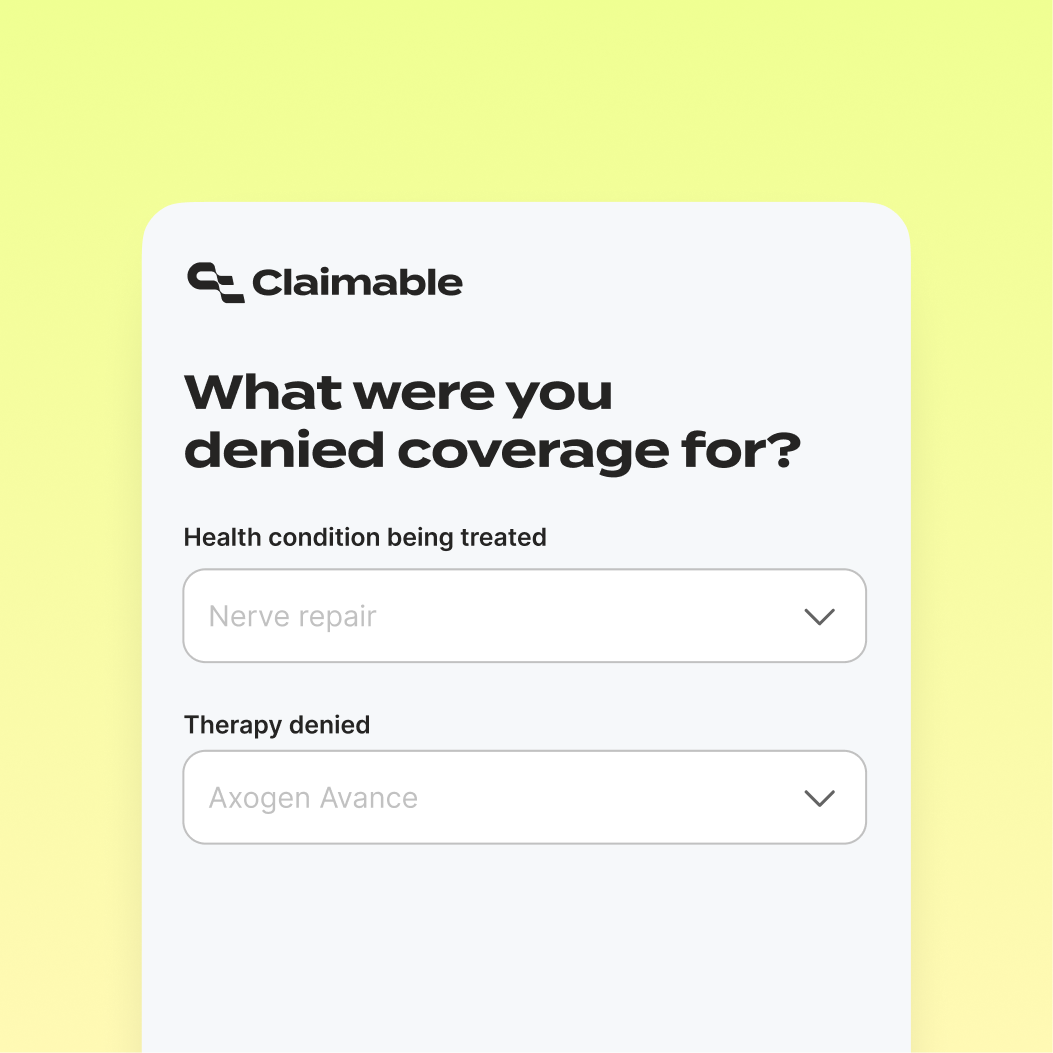
Claimable makes it easy to create strong, clinically-supported appeals for nerve repair denials.
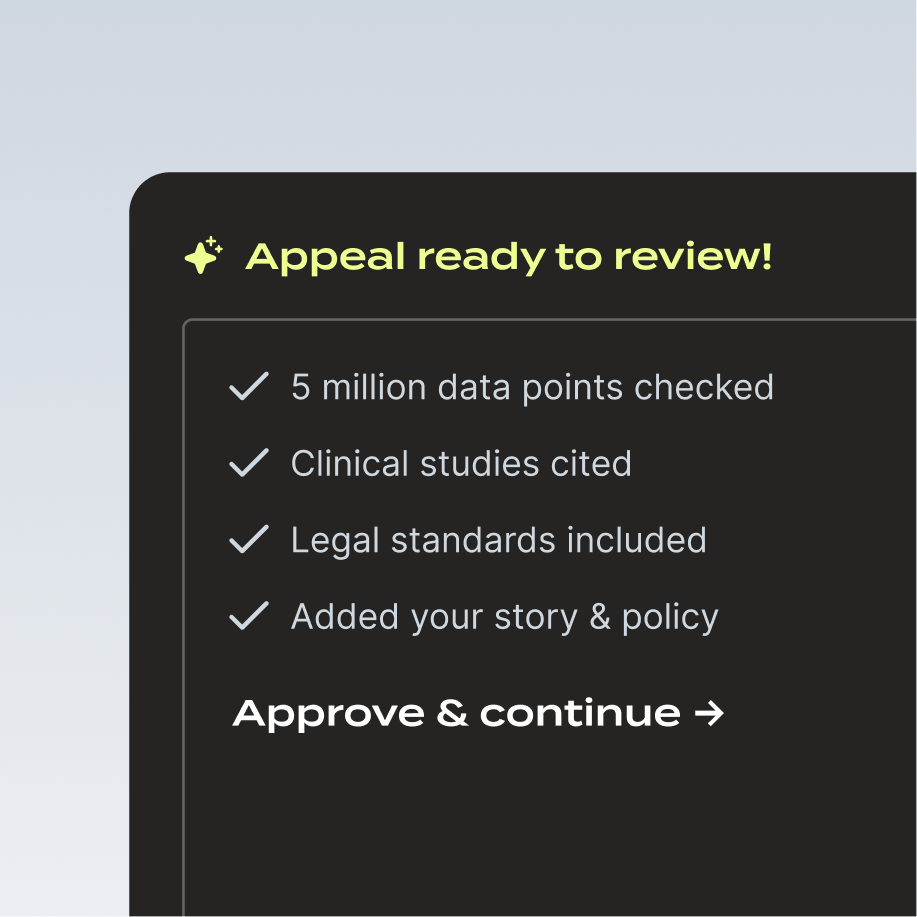


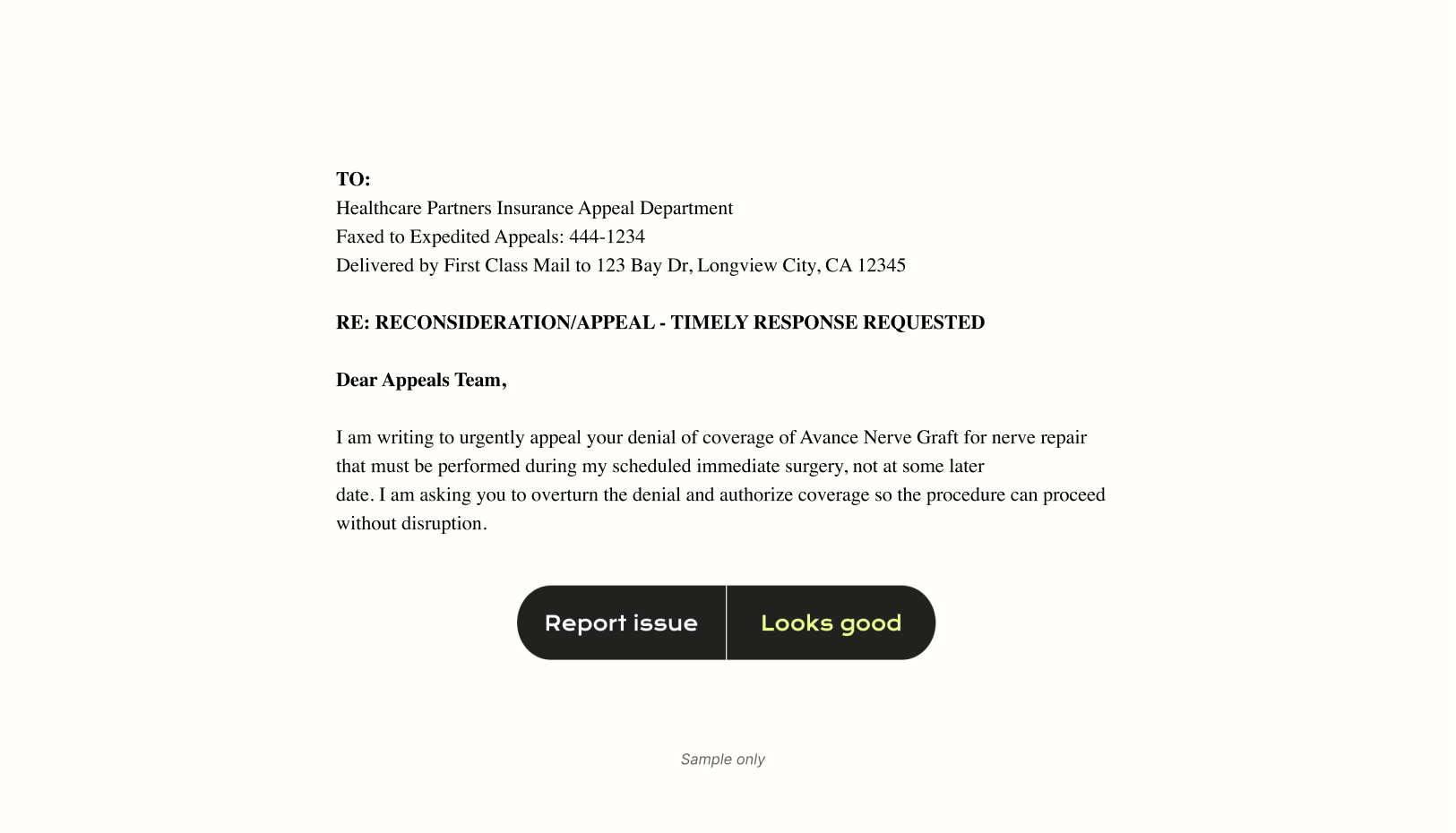
What's in your patient appeal?
The loss of sensation would deeply affect my daily life. I am concerned about intimacy, body image, emotional well-being, and identity, and anxious about how this will affect me at home and at work. The changes that come after bilateral mastectomies weigh heavily on me.
Given these concerns, my surgeon has recommended this procedure as part of my initial surgery and has told me it cannot be deferred to a later one. My surgery is already scheduled, and without a timely decision I am worried I will lose my chance to have it done when it needs to happen.
I have needed time away for appointments and planning, and I am managing lost wages, copays, travel, and childcare costs. Being told I must either pay out of pocket for this graft or forego the treatment my surgeon recommends is overwhelming.
///////////////////////////////////////////////////////////////////////
/////////////////////////////////////////////
sample for illustrative purposes only

///////////////////////////////////////////////////////////////////////
//////////////////////////////////////////////////////////////////////////
/////////////////////////////////////////////
Clinical studies and literature are cited throughout this appeal to support nerve allograft as an established medical practice.
References:
Hartwell, Margaret, et al. Preserving Sensation: Operative Approaches to Nerve-sparing Mastectomy. Journal of Surgical Reconstruction Open, vol. 9, no. 3, 2023, e3201.
Okonkwo, Daniel, et al. Restoring Sensory Function in Free Flap Breast Reconstruction Through Allograft Coaptation. Annals of Reconstructive Surgery, vol. 148, no. 2, 2022, pp. 112-120.
Vasquez, Elena, et al. Optimizing Nerve Coaptation for Sensory Outcomes in Breast Neurotization. Journal of Surgical Reconstruction Open, vol. 5, no. 8, 2019, e2044.
///////////////////////////////////////////////////////
/////////////////////////////////////////////
sample for illustrative purposes only
///////////////////////////////////////////////////////////////////////
//////////////////////////////////////////////////////////////////////////
////////////////////////////////////////////////////////////////////
/////////////////////////////////////////////
Federal law also supports coverage. The Women’s Health and Cancer Rights Act of 1998 requires plans that cover mastectomies to also cover all stages of reconstruction of the breast on which the mastectomy was performed, surgery and reconstruction of the other breast to produce a symmetrical appearance, and treatment of physical complications of all stages of mastectomy, including lymphedemas.
My request falls within reconstruction following mastectomy. Nerve reconstruction performed at the time of immediate breast reconstruction is part of that reconstructive process.
//////////////////////////////////////////////////////////////////////////
////////////////////////////////////////////////////////////////////
/////////////////////////////////////////////
sample for illustrative purposes only

From start to send in minutes
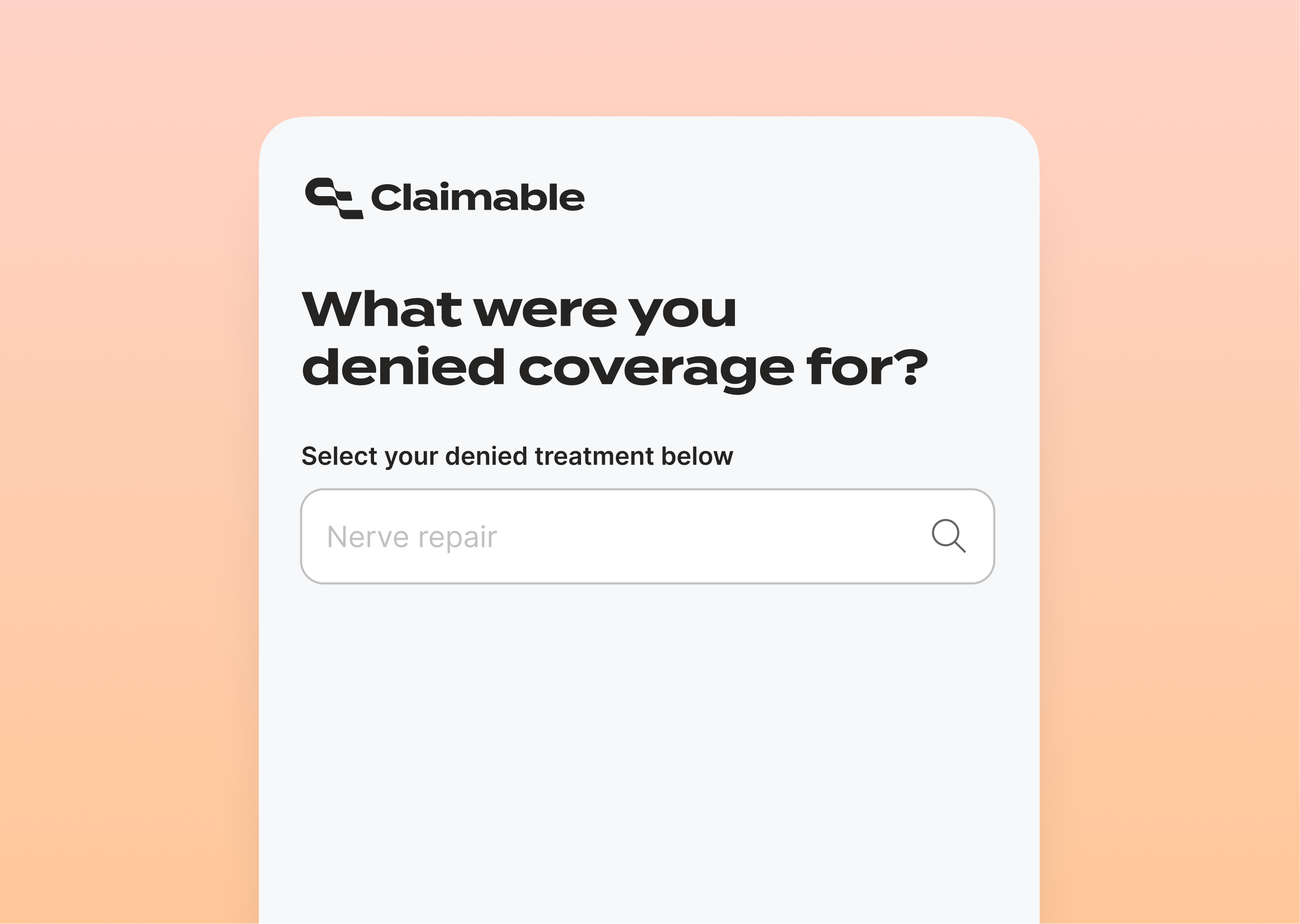
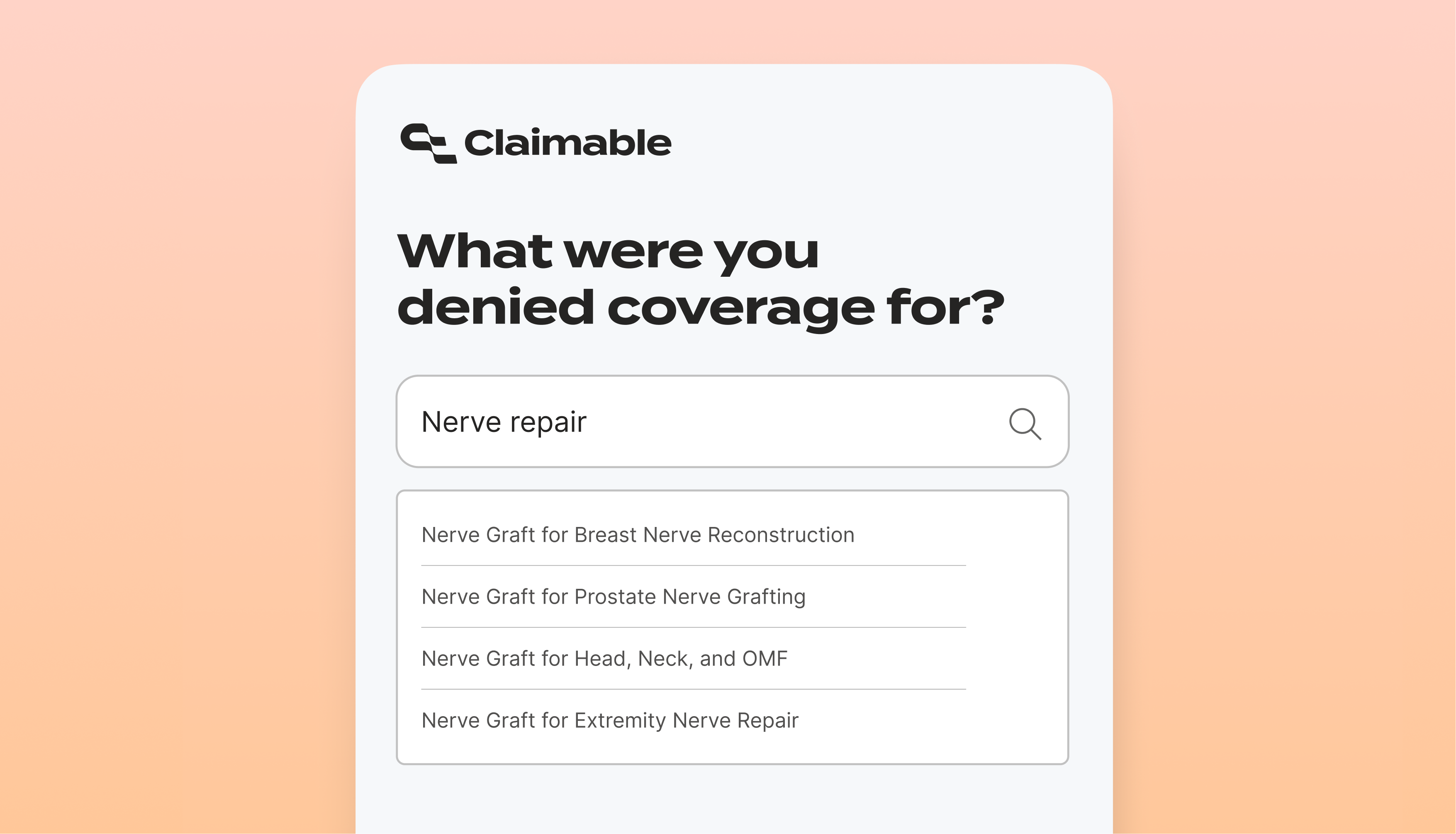
Find your treatment
Create your account

Answer simple questions

Generate your appeal

Review your appeal
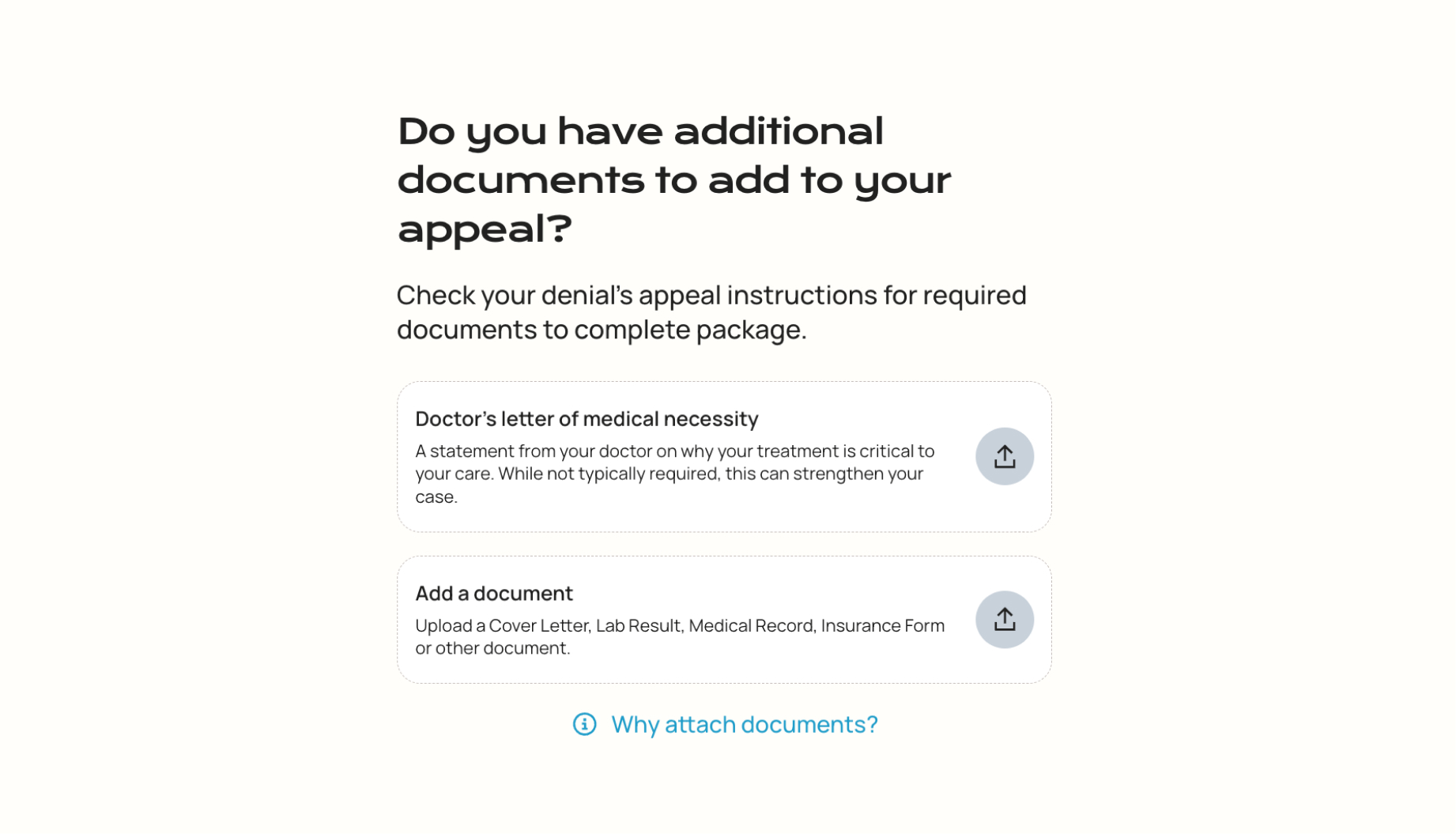
Upload documents
Tip: Gather everything beforehand so it’s quick and easy!
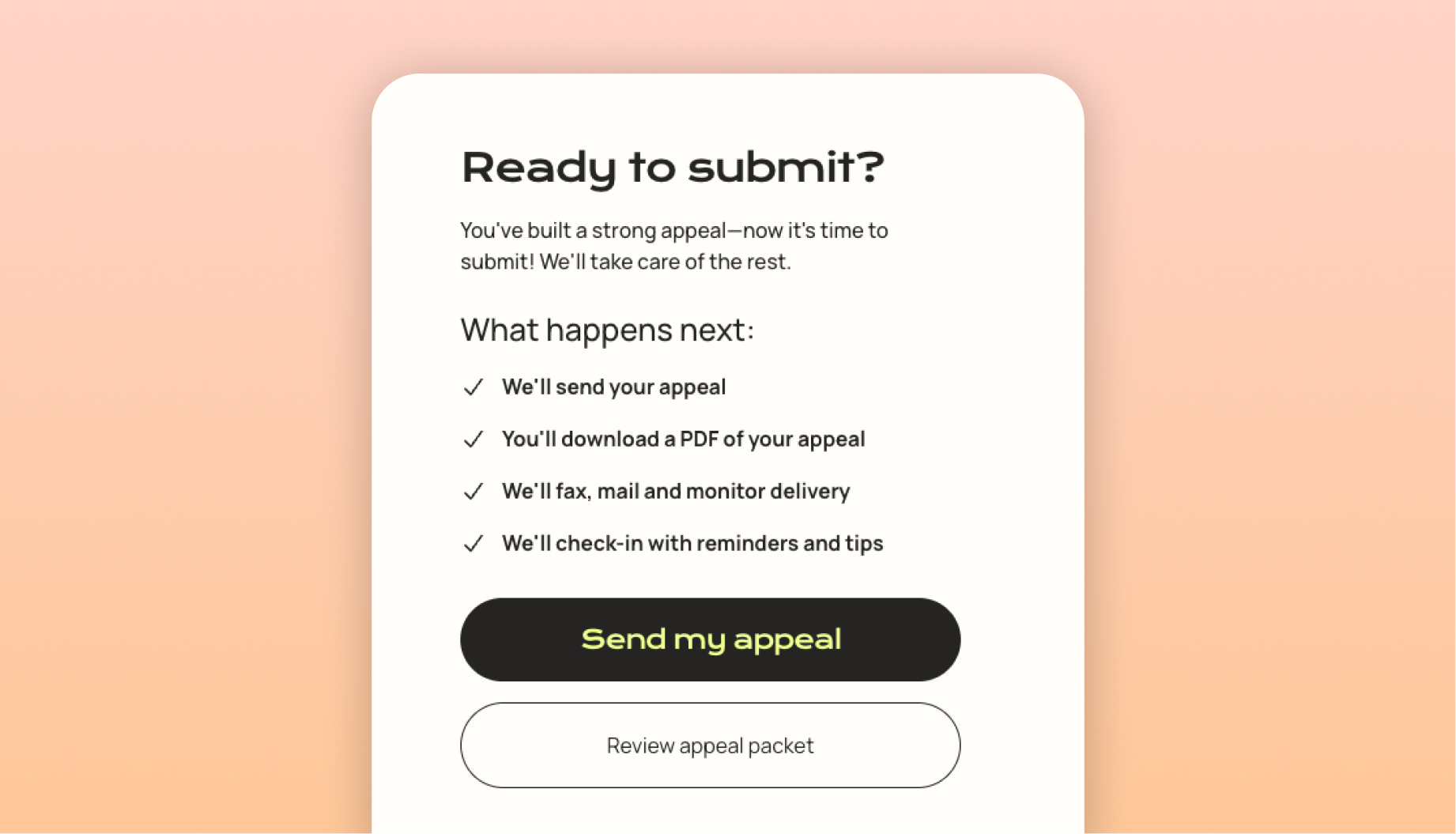
Finalize and submit
We fax and mail it for you and track delivery.
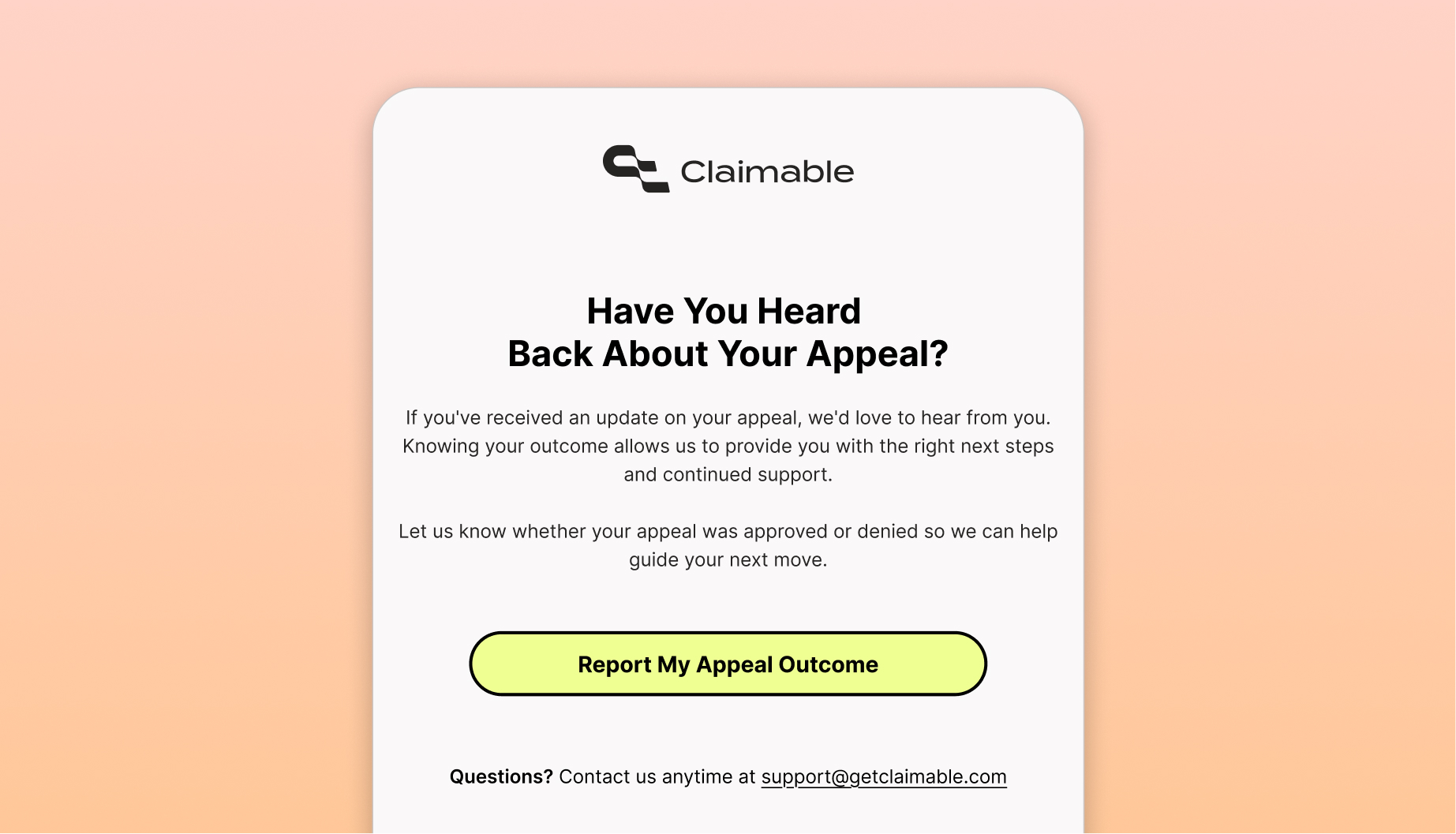
Report & support
We’ll check in with you along the way – and if you need help with next steps, our team is here for you.
Let's start your appeal

Insurance companies deny coverage for nerve repair procedures for several reasons. The most common are:
- Investigational or experimental: Some insurers have historically classified nerve allograft as investigational, even though Avance Nerve Graft received full FDA approval as a biologic in December 2025. Insurer policies don't always reflect the latest regulatory decisions, and outdated criteria are one of the most common reasons for denial.
- Not medically necessary: Your insurer may claim that nerve repair isn't required for your condition, or that an alternative approach (such as autograft — using nerve tissue harvested from another part of your body) should be used instead.
- Plan exclusion or coverage limitation: In some cases, your specific insurance plan may have restrictions on coverage for certain procedures or products.
If your denial letter uses language you don't understand, you're not alone — denial letters are often written in confusing, clinical terms. That's part of what Claimable helps with.
A denial is not a final decision — it's the start of a process. You have the legal right to appeal, and appeals can be successful.
Here's what to do:
- Read your denial letter carefully. It will include the specific reason your claim was denied and instructions for how to appeal. Keep this letter — you'll need it.
- Note the deadline. Your denial letter will include a deadline for filing an appeal. Mark it and don't miss it.
- Talk to your surgeon's office. Let them know you've been denied. They may also be working on an appeal or peer-to-peer review on their end.
- Start your appeal with Claimable. Through this program, you can create and submit an evidence-based patient appeal at no cost to you. You'll answer some questions about your health and situation, and Claimable will generate a personalized appeal that includes clinical evidence, policy arguments, and your personal story.
The most important thing is to act quickly — especially if you have a surgery date scheduled.
It depends on the type of appeal and your specific situation, but here's what to expect:
- Urgent/expedited appeals: If your appeal is related to a scheduled surgery or a time-sensitive medical situation, it can be classified as urgent. Federal law requires insurers to respond to urgent appeals within 72 hours, and in some cases within 24 hours. Through this program, Claimable will help you flag your appeal as urgent when appropriate.
- Standard internal appeals: Insurers are generally required to respond within 30 days for pre-service denials (before you've had the procedure) and 60 days for post-service denials.
- External review: If your internal appeal is denied, you have the right to an independent external review. These are typically decided within 45–60 days, or faster for urgent cases.
Claimable's platform is designed to get your appeal submitted quickly — most patients complete the process in about 30 minutes. From there, the timeline depends on your insurer's response.
Not necessarily. If your surgery is already scheduled, time is critical — and that's exactly why the appeal process includes an expedited option.
When an appeal is filed as urgent, your insurer is required by law to respond within 72 hours (and in some cases, 24 hours). Claimable will help you file an expedited appeal and clearly communicate the time-sensitive nature of your situation.
That said, every case is different. We recommend:
- Letting your surgeon's office know you've been denied and that you're appealing. They can help coordinate timing.
- Starting your appeal immediately. The sooner you file, the more time your insurer has to respond before your scheduled date.
- Do not cancel your surgery before talking to your care team. In some cases, your surgeon may recommend proceeding with the surgery while the appeal is in progress, depending on your specific medical and insurance situation.
AVANCE (acellular nerve allograft-arwx) is an FDA-approved biologic used to repair damaged or severed nerves. It's made from donated human nerve tissue that has been specially processed.
Your surgeon may recommend AVANCE when a nerve has been damaged and needs a "bridge" to reconnect the healthy nerve ends. Unlike autograft — where nerve tissue is taken from another part of your body, creating a second surgical site — AVANCE is an off-the-shelf graft that doesn't require harvesting your own tissue.
AVANCE is used in several types of nerve repair, including breast nerve reconstruction (restoring sensation after mastectomy), head and neck reconstruction, extremity nerve repair, and other procedures where nerve function needs to be restored.
In December 2025, the FDA approved AVANCE as a biologic product to treat peripheral nerve discontinuities.
Axogen is the medical technology company that developed Avance nerve allograft. Axogen's mission is to restore health and improve the quality of life by making the restoration of peripheral nerve function an expected standard of care.
Axogen has partnered with Claimable to provide this no-cost appeal service for eligible patients who have been denied insurance coverage for nerve repair procedures using Avance Nerve Graft. Through this partnership, you can access Claimable's appeal platform to create and submit a personalized, evidence-based appeal — at no cost to you.
Through this partnership with Axogen, there is no cost to you for using Claimable to create and submit your appeal.*
You'll have access to Claimable's full appeal platform — including personalized appeal generation, evidence-based arguments, and submission via fax and mail — at no charge. See program terms for full details.
To create your appeal, you'll need:
- Your denial letter — this tells us exactly why your claim was denied, which insurer denied it, and what your appeal deadlines are. If you don't have a physical copy, you may be able to find it through your insurer's online portal or mobile app.
- Your insurance card — you can take a photo of the front and back.
- Basic information about your health situation — Claimable will walk you through guided questions about your condition, treatment history, and how the denial has affected you. You don't need to prepare anything in advance.
If you have any additional documentation — such as a letter of medical necessity from your surgeon, medical records, or test results — you can upload those too, but they're not required to get started.
The entire process typically takes about 30 minutes.
They may be — and that's a good thing. Provider appeals and patient appeals work together, and having both strengthens your case.
Here's how they're different:
- A provider appeal is filed by your surgeon or their office. It typically focuses on the clinical rationale for why your procedure is medically necessary, and may include a peer-to-peer review with the insurer's medical reviewer.
- A patient appeal is filed by you (with Claimable's help). It includes your personal health story, clinical evidence matched to your specific situation, analysis of your insurer's own coverage policies, and references to applicable laws and regulations. Patient appeals also trigger additional legal protections — including mandated response timelines, the right to an independent external review, and access to the insurer's internal criteria.
You don't need to wait for your provider's appeal to be resolved before filing your own. In fact, filing both at the same time can create more pressure on the insurer to reconsider. Even if your surgeon has already done a peer-to-peer, a patient appeal gives you additional levels of review and brings in arguments that a provider appeal can't.
We recommend letting your surgeon's office know that you're filing a patient appeal so they can coordinate with you.
About AVANCE
What is AVANCE® (acellular nerve allograft-arwx)?
AVANCE is a sterile nerve graft prepared from donated human tissue. AVANCE is implanted in patients with cut nerves to help restore sensory or motor function.
Important Safety Information
AVANCE has risks related to surgery and the use of donated human tissue that you should understand before treatment.
Surgical and Procedure-Related Risks
As with any nerve repair surgery, complications can occur. Risks related to the surgical procedure and use of AVANCE may include pain, increased sensitivity at the implant site, swelling, bleeding, and infection. Other risks may include scarring (including thick or raised scars), delayed wound healing, scar tissue, and formation of a painful nerve growth. Some patients may experience loss, decrease, or change in sensation or movement in the area being treated. One patient had a serious wound healing problem, where the surgical wound reopened.
Risk of Infectious Disease Transmission
Because AVANCE is made from donated human tissue, it can pass on infectious diseases. Donors are carefully screened and tested for viruses and other infectious agents. However, these measures do not completely eliminate the risk of disease transmission. All infections thought to be transmitted by AVANCE should be reported to Axogen Corporation at 1-888-296-4361.
What to Watch for After Surgery
After your procedure, your doctor will monitor your healing and nerve recovery. Contact your healthcare provider right away if you notice any of the following:
- Redness, swelling, warmth, or increasing pain at the surgical site
- Drainage or signs of infection
- New or worsening numbness, tingling, or pain
- Changes in movement or weakness
- Any other symptoms that concern you
Always follow your healthcare provider’s instructions during recovery and rehabilitation.
Please see the Avance Full Prescribing Information for additional information.
Through sponsorship by Axogen, Claimable provides this platform to support patient appeals related to AVANCE® (acellular nerve allograft-arwx) at no cost (the "Sponsored Program") for eligible nerve repair patients with commercial insurance, including health insurance exchanges and federal or state employee plans. Patients with government health insurance programs such as Medicaid, Medicare, Medicare Advantage, VA, DoD/TRICARE, or other federal or state programs are not eligible for the Sponsored Program. Patients must reside in the U.S., have a valid order and a current letter of medical necessity from a licensed US healthcare professional for a nerve repair procedure within an FDA-approved indication for Axogen nerve graft (AVANCE), and have received a denial from their commercial insurance for Product. The Sponsored Program provides eligible patients with appeals support for up to two cases per patient per calendar year (including multiple appeal levels for the same denial). Patients are responsible for the accuracy, completeness, and timeliness of any submissions associated with their treatment and must review the full appeal before submission. The program sponsor does not control the Claimable platform and cannot guarantee the accuracy or suitability of any appeal generated. Approval of an appeal generated as part of the Sponsored Program is not guaranteed. No medical or treatment advice, or medical assessment of patients is provided as part of the Sponsored Program. Patients should talk to their doctors about any questions related to their condition or treatment.
MAT-US-AVAN-0099 V1.0