Claimable Blog
Learn about appeals, denials, and stay up to date on what is happening in the world of healthcare.

Wegovy is one of the most frequently denied medications in the country. It’s also one of the medications where patients have the most arguments available to fight back. Most patients have a case. The challenge is figuring out which one to make.
A Wegovy appeal letter that argues weight management when your denial is based on a blanket plan exclusion will fail. So will one that cites cardiovascular data when the insurer’s actual objection is a documentation gap. Wegovy’s FDA label now spans three distinct indications, and each one opens a different set of clinical, policy, and legal arguments. Your letter needs to match your evidence to your specific denial, or it’s wasted effort.
This guide walks through a proven appeal letter structure section by section, explains how to customize each part for your specific Wegovy denial, and covers what to do if the first response comes back unfavorable. We’ve also put together a free downloadable template to give you a starting point.
If you’d prefer not to build this from scratch, Claimable generates fully customized Wegovy appeal letters backed by a purpose-built database of clinical studies, insurer policies, and legal standards, then submits them directly to your insurer on your behalf.
Start Here: Identify Your Denial Type
Before writing anything, find the exact denial reason on your letter. The entire strategy changes depending on which barrier you’re facing, and submitting the wrong type of argument wastes time and appeal opportunities. Wegovy’s FDA label now covers chronic weight management, cardiovascular risk reduction, and MASH with liver fibrosis, which means a blanket “weight loss drug” exclusion doesn’t necessarily close the door.
Our guide to Wegovy denials breaks down each denial type, what it actually means, and the best first move for each, including when an alternate indication can bypass the denial entirely.
If the denial traces back to a correctable issue (a missing lab result, an outdated BMI measurement, or a wrong diagnosis code) you may not need a formal appeal at all. A resubmission with the missing documentation can sometimes resolve it faster.
Wegovy Appeal Letter: What to Include, Plus a Customizable Template
We’ve created a free, customizable appeal letter template you can use as a starting point for your Wegovy appeal:
Download the free appeal letter template
Each section of a strong Wegovy appeal serves a specific function. Here’s what to include and why.
Section 1: Identifying Information, Claim Details, and Denial Reference
Start with a header block that identifies you, your insurer’s appeals department, and the specific claim at issue. The opening paragraph should name the medication, the prescribing physician, your diagnosis, and the insurer’s stated denial reason, quoted directly from the letter. Reproducing their exact language matters. Everything that follows is a targeted response to that specific rationale.
If a gap in treatment poses a medical risk (disease progression, cardiovascular events, weight regain that worsens comorbidities), this is also where you request an expedited review. Most plans must decide expedited appeals within 72 hours.
Note your appeal deadline immediately. Most commercial plans allow 180 days for an internal appeal, but timelines vary by plan type and insurer. UnitedHealthcare allows just 65 days for many plan types. Medicare Advantage plans allow 60 days under CMS rules. ERISA employer plans and Medicaid each run on their own schedules, and some are considerably shorter.
Your exact deadline is printed on your denial letter. Mark your calendar the day the denial arrives and file as early as you can.
Section 2: Your Diagnosis and Its Impact on Your Life
This section establishes your clinical profile and makes the human cost of the denial concrete. Include your diagnosis with ICD-10 codes if available, all relevant comorbidities, and a specific description of how your condition affects daily life.
For Wegovy, the indication your prescriber documented matters enormously. If the prescription is for cardiovascular risk reduction, your appeal needs to center your cardiovascular history (prior heart attack, stroke, peripheral arterial disease) and the risk of being denied a medication with proven event reduction data. If it’s for MASH with liver fibrosis, the framing is hepatic, not metabolic.
If it’s for chronic weight management, the appeal should document the full clinical picture, including BMI, comorbidities, functional limitations, and the impact of obesity on your overall health trajectory.
A reviewer who reads that you’re managing heart failure, sleep apnea, or progressive liver disease reads the clinical sections that follow with a different frame than one who sees a vague reference to weight concerns.
Section 3: Prior Treatments and Their Outcomes
This section demonstrates that you’ve already done what the plan requires, or that there’s a documented clinical reason those requirements don’t apply to you. Present prior treatments in a clear table, with specific dates, drug names, and documented outcomes are what turn a general claim into evidence the insurer is required to address.
Two details that patients frequently overlook. First, “failure” includes intolerable side effects, medical contraindications, and results that didn’t reach or sustain a clinically meaningful threshold, not just complete non-response. Second, if you’re currently on Wegovy and responding well, the continuity of care argument (that switching or stopping would reverse clinical progress) belongs here as well.
Section 4: Why Wegovy Is Medically Necessary
This section connects your physician’s clinical judgment, your treatment history, and your current health trajectory into a single argument. It should explain why Wegovy specifically is the appropriate medication, not just “a GLP-1,” and what happens without it, such as disease progression, cardiovascular events, weight regain that worsens existing comorbidities, liver disease advancement, or loss of function.
Medical necessity is the standard most denials ultimately turn on, and the section should meet it directly. If your prescriber has written a letter of medical necessity, this section of your appeal letter reinforces and builds on that clinical reasoning with your own perspective and supporting evidence.
One detail for patients already on Wegovy that’s easy to miss. Use your baseline BMI from before starting treatment, not your current weight. Insurers have denied coverage based on improved numbers, essentially penalizing patients for responding to the medication. Your pre-treatment clinical picture is what establishes the need.
Section 5: Clinical Evidence Supporting Wegovy
This section does the heaviest lifting, and it’s where most generic appeal letters miss. Cite specific clinical trials, match each to your indication, and connect the data to the insurer’s stated reason for denial.
Match the trial data to your situation. Citing SELECT, a cardiovascular risk reduction trial, in a weight management appeal won’t strengthen your case. Citing weight management studies for a MASH-coded prescription misses the point. Use the trial that matches your indication.
A serious caution: never cite a study you haven’t verified. General-purpose AI tools and template letters routinely generate fabricated clinical references that look convincing. A single invented citation gives the reviewer a clean justification to dismiss your entire appeal. If you can’t produce a real citation for a claim, remove it.
Section 6: The Denial Doesn’t Align With Your Insurer’s Own Criteria
Insurers publish their Wegovy coverage policies, and those documents are publicly available. Pull the relevant policy, identify each criterion, and show point by point that your clinical profile satisfies them.
If the policy requires a BMI of 30 or above and your records show 34, say so. If the policy requires documented comorbidities and your chart lists three of them, list them against the criteria. If the policy requires prior treatment attempts and you’ve already completed them, show the match.
Section 7: Applicable State and Federal Law
Legal citations move your appeal from a request to a demand, and insurers treat those differently. The specific protections available depend on your plan type and your state, but they often include ACA-guaranteed rights to internal appeal and independent external review, state step therapy override laws, and ERISA protections for employer-sponsored plans. Several states now mandate coverage for FDA-approved anti-obesity medications, and if yours is one of them, that belongs in this section.
If your plan excludes weight loss drugs but covers cardiovascular treatment, and you have an established cardiovascular condition, the argument that Wegovy’s CV indication falls outside the weight loss exclusion is both a clinical argument and a legal one. The same applies to MASH, which is a liver disease indication that is categorically different from a weight management one, and your appeal should make that distinction explicit.
Section 8: Request for Review and Approval
Close with a formal, specific request. Ask the insurer to approve coverage for Wegovy, override the cited denial barrier, and if the situation is time-sensitive, process the appeal on an expedited basis. Ask for written confirmation of the decision. If the appeal is denied, request the complete claim file so you can see every document the reviewer considered and identify any gaps for the next level of review.
Section 9: Supporting Documentation
List everything you’re including with the letter, such as the physician’s letter of medical necessity, medical records documenting your diagnosis and treatment history, relevant lab results, the clinical studies cited in the letter, the original denial letter, and any prior appeal decisions. Nothing should require the reviewer to go searching.
Section 10: Citations and References
End with a full reference list of every clinical trial, guideline, insurer policy, and statute cited. This doubles as your own quality check. If you can’t produce a clean, verifiable citation for a claim, that claim should not be in the letter.
An Alternative Approach: Use Claimable
The template above provides the architecture of a strong appeal. But the sections that determine whether it succeeds (clinical evidence, policy analysis, legal citations) are also the ones that require hours of targeted research and where errors weaken your case. A misquoted trial or a misapplied statute does more harm than leaving the section blank.
Claimable does this work for you. You answer a set of questions about your denial, your diagnosis, and your treatment history, and Claimable generates a fully personalized appeal drawing on a specialized database of verified clinical studies, insurer-specific policies, and applicable law. Every citation is verified, every argument is matched to your insurer and plan type, and we mail and fax it directly to your plan on your behalf.
Over 80% of Claimable appeals succeed, with most resolved in 10 days or less. Appealing with Claimable costs $39.95 for Wegovy, with no success fees and no hidden costs.
Start your Wegovy appeal with Claimable.
Common Mistakes That Get Wegovy Appeals Denied
Building the Appeal Around the Wrong Indication
Wegovy’s multi-indication label is an asset, but only if you’re using the one that fits your clinical profile. An appeal that argues cardiovascular risk reduction without documenting established cardiovascular disease won’t land. One that argues weight management when a MASH-coded prescription would bypass the plan exclusion entirely is a missed opportunity. Before drafting, identify which indication gives you the strongest case given your clinical profile and your denial type, and build the entire letter around it.
Using Current Weight Instead of Baseline BMI
If you’ve already been on Wegovy and lost weight, your current BMI may no longer meet the plan’s threshold. That’s the medication working, not a reason to deny coverage. Your appeal should document your pre-treatment baseline, not the number on the scale today. This is a common and avoidable mistake that hands the insurer an easy rationale.
Vague Language That Doesn’t Engage With the Denial
A letter that says “my doctor says I need this medication” without clinical specifics gives the reviewer nothing to evaluate. Spell out your disease activity, your comorbidities, your prior treatments and exactly why they were insufficient, and the precise clinical reasoning for Wegovy over alternatives. Personal impact belongs in the letter, but it reinforces the clinical evidence rather than replacing it.
Citing Fabricated Studies or Incorrect Legal References
General-purpose AI tools generate convincing-looking clinical citations that don’t exist and legal references that don’t say what the letter claims. A reviewer who catches one fabricated source has every reason to treat the entire submission as unreliable. Verify every reference before it goes near your insurer. This is exactly why Claimable runs on a proprietary database of real, verified sources rather than a general-purpose language model.
Missing the Filing Deadline
Deadlines are printed on your denial letter and they are absolute. Most commercial plans allow 180 days for an internal appeal, but not all do. UnitedHealthcare gives just 65 days for many plan types. Medicare Advantage plans allow 60 days under current CMS guidelines.
Missing the window eliminates your right to appeal entirely. Mark the deadline the day the letter arrives and file with as much lead time as possible.
Don’t Navigate This Alone If You Don’t Have To
You have the legal right to appeal, the clinical evidence to support it, and a process designed to give you multiple chances to make your case. The template above gives you the structure to build a strong Wegovy appeal on your own.
If you’d rather not spend hours verifying clinical studies and tracking down insurer policies, Claimable handles the research-intensive work, builds an appeal customized to your insurer and plan type, and submits it on your behalf. Over 80% of our appeals succeed, with most resolved in 10 days or less.
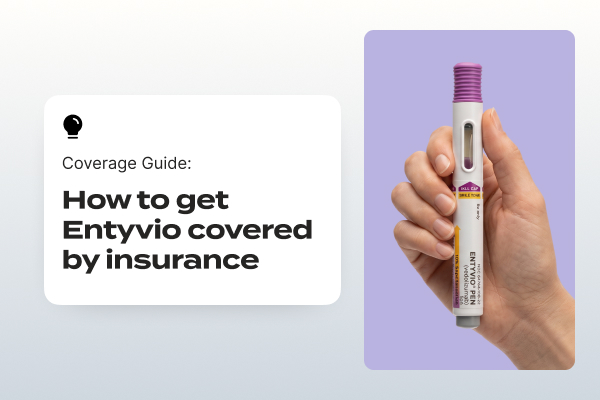
Your doctor prescribed Entyvio because it's the right choice for you. But then your insurer denied it.
That’s frustrating on its own, but it’s especially galling for Entyvio. The very reason gastroenterologists often choose Entyvio (your IBD needs a biologic that works in the gut without suppressing your entire immune system) is also exactly what most insurer step therapy policies ignore when they demand you try a TNF blocker first. Though there are other reasons Entyvio may be denied, this one is all too common.
Entyvio (vedolizumab) has been FDA-approved since 2014 for moderate-to-severe ulcerative colitis and Crohn’s disease. Unlike TNF inhibitors and JAK inhibitors, it targets α4β7 integrin specifically in the GI tract rather than suppressing immunity systemically.
That mechanism makes it the preferred biologic for patients with infection risks, a history of malignancy, or complications from broader immunosuppression. It’s also one of the most expensive biologics on the market (roughly $9,900 per IV infusion, approximately $3,500 per subcutaneous dose), with no biosimilar currently available. Insurers deny it often.
But denials can be overturned. Fewer than 1% of denied claims are ever appealed, according to KFF’s analysis of federal marketplace data. When patients do challenge with proper evidence, the results look very different. We see this daily at Claimable, where our appeals succeed over 80% of the time in established conditions.
Entyvio denials follow their own patterns. A UC patient denied because the insurer demands TNF failure is in a different fight than a Crohn’s patient denied during the transition from IV to subcutaneous maintenance, or one whose insurer pulled Entyvio from the formulary entirely. This guide covers each type and how to respond.
Why Insurance Companies Deny Entyvio Coverage
The specific reason on your denial letter determines what evidence you need, which arguments will work, what type of appeal you should submit. A generic appeal that ignores your actual denial type is unlikely to succeed, and most plans cap the number of appeals you can file.
Why Entyvio Denials Are Their Own Category
Entyvio’s gut-selective mechanism is the reason doctors prescribe it, but it’s also the reason insurers resist covering it. Most insurers still require TNF failure before they’ll approve it, forcing patients through systemically immunosuppressive drugs before granting the one designed to avoid those risks.
It comes in two formulations on two different insurance benefits. Entyvio IV is billed under the medical benefit, Entyvio SC under the pharmacy benefit. Patients who complete IV induction and transition to SC maintenance need a separate PA on the pharmacy side, creating two potential denial points for the same drug.
There is no biosimilar available yet. The first vedolizumab biosimilar application was accepted by the FDA in June 2026 (Alvotech’s AVT16, an IV-only product), with an FDA decision expected in early 2027. But Takeda’s patent runs until May 2032, so a biosimilar isn’t expected to reach patients for years.
And vedolizumab has a slower onset than some competing biologics (6-14 weeks for full response), which means some insurers pull coverage before the drug has had enough time to work.
What We See In Entyvio Appeals
Denial letters are designed to close the conversation. They shouldn’t. Here are the most common Entyvio denial types, what they actually mean, and where to focus first:
Step Therapy and TNF Failure Required
This is the most common Entyvio denial. Most plans require documented failure on at least one TNF blocker before they’ll cover vedolizumab. Some require failure on two, or require an immunomodulator trial on top of TNF failure.
The argument that wins: The 2025 ACG Crohn’s disease guideline recommends vedolizumab among the advanced therapies for moderate-to-severe Crohn’s without mandating TNF failure as a prerequisite, and the 2025 ACG ulcerative colitis guideline likewise recommends vedolizumab for induction in moderate-to-severe UC. The AGA guidelines recommend vedolizumab for induction and maintenance as well. If your doctor chose vedolizumab because of a contraindication to TNF blockers (active TB, prior lymphoma, demyelinating disease, heart failure, recurrent serious infections), that is a documented medical reason, and most state step therapy exception laws are designed to cover exactly this scenario.
Not Medically Necessary
This denial is common. Sometimes it reflects a request that didn't spell out the clinical picture; other times a reviewer applied the plan's own criteria and decided your case didn't clearly meet them. Your appeal is where you make the full case either way.
What a strong resubmission includes: diagnosis with current ICD-10 codes, disease severity documented with objective measures (partial Mayo score or full Mayo score for UC, CDAI or Harvey-Bradshaw Index for Crohn’s, plus endoscopy findings if available). Include complete treatment history with dates, durations, doses, and specific reasons each prior therapy was stopped. Add a clinical rationale for why vedolizumab is the appropriate next treatment.
IV-to-SC Transition Denied
When a patient completes IV induction and their gastroenterologist prescribes the SC pen for maintenance, a new PA is required on the pharmacy side. That PA can be denied even though the patient is already approved for the same medication on the medical side.
The fix: submit the SC PA with documentation of successful IV induction and current clinical response. Frame it as continuation of established therapy, not initiation of a new treatment. If the pharmacy benefit denies it, your doctor can request that maintenance continue via IV infusion while the SC denial is appealed.
Continuation Denied
Vedolizumab’s onset of action can take 6 to 14 weeks (longer for Crohn’s). Some insurers build early response checkpoints into their criteria and pull coverage before the drug has had enough time to work.
When to push back: if you’re within the expected response window and showing any trajectory of improvement (labs trending down, symptoms improving, reduced steroid use), document that trajectory and have your gastroenterologist state that the response pattern is consistent with vedolizumab’s mechanism. The insurer’s timeline should match the drug’s pharmacology.
Formulary Exclusion
Some plans have begun removing Entyvio IV from their formularies. Document your clinical stability on vedolizumab, why alternatives are inappropriate (prior TNF failures, contraindications to JAK inhibitors), and the risk of switching a responding IBD patient to a different biologic. If your state has non-medical switching protections, reference them directly.
Site of Care Restriction
If your insurer objects to where you receive your infusion rather than whether you need it, your doctor can submit a site-of-care exception if the alternative facility can’t safely accommodate your needs. If the alternative is clinically appropriate, transitioning is often the fastest path to continued coverage.
How to Appeal an Entyvio Denial (Step by Step)
Step 1: Find Your Deadline
Your denial letter must include the reason for denial, your appeal rights, and the filing deadline. Most commercial plans allow 180 days, but UnitedHealthcare limits many plans to 65 calendar days and Medicare plans follow CMS timelines. Missing the deadline eliminates your rights regardless of how strong your case is.
Step 2: Talk to Your Doctor
Both you and your doctor have the ability to appeal. Your doctor's appeal typically focuses on the clinical appeal (resubmitting the PA, writing a letter of medical necessity, requesting peer-to-peer review). You can file your own patient-initiated appeal, and can also include personal impact, policy precedent, and legal arguments. Patient appeals work on faster timelines and include more legal rights than a provider's appeal, so if your doctor can't or won't appeal, or if their appeal gets denied, a patient appeal is a great option.
Step 3: Verify Your Documentation
Confirm that your ICD-10 codes, disease severity scores, and treatment history are complete and current, following the documentation requirements for your denial type above. For IV-to-SC denials, document successful IV induction. For continuation denials, document trending improvements.
Step 4: Get a Letter of Medical Necessity
While appeals can be approved without a LOMN, it can be helpful – ask your doctor to write you one. A strong LOMN includes your diagnosis with severity scores, complete treatment history, and clinical rationale for vedolizumab addressing the insurer’s specific denial reason. Also include any denial-specific documentation, such as TNF contraindications for step therapy denials, clinical trajectory for continuation denials, or successful IV induction for transition denials.
Step 5: Build the Appeal Package
A complete appeal includes the cover letter, the LOMN, supporting clinical records, and your personal statement. The winning structure:
Start with your story, covering the real-world impact of IBD on your daily life.
Follow with clinical evidence from the ACG 2025 and AGA guidelines supporting vedolizumab for your condition.
Close with policy and legal analysis showing how your case meets the plan’s own criteria, plus ACA protections and any applicable state step therapy exception laws.
Step 6: Submit and Track
Submit per the denial letter instructions. Insurers must respond within 30 days (standard) or 72 hours (urgent). Keep records of everything: fax confirmations, certified mail receipts, representative names.
Step 7: Escalate If Denied Again
You have the right to external review by an independent third party. Their decisions are binding on the insurer in most states. Additional options include state Department of Insurance complaints, ERISA remedies, and state step therapy exception laws.
Appeal Timelines: How Long Does an Entyvio Appeal Take?
The biggest factor in speed is submitting a complete package from the start. An appeal that arrives with the letter of medical necessity, clinical documentation, and personal statement can help your appeal move quicker. The average Claimable appeal gets a response in just 10 days.
FAQs
Why was my Entyvio denied when my doctor specifically chose it for safety reasons?
Most insurer step therapy policies don’t account for the clinical reasoning behind a prescriber’s drug selection. They require TNF blocker failure before vedolizumab regardless of why your doctor chose it. If the reason was a safety concern with systemic immunosuppression, that’s a step therapy exception argument, and a strong one. But you have to make it explicitly in the appeal with documentation.
Can I appeal an Entyvio denial myself?
Yes. Patient appeals run on a separate legal track from your gastroenterologist’s clinical appeal, with guaranteed response timelines, the right to external review, and multiple levels of internal appeal.
Is there a biosimilar or generic version of Entyvio?
Not yet. The first vedolizumab biosimilar application was accepted by the FDA in June 2026, with an FDA decision expected in early 2027. But Takeda’s patent runs until May 2032, so a biosimilar isn’t expected to reach patients for years.
How much does Entyvio cost without insurance?
Entyvio IV runs roughly $9,900 per infusion. The SC pen costs approximately $3,500 per dose. Takeda offers financial support through EntyvioConnect, including a copay card for commercially insured patients and a patient assistance program for eligible uninsured patients.
Claimable’s physician-led team has helped patients recover over $30 million in care access by fighting insurance denials. We’re SOC 2 Type II certified and HIPAA compliant. Learn more about how Claimable works →

Your doctor prescribed Stelara because it’s the right treatment for you. And if your insurer denied it, the reason often has less to do with your medical needs than with a choice made to protect their bottom line.
Since brand Stelara’s patent expired, eight ustekinumab biosimilars have received FDA approval and several have launched commercially. The major PBMs are moving aggressively toward these biosimilars, though each is doing it differently and on its own timeline. Express Scripts excluded the IV formulation in January 2026 and is pulling subcutaneous Stelara for all users by July 2026. UnitedHealth’s Optum Rx and CVS Caremark are steering members toward their own affiliated biosimilars, even where brand Stelara technically remains on the list.
The biosimilars replacing it on formularies aren’t neutral choices. Each PBM tends to prefer its own affiliated product, meaning you may have no say in which specific version of ustekinumab you’re switched to.
If you’ve been stable on Stelara, this feels like a medical decision being made for you for business reasons that you have no stake in. If you’re a new patient, the step therapy and prior authorization requirements can still block access to ustekinumab entirely, biosimilar or not.
Fewer than 1% of denied claims are ever appealed, and insurers count on that. We see this first-hand at Claimable, where our appeals succeed over 80% of the time in established conditions.
Below, we break down each denial type and the specific strategies that win each one.
Why Insurance Companies Deny Stelara Coverage
The reason on your denial letter shapes your entire strategy, from the evidence you need to whether you file a formal appeal or a corrected resubmission.
Why Stelara Denials Are Their Own Category
Stelara (ustekinumab) is an IL-12/23 inhibitor approved for four conditions across two medical specialties: plaque psoriasis and psoriatic arthritis in dermatology, and Crohn’s disease and ulcerative colitis in gastroenterology. Step therapy requirements are completely different depending on your diagnosis, so two patients with identical denial language may need entirely different appeal strategies.
The biosimilar transition is the dominant factor in Stelara denials right now. With eight approved biosimilars and the major PBMs favoring their own affiliated versions (Cordavis for CVS Caremark, Nuvaila for Optum Rx, Quallent for Express Scripts/Cigna), many patients stable on brand Stelara are being pushed onto a biosimilar they didn’t choose. For many patients, that switch works fine. For some, it doesn’t, and those patients have the right to appeal.
For IBD patients, Stelara uses a weight-based IV induction dose (260 mg, 390 mg, or 520 mg depending on body weight) followed by subcutaneous maintenance every 8 to 12 weeks. This two-phase dosing structure creates a specific set of denial risks covered in the IV induction section below.
What We See In Stelara Appeals
Denial letters are written to end the conversation. Here are the most common types, what they mean, and where to start:
Formulary Removal and Biosimilar Switch
More patients are hitting this denial than any other. If you’ve been stable on brand Stelara and received a letter saying it’s no longer covered or no longer preferred, you’re in the middle of the fastest biosimilar formulary transition the industry has seen.
Ustekinumab biosimilars contain the same active ingredient, meet the same efficacy and safety standards, and are held to FDA bioequivalence requirements. A subset have also been designated interchangeable with Stelara — Wezlana was the first, followed by Selarsdi and others — which allows pharmacy-level substitution. Not all biosimilars carry that designation, but interchangeability speaks to substitution rules, not to whether a biosimilar is safe or effective; the non-interchangeable products meet the same clinical standards.
If you’re stable and have no history of problems with medication transitions, switching to your plan’s preferred biosimilar may be the fastest and simplest path to continued treatment. But if you don't want to switch, you shouldn't have to just because your insurance says so.
If you’ve experienced adverse reactions during prior biologic switches, if you have documented immunogenicity concerns, or if disease stability is fragile and your doctor believes any disruption carries clinical risk, your appeal case is particularly strong. Request a formulary exception, documenting your clinical stability on brand Stelara with objective measures and explain why switching introduces risk for your specific situation. If your state has non-medical switching protections, cite them directly.
Step Therapy Required
Step therapy means your insurer requires documented failure on cheaper therapies before they’ll approve ustekinumab (brand or biosimilar). Requirements often differ substantially by diagnosis:
The detail that changes outcomes: “failure” includes side effects, contraindications, and medical reasons a drug is inappropriate. Methotrexate is contraindicated in pregnancy and carries liver risk. Cyclosporine affects blood pressure and kidney function. If a required step therapy drug isn’t safe for you, document that directly.
The argument that wins: The 2025 ACG guidelines support ustekinumab as an advanced therapy for moderate-to-severe Crohn’s disease and UC without mandating TNF failure first. The AAD/NPF guidelines support IL-12/23 inhibitors for moderate-to-severe plaque psoriasis. The ACR/NPF 2018 guidelines include ustekinumab among the treatment options for active psoriatic arthritis. Citing these puts the insurer’s additional requirements in tension with professional consensus.
Not Medically Necessary
This denial is common. Sometimes it reflects a request that didn't spell out the clinical picture; other times a reviewer applied the plan's own criteria and decided your case didn't clearly meet them. Your appeal is where you make the full case either way.
A strong appeal includes diagnosis with ICD-10 codes, disease severity with objective measures (PASI or BSA for psoriasis, tender/swollen joint counts for PsA, CDAI or partial Mayo for IBD), complete treatment history with dates and reasons each therapy was stopped, and a clear clinical rationale for ustekinumab.
IV Induction Denied (IBD Patients)
For Crohn’s disease and ulcerative colitis, Stelara requires a single weight-based IV induction infusion before transitioning to subcutaneous maintenance. The induction dose is billed under the medical benefit, while the SC injections are billed under the pharmacy benefit. This dual-benefit split creates the same denial risk that Entyvio patients face.
Denials at the induction stage can occur because the PA was submitted under the wrong benefit, because the weight-based dosing wasn’t clearly documented, or because the insurer requires additional step therapy before approving the IV component.
Confirm that the PA is filed under the medical benefit with the correct HCPCS codes and that the weight-based dose matches your current body weight.
Dose or Interval Adjustment Denied
Maintenance dosing depends on your condition. For psoriasis and psoriatic arthritis, the standard interval is every 12 weeks. For Crohn’s disease and ulcerative colitis, the labeled maintenance dose is a subcutaneous injection every 8 weeks — but some IBD patients lose response at that interval and need it shortened further, to every 4 to 6 weeks, to maintain disease control. Insurers may deny the shortened interval as exceeding recommended dosing.
The argument that wins: dose optimization for ustekinumab is supported by clinical evidence and is standard gastroenterology practice. Your appeal should include objective evidence of inadequate response at the standard interval (worsening symptoms, rising inflammatory markers, low drug levels) and your prescriber’s rationale for the adjustment.
How to Appeal a Stelara Denial (Step by Step)
Step 1: Find Your Deadline
Most commercial plans allow 180 days. UnitedHealthcare limits many plans to 65 calendar days. Medicare plans follow CMS timelines. Don't miss the deadline, or you lose your right to appeal.
Step 2: Talk to Your Doctor
Both you and your doctor have the ability to appeal. Your doctor's appeal typically focuses on the clinical appeal (resubmitting the PA, writing a letter of medical necessity, requesting peer-to-peer review). You can file your own patient-initiated appeal, and can also include personal impact, policy precedent, and legal arguments. Patient appeals work on faster timelines and include more legal rights than a provider's appeal, so if your doctor can't or won't appeal, or if their appeal gets denied, a patient appeal is a great option.
Step 3: Verify Your Documentation
Confirm ICD-10 codes, disease severity measures appropriate to your condition, and treatment history with dates, doses, and reasons each therapy was stopped. For biosimilar switch appeals, document clinical stability on brand Stelara with objective metrics.
Step 4: Get a Letter of Medical Necessity
While appeals can be approved without a LOMN, it can be helpful – ask your doctor to write you one. A strong LOMN includes your diagnosis with severity scores, complete treatment history, and clinical rationale for vedolizumab addressing the insurer’s specific denial reason. Also include any denial-specific documentation, such as TNF contraindications for step therapy denials, clinical trajectory for continuation denials, or successful IV induction for transition denials.
Step 5: Build the Appeal Package
A complete appeal includes the cover letter, the LMN, supporting clinical records, and your personal statement. Structure it around: your story (the real-world impact of your condition), clinical evidence (ACG, AAD/NPF, or ACR/NPF guidelines supporting ustekinumab for your diagnosis), and policy and legal analysis (how your case meets the plan’s criteria, plus ACA protections and applicable state laws).
Step 6: Submit and Track
Submit per the denial letter instructions. Insurers must respond within 30 days (standard) or 72 hours (urgent). Keep records of everything.
Step 7: Escalate If Denied Again
You have the right to external review by an independent third party. Their decisions are binding in most states. Additional options include state Department of Insurance complaints, ERISA remedies, and state step therapy or non-medical switching laws.
Appeal Timelines: How Long Does a Stelara Appeal Take?
Complete submissions move faster. The average Claimable appeal gets a response in just 10 days.
FAQs
Why was my Stelara denied if my plan used to cover it?
Since brand Stelara’s patent expired, the major PBMs have been shifting their formularies toward lower-cost biosimilars. Your plan likely still covers ustekinumab, but may now require the biosimilar version. If you need to stay on brand Stelara for clinical reasons, that requires a formulary exception with supporting documentation.
Can I appeal a Stelara denial myself?
Yes. Patient appeals run on a separate legal track from your doctor’s clinical appeal, with guaranteed response timelines, the right to external review, and multiple levels of internal appeal.
What if my insurer wants me to switch to a Stelara biosimilar?
For most patients, the switch is clinically straightforward. Ustekinumab biosimilars meet the same FDA standards as brand Stelara, and several are designated interchangeable. If you have a documented clinical reason to stay on brand (adverse reaction history, immunogenicity concerns, fragile disease stability), request a formulary exception with supporting documentation from your prescriber. Some plans may approve brand Stelara but require you to pay the cost difference.
How many Stelara biosimilars are there?
Eight ustekinumab biosimilars have been FDA-approved as of mid-2026, and several have launched commercially. The specific biosimilar your plan prefers depends on your PBM. All are approved for the same indications as brand Stelara: plaque psoriasis, psoriatic arthritis, Crohn’s disease, and ulcerative colitis.
How much does Stelara cost without insurance?
Brand Stelara’s list price is among the highest for any biologic. Biosimilars are priced significantly lower. Johnson & Johnson offers financial support through the Janssen CarePath program, and biosimilar manufacturers have their own copay and patient assistance programs. The IRA negotiated maximum fair price for Stelara in 2026 is 66% below the 2023 list price, which primarily affects Medicare Part D.
Claimable’s physician-led team has helped patients recover over $30 million in care access by fighting insurance denials. We’re SOC 2 Type II certified and HIPAA compliant. Learn more about how Claimable works →
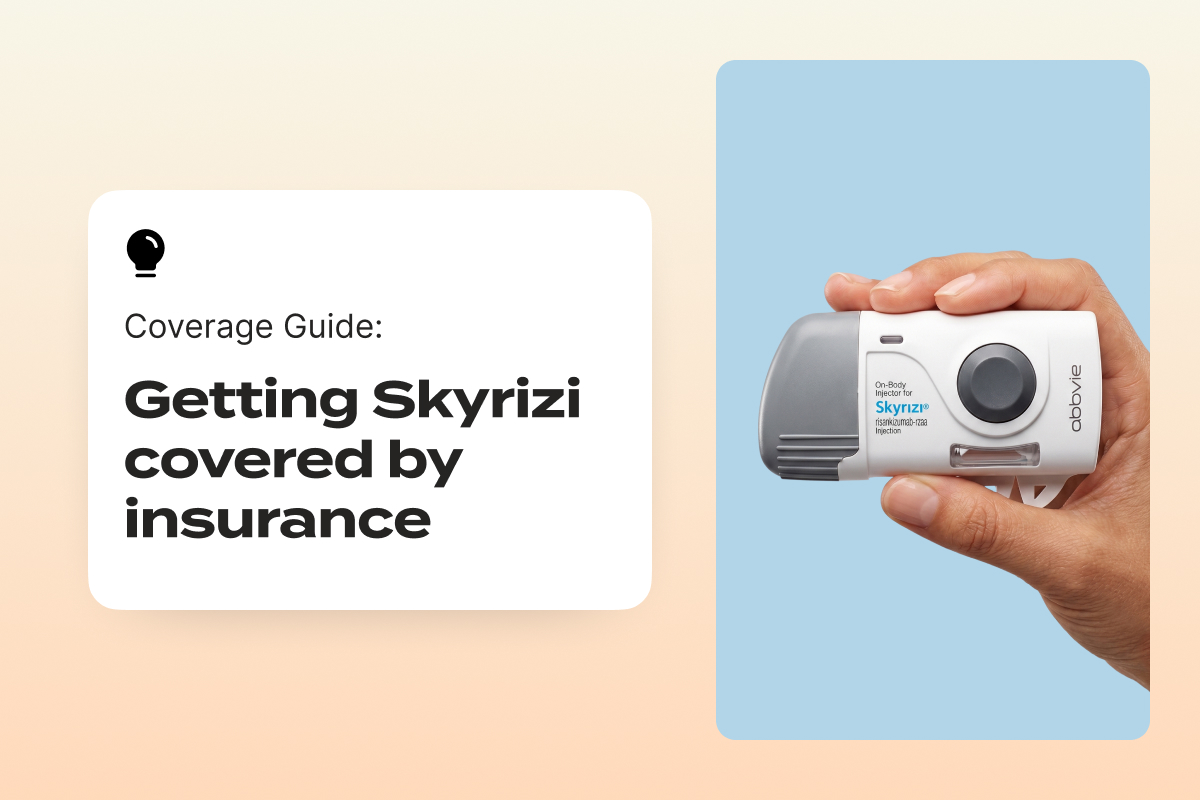
Your doctor prescribed Skyrizi because it’s the right treatment for your condition. Your insurer denied it. And in a growing number of cases, the reason has little to do with whether you actually need the drug. It has to do with money: a cheaper, older competitor recently became available, and some insurers would rather you take that one.
Skyrizi (risankizumab) is a targeted biologic. It blocks a specific protein, called IL-23, that drives inflammation in autoimmune disease. That targeting is what sets it apart from an older drug, Stelara, which blocks IL-23 along with a second protein, IL-12. Because Skyrizi leaves IL-12 alone, it works more narrowly. In studies that compared the two head-to-head for psoriasis, Skyrizi cleared skin better, and it carries no boxed warning (the FDA’s most serious safety label). It’s approved for four conditions across two specialties: plaque psoriasis, psoriatic arthritis, Crohn’s disease, and ulcerative colitis.
None of that stopped insurers from putting it behind some of the toughest coverage barriers in specialty pharmacy. Stelara now comes in cheaper “biosimilar” versions (near-identical copies that arrive once a brand-name drug loses patent protection), and because they treat the same conditions, some plans would rather you take the older, less targeted drug than the one your doctor chose. Some plans have dropped Skyrizi from their covered drug list entirely, or placed it somewhere that makes it harder to get. Others will only consider it after you’ve tried and failed other drugs first, like a TNF blocker or a version of ustekinumab.
Here’s the part insurers count on you not knowing: these denials can be overturned. Fewer than 1% of denied claims are ever appealed, which is exactly how the system is designed to work. We see this every day at Claimable, where our appeals succeed more than 80% of the time in established conditions.
Skyrizi denials aren’t all the same. What you’re up against depends on your diagnosis, how you take the drug, and the specific barrier your plan put up. A psoriasis patient whose plan prefers Stelara is in a different fight than a Crohn’s patient denied at the infusion stage. This guide walks through each kind and what to do about it.
Why Insurance Companies Deny Skyrizi
The reason on your denial letter shapes everything about how you respond. It tells you what to gather, which argument to lead with, and whether a quick fix might solve it before you even need a formal appeal.
Why Skyrizi denials come in different forms
Skyrizi treats four conditions, and how you take it depends on which one you have.
For psoriasis and psoriatic arthritis, it’s an injection under the skin. You get two starter doses four weeks apart, then one every 12 weeks after that.
For Crohn’s disease and ulcerative colitis, you start differently. The first three doses are IV infusions, given at weeks 0, 4, and 8, to get the drug working. After that, you switch to an injection under the skin every 8 weeks, starting at week 12.
That split matters for one reason: the infusions and the injections are paid for by two different parts of your insurance. The infusions usually go through your medical benefit (the part that covers doctor visits and procedures), and the injections go through your pharmacy benefit (the part that covers prescriptions). So you can end up needing two separate approvals, and a denial at either stage can come down to a billing mix-up rather than whether you truly need the drug. It’s the same headache Entyvio patients run into.
There’s no generic or biosimilar version of Skyrizi. AbbVie is the only maker, and that isn’t expected to change soon. At roughly $23,800 per dose, it’s one of the most expensive specialty drugs on the market, which is why every major insurer scrutinizes it so hard.
The bigger pressure right now comes from competition. Stelara’s cheaper biosimilar copies give insurers a lower-cost option for the same conditions, and that price difference is driving a growing share of Skyrizi denials.
What we see across thousands of appeals
Denial letters are written to end the conversation. Here are the most common types, what they really mean, and your best first move.
“You have to try other drugs first” (step therapy)
Most insurers want you to have failed at least one TNF blocker before they’ll cover Skyrizi, no matter which condition you have. Some go further and require two failed biologics, or a trial of a ustekinumab product specifically. What counts varies by diagnosis:
Here’s the detail that changes outcomes: “failure” doesn’t only mean you tried a drug and it didn’t work. It also covers side effects, and it covers drugs your doctor has already ruled out as unsafe for you. If a required drug carries a real risk in your case, that counts as a failure even if you never took a single dose.
The argument that tends to win: the major dermatology guidelines (AAD/NPF) back IL-23 blockers like Skyrizi for moderate-to-severe psoriasis, and the 2025 gastroenterology guidelines (ACG) go a step further for Crohn’s. They specifically recommend risankizumab over ustekinumab for patients who’ve already been on a TNF blocker. Pointing to guidelines like these shows your doctor’s choice lines up with what the specialists recommend. When the insurer’s requirements demand more than the guidelines do, that gap is the heart of your appeal.
“Try a biosimilar instead”
This denial is a direct result of those cheaper ustekinumab copies hitting the market. Because they cost the insurer less, some plans want you to try one - often Stelara - before they’ll approve Skyrizi, even though the two drugs aren’t the same.
Why that matters: Skyrizi and Stelara are not interchangeable. They work on different targets. Skyrizi blocks only IL-23, while Stelara blocks both IL-23 and IL-12. That difference, plus the head-to-head psoriasis data where Skyrizi came out ahead, makes it a genuinely different drug, not a brand-name stand-in for a cheaper copy.
The argument that wins depends on your history. If you’ve already tried a ustekinumab product and it didn’t work well enough, your appeal can point to that. If you haven’t tried it, but your doctor chose Skyrizi for specific clinical reasons (its more targeted action, the stronger data, something about your particular disease), that reasoning needs to be spelled out in your letter of medical necessity. The insurer is treating the two drugs as the same because they’re both in the IL-23 family. Your appeal’s job is to show they aren’t.
“Not medically necessary”
This one usually means the original request was too thin. A stronger resubmission should include your diagnosis with its billing codes, your disease severity backed by objective measures (PASI and BSA for psoriasis, joint counts for psoriatic arthritis, CDAI for Crohn’s, partial Mayo for ulcerative colitis), a full list of what you’ve tried before with dates and why each was stopped, and your doctor’s reasoning for choosing Skyrizi. If the first request went in bare, a thorough resubmission often clears it up without a formal appeal.
“Not on the covered drug list” (formulary exclusion)
If your plan doesn’t cover Skyrizi at all, your main path is a formulary exception with medical necessity documentation. Which drugs a plan covers changes by plan and by year, so check your plan’s current drug list before you build your case.
Then document why the alternatives the plan does cover (TNF blockers, a ustekinumab copy, other IL-23 or IL-17 drugs) aren’t right for you, either because you’ve already tried and failed them or because something about your situation makes Skyrizi the better choice.
“Infusion denied” (Crohn’s and ulcerative colitis)
Crohn’s patients start Skyrizi with three IV infusions of 600 mg, at weeks 0, 4, and 8. Ulcerative colitis patients get the same three-infusion schedule at a higher dose, 1,200 mg. These infusions go through your medical benefit. The at-home injections that follow go through your pharmacy benefit.
Denials at the infusion stage usually trace back to paperwork: the request went through the wrong benefit, or the billing codes were wrong. Before you build a formal appeal, confirm the infusion request was filed under the medical benefit with the right codes.
“You have to use our pharmacy”
Skyrizi is only dispensed through specialty pharmacies. If your plan requires a specific one and you tried to fill it somewhere else, this denial has nothing to do with whether you should be on the drug. Find out which pharmacy your plan wants and have your doctor send the prescription there.
How to Appeal a Skyrizi Denial, Step by Step
Step 0: Rule out a paperwork problem first. Before you build a full appeal, check for a simple error. A lot of Skyrizi denials come down to wrong billing codes, or a request sent through the wrong part of your insurance. For Crohn’s and ulcerative colitis especially, make sure the infusions were billed to your medical benefit and the injections to your pharmacy benefit. Fixing a coding mistake and resubmitting can clear the denial without a full appeal.
Step 1: Find your deadline. Most commercial plans give you 180 days. UnitedHealthcare limits many plans to 65 days. Medicare Advantage plans give you 60. Miss the deadline and you lose the right to appeal, so this is the first thing to pin down.
Step 2: Use both tracks. Your doctor can file a clinical appeal (resubmitting the request, writing a letter of medical necessity, asking for a doctor-to-doctor review). You can file your own appeal separately. These run in parallel and strengthen each other, and your own appeal comes with guaranteed response times and the right to an outside review. File both.
Step 3: Check your paperwork. Confirm your billing codes, your severity scores, and your treatment history (with dates, doses, and why each earlier drug was stopped). For Crohn’s and ulcerative colitis, double-check that the infusions were filed under the medical benefit.
Step 4: Get a letter of medical necessity. This is one of the most important documents in your appeal. It should cover your diagnosis, your severity scores, your full treatment history, and your doctor’s reasons for choosing Skyrizi, written to answer the insurer’s specific denial reason. You can ask your doctor directly: “I need a letter of medical necessity for my Skyrizi appeal. Can you include my diagnosis, my severity scores, my treatment history, and why you chose Skyrizi over the drugs the insurer is asking me to try?”
Step 5: Build the package. A complete appeal has a cover letter, the letter of medical necessity, your supporting medical records, and your personal statement. Build it around three things: your story (how your condition affects your daily life and what getting the right treatment would change), the clinical evidence (the guidelines that back your treatment), and the policy and legal side (how your case meets the plan’s own rules, plus your protections under the ACA and any state step therapy laws).
Step 6: Submit and track. Send it the way your denial letter tells you to. Insurers have to respond within 30 days for a standard appeal, or 72 hours if it’s urgent. Keep a copy of everything.
Step 7: Escalate if you’re denied again. You have the right to an outside review by an independent third party, and in most states their decision is binding. You can also file a complaint with your state insurance department, and depending on your plan, you may have further options under federal law or your state’s step therapy laws.
An Easier Way: Let Claimable Handle Your Skyrizi Appeal
If all of this is more than you can take on, or you’ve already been denied once and want a stronger approach, Claimable can take it from here.
Here’s how it works. You answer a few questions about your denial and your medical history. We build a custom appeal using our database of millions of clinical studies, insurer policies, and legal standards. It includes your personal story, the clinical evidence that fits your condition and your denial, and an analysis aimed squarely at your insurer’s reasoning. We submit it to your insurer, and if you need to escalate, we guide you through that too.
Because we handle so many biologic appeals, we know which plans push a ustekinumab copy, which ones respond to step therapy exception requests, and which escalation paths actually work.
Appealing with Claimable costs $39.95. No success fees, no hidden costs. When Skyrizi runs around $23,800 a dose and going untreated can mean permanent joint damage, severe flares, or surgery, the cost of not appealing is a lot higher.
How Long Does a Skyrizi Appeal Take?
Complete appeals move faster. The average Claimable appeal gets a response in about 10 days.
FAQs
Why was my Skyrizi denied when my doctor prescribed it?
Almost every insurer requires prior authorization for Skyrizi, and their rules often go beyond what a normal prescription involves: making you try other drugs first, hitting certain severity thresholds, using a specific pharmacy. Your doctor made the medical call. The insurer is layering its own cost rules on top.
Can I appeal a Skyrizi denial myself?
Yes. Your appeal runs on a separate track from your doctor’s, with guaranteed response times, the right to an outside review, and several levels of internal appeal. Your appeal and your doctor’s work in parallel and strengthen each other.
My insurer wants me to try a Stelara biosimilar instead. Are they the same drug?
No. They work on different targets and have different data behind them. Stelara blocks both IL-23 and IL-12; Skyrizi blocks only IL-23. In head-to-head psoriasis studies, Skyrizi cleared skin better. If your insurer is treating them as equals, your appeal should spell out the difference and your doctor’s reason for choosing Skyrizi.
Is there a generic or biosimilar version of Skyrizi?
No. AbbVie is the only maker, and no copy is expected soon. Skyrizi is dispensed only through specialty pharmacies.
How much does Skyrizi cost without insurance?
The list price is about $23,838 per dose as of January 2026. For psoriasis and psoriatic arthritis, at four to five doses a year, that’s over $90,000 annually. If cost is a barrier, AbbVie’s Skyrizi Complete Savings Card can bring it down to as little as $0 a dose for people with eligible commercial insurance, and its myAbbVie Assist program may provide the drug free for people who qualify. What you’ll pay depends on your coverage, so check the details for your situation.
How is the dosing different for psoriasis versus Crohn’s or ulcerative colitis?
For psoriasis and psoriatic arthritis, Skyrizi is a 150 mg injection under the skin at weeks 0 and 4, then every 12 weeks. For Crohn’s, you start with three 600 mg IV infusions (weeks 0, 4, and 8). For ulcerative colitis, the infusions are the same schedule at a higher dose, 1,200 mg. After the infusions, both Crohn’s and ulcerative colitis patients switch to a 180 mg or 360 mg injection under the skin, starting at week 12 and every 8 weeks after that. The infusions are billed to your medical benefit, the injections to your pharmacy benefit.
Is it worth appealing a Skyrizi denial?
Almost always. Skyrizi is usually prescribed when your situation calls for a targeted drug, and for many people that means they’ve already tried other treatments. Left untreated, psoriatic disease can cause permanent joint damage, inflammatory bowel disease can lead to surgery, and gaps in biologic treatment risk flares and loss of response. The appeals process exists for exactly this: when a coverage decision doesn’t match your medical reality. Your doctor prescribed Skyrizi because the evidence supports it. An appeal forces the insurer to answer that evidence on the record.
Claimable’s physician-led team has helped patients recover over $30 million in care access by fighting insurance denials. We’re SOC 2 Type II certified and HIPAA compliant. Learn more about how Claimable works →

Otezla offers people with psoriatic disease a treatment that skips the injections, the infusions, the regular bloodwork, and the effect on the immune system that comes with biologic therapy. It's an oral pill you pick up at the pharmacy and take at home. For many people living with plaque psoriasis or psoriatic arthritis, that's exactly the kind of treatment they're looking for. Which is what makes a denial so frustrating: your doctor found a treatment that fits your life, and your insurer won't pay for it.
Otezla (apremilast) has been on the market since 2014 as the first oral PDE4 inhibitor approved for psoriatic disease. It works differently from the other targeted treatments for these conditions, which is part of why doctors reach for it when a patient can't tolerate biologics, when a biologic isn't safe for them, or when they simply do better with a daily tablet than a weekly or monthly injection.
Even so, insurers can put roadblocks in front of Otezla. Almost every plan requires what's called prior authorization, meaning your insurer won't pay until your doctor submits paperwork justifying the prescription and the plan signs off. Many plans also place Otezla in a high-cost category on their list of covered drugs (their “formulary”), which can mean a larger copay and extra requirements before they'll approve it. On top of that, Otezla is one of the most consistently denied non-biologic medications in dermatology and rheumatology.
The encouraging part is that appeals work. Fewer than 1% of denied claims are ever appealed, but a meaningful share of the ones that are get overturned. When patients come back with solid clinical evidence and the right strategy, the numbers shift in their favor. We see this every day at Claimable, where our appeals succeed over 80% of the time in established conditions.
Otezla denials don't all look alike, and that matters more than it might seem. A patient denied because they haven't tried methotrexate is in a completely different situation than one denied because the insurer wants them on a biologic first, or one denied a starter pack because the dosing schedule confused an automated system. The appeal that wins one of these would barely move the needle on another. This guide walks through each major denial type and how to push back.
Why Insurance Companies Deny Otezla Coverage
Before you respond to a denial, you need to know exactly which denial you're dealing with. The evidence you'll need, the argument most likely to succeed, and the next step you should take all depend on the specific reason your insurer gave. A generic appeal that doesn't speak to your actual denial reason wastes time and burns through your limited appeal opportunities.
What Makes Otezla Denials Different
A few things about Otezla shape how it gets denied in ways that don't apply to most medications.
It's an oral drug that's priced like a specialty one, which insurers handle awkwardly. Otezla is a daily tablet, but it costs roughly $5,000 to $6,800 per month, so plans treat it like the injectable and infused drugs that carry the heaviest restrictions, and they apply more hurdles than a typical pill prescription faces.
There's no generic version available. The FDA has approved generic apremilast applications, but patent disputes have blocked them from actually launching until approximately 2028 or 2029. Brand Otezla is the only option for now, which means a denial based on cost can't be solved by switching to a cheaper version of the same drug.
Otezla XR, the once-daily extended-release version, was approved in 2025 and is adding a new layer of confusion. Many plans haven't added Otezla XR to their list of covered drugs yet, and some require you to try standard Otezla first, even though both versions contain the same medication.
The starting schedule causes administrative problems. Otezla begins at a low dose and steps up over five days to reach the full dose on day six, dispensed in a starter pack that doesn't always fit a plan's automated limits on how much can be dispensed at once.
And step therapy rules vary by diagnosis. A patient with plaque psoriasis and a patient with psoriatic arthritis may both be denied for “step therapy required,” but the path to overturn each denial looks different.
The Most Common Otezla Denials, and What They Really Mean
Denial letters are written to sound final. They're not. Each of the most common Otezla denials points to a different first move:
Step Therapy Required
This is the most common Otezla denial and the one that creates the most confusion. Step therapy means your insurer wants proof that older, cheaper treatments didn't work for you before they'll pay for Otezla, even when your doctor has already decided those treatments aren't right for you.
It gets complicated because the requirement depends on your diagnosis and on where each insurer decides Otezla belongs in the treatment order. Some plans want you to try a conventional treatment first but not a biologic. Others want you to try a biologic first. A few want both. Here's what most major insurers expect:
Here's the detail that overturns more of these appeals than anything else: “failure” doesn't only mean a drug stopped working. If a required drug caused side effects you couldn't tolerate, or isn't safe for you in the first place, that counts as failure under most plans' own rules. Methotrexate, for example, isn't safe during pregnancy and can affect the liver. If a required step therapy drug isn't safe or appropriate for you, your appeal needs to say so directly, with your doctor's reasoning to back it up.
You can also point to the medical guidelines that support Otezla for your condition. The American Academy of Dermatology and National Psoriasis Foundation recommend apremilast as an option for moderate-to-severe plaque psoriasis, and the major rheumatology guidelines recognize it for psoriatic arthritis. When your doctor's choice lines up with national guidelines, the insurer has to explain why its own internal rules don't.
One more thing worth knowing: if you've already tried and failed a biologic for psoriasis, most plans will accept that in place of stepping through the older treatments. You shouldn't have to go backward to a treatment you've already moved past.
Not Medically Necessary
This is one of the most overturned denials on appeal. Sometimes it means the original request was thin on detail; other times the insurer's reviewers applied their own criteria and decided your case didn't clearly meet them. Either way, a well-documented appeal is what turns it around.
A strong resubmission shows how serious your condition is, in concrete terms your insurer recognizes. For plaque psoriasis, that's a severity score and the percentage of your body affected. For psoriatic arthritis, it's a count of tender and swollen joints. It should also include your full treatment history, with the dates and the reason each prior treatment was stopped, plus a clear note from your doctor explaining why Otezla is the right next step for you specifically.
And if you've already been doing well on Otezla and your coverage was dropped, say so directly. If you're being moved off a treatment that's working, you can ask for a continuity of care exception, the argument that a stable patient shouldn't have effective treatment interrupted, and you can ask the plan to keep covering it while your appeal is pending so there's no gap in care.
Quantity Limit or Starter Pack Issue
Otezla starts at a low dose and steps up to the full dose over the first six days, packaged as a 27-tablet starter pack. Most plans set their dispensing limits around the standard daily dose, and the starter pack doesn't always fit neatly into those automated systems.
When you see this denial, the problem is almost always paperwork, not your eligibility for the drug. Call your doctor's office or your specialty pharmacy and ask them to resubmit with the FDA-approved starting schedule and a request to override the dispensing limit. This is one of the few Otezla denials that's usually sorted out with a phone call and a corrected request rather than a full appeal, often within a few days.
If the starter pack keeps getting denied even after that, it's time to appeal. The starting schedule is part of Otezla's official FDA instructions, not an off-label use, and a plan can't refuse to cover the dosing the drug's own label calls for. That's a strong, clean argument to put in front of a reviewer.
Otezla XR Not Covered
This denial didn't exist before 2025. Otezla XR is a once-daily tablet with the same medication and the same uses as standard Otezla, designed to make dosing easier for people who have trouble with a twice-daily schedule.
The problem is that many plans haven't added Otezla XR to their covered drug list yet, and others want you to fail on standard Otezla first before they'll approve it. That second approach is hard to defend, since it's the same medication either way.
The argument that works: request an exception and explain why once-daily dosing matters for you, including any history of missed doses or side effects that ease up with the extended-release version. If you're already doing well on Otezla XR and the plan is trying to switch you back, document that and frame it as keeping you on a treatment that's working, not starting something new.
Specialty Pharmacy Restriction
Because of how it's categorized, Otezla usually has to be filled through a specific specialty pharmacy your plan works with. If you try to fill it at your local pharmacy, you'll get a denial that has nothing to do with whether you should be on Otezla at all.
The fix is to find out which specialty pharmacy your plan requires and have your doctor send the prescription there. If that pharmacy creates a real problem, like long shipping delays or an access issue where you live, you can request permission to fill it somewhere else. In most cases, though, switching to the in-network specialty pharmacy is the fastest way to get the medication in hand.
Severity Threshold Not Met
For plaque psoriasis especially, some plans require your condition to reach a certain level of severity before they'll approve Otezla, often measured by how much of your body is affected or by a standard severity score. Some plans also count psoriasis in high-impact areas like the face, scalp, hands, feet, or genitals.
Your appeal needs updated severity documentation from your dermatologist or rheumatologist. If your psoriasis falls below the plan's threshold but affects those high-impact areas, say so directly. Plans usually recognize that psoriasis on the face, hands, feet, or genital area qualifies for systemic treatment even when the total body coverage is small, because of how much it affects daily life.
How to Appeal an Otezla Denial (Step by Step)
Appeals overturn denials more often than most patients expect. Insurance companies built their business model on the assumption that you won't fight back, and most of the time they're right, because most denied claims are never challenged. The patients who do appeal, with the right documentation and a clear strategy, see overturn rates that change the math entirely.
One thing to know before you start: your doctor's office can also file an appeal on the clinical side, and many do. It's worth asking yours directly whether they're submitting one, because it doesn't always happen automatically, and your appeal and theirs can reinforce each other. But you don't have to wait on them. The steps below walk you through filing your own.
Step 1: Read the Denial Letter and Find Your Deadline
Federal law requires your denial letter to state the specific reason for the denial, your right to appeal, and the deadline to file. Find the deadline first, because everything else depends on it.
Most commercial plans give you 180 days from the date of the denial to file an internal appeal. UnitedHealthcare is a major exception, with a 65-day window for many of its commercial plans. Medicare Advantage and Medicare Part D plans follow Medicare's own, shorter timelines. If you miss the deadline, the appeal rights you'd otherwise have effectively disappear, so move quickly.
Step 2: Confirm Your Documentation Is in Order
Before you submit, check the basics. Is your diagnosis coded correctly for your specific condition? Has your doctor documented how serious it is, in measurable terms? Are your prior treatments listed with dates and the specific reason each one was stopped?
For plaque psoriasis, that means a severity score, the percentage of your body affected, and notes on which areas are involved. For psoriatic arthritis, it means a count of tender and swollen joints and any relevant lab values. The stronger and more specific this information is, the harder the denial is to defend.
Step 3: Get a Strong Letter of Medical Necessity
The letter of medical necessity from your prescribing doctor is the centerpiece of any successful Otezla appeal. A complete letter should include your diagnosis and current severity; your full treatment history with the specific reason each prior treatment was stopped (it didn't work, the side effects were too much, it wasn't safe for you, or another clinical reason); and a clear explanation of why Otezla is the right treatment, written to answer the insurer's specific denial reason. For an Otezla XR appeal, it should explain why once-daily dosing matters for you. For a severity denial, it should describe the real-world impact even when your body-coverage number is low.
Be specific when you ask. Something like: “My Otezla was denied. Would you be willing to write a letter of medical necessity for my appeal? I can share what the insurer is looking for so we can address it directly.” Most doctors will write the letter. The hold-up is usually time, not willingness.
Step 4: Build the Appeal Package
A complete Otezla appeal includes a cover letter, the letter of medical necessity, supporting medical records, and a personal statement from you about how the denial is affecting your health and your life. Build it in three parts.
Your story. The impact of untreated or undertreated psoriatic disease isn't theoretical. Plaque psoriasis affects sleep, intimacy, work, and social life. Psoriatic arthritis can disable people in their thirties and forties. Tell the reviewer what your daily life looks like with this condition and what it would look like with effective treatment.
The clinical evidence. Point to the national guidelines that support Otezla for your diagnosis, and match them to the insurer's specific reasoning.
The policy and legal side. Show how your situation meets your plan's own coverage rules. If the denial contradicts the plan's published policy, point that out specifically. You can also cite the patient protections that apply, including your right under the Affordable Care Act to appeal and to an independent outside review, plus any state laws that limit step therapy.
Step 5: Submit and Track Everything
Submit the appeal exactly as your denial letter instructs, whether that's by fax, mail, or online portal. Your insurer has to respond within 30 days for a standard appeal, or 72 hours for an urgent appeal when a delay would seriously endanger your health.
Keep records of everything: fax confirmations, certified mail receipts, screenshots from the online portal, the names and direct numbers of anyone you speak with, and the date of every contact. If a deadline passes without a response, you have grounds to escalate.
Step 6: Escalate If the First Appeal Is Denied
A denied internal appeal isn't the end of the line. You have the right to an external review, where an independent reviewer with no financial ties to your insurer looks at your case. These reviewers focus on the medical justification for treatment, they overturn denials at meaningful rates, and in most states their decision is binding on the insurer.
Other options include filing a complaint with your state's insurance department, additional remedies under federal law if your plan comes through an employer, and state step therapy protections where they apply.
The system is designed to wear patients down, so persistence is part of the strategy. Each level of appeal brings a fresh reviewer to your case, and the patients who keep pushing are the ones who tend to get coverage.
Appeal Timelines: How Long Does an Otezla Appeal Take?
The biggest factor in how fast your appeal moves is how complete it is when you send it. An appeal that arrives with everything in one package, the letter of medical necessity, your records, and your personal statement, moves through review faster than one that triggers follow-up requests for missing documents. The average Claimable appeal gets a response in just 10 days.
FAQs
Why did my insurance deny Otezla when my doctor prescribed it?
A prescription and an approval are two separate things. Almost every plan requires prior authorization for Otezla, meaning your doctor has to submit paperwork and the insurer has to sign off before it's covered. Those requirements often include step therapy, severity thresholds, and a specific pharmacy you have to use. Your doctor made the medical decision; the insurer is applying its own coverage rules on top of it.
Can I appeal an Otezla denial myself?
Yes. As the patient, you have your own right to appeal, separate from anything your doctor's office is doing. Your appeal comes with guaranteed response times, the right to an independent outside review, and more than one level of internal review. If your doctor's prior authorization was denied, your appeal is an additional shot at coverage, not a repeat of theirs.
What if my insurer requires me to try methotrexate or cyclosporine first?
You can challenge that when the required medication isn't right for you. Methotrexate isn't safe in pregnancy and can affect the liver; cyclosporine can raise blood pressure and affect the kidneys. If your doctor has clinical reasons that a required drug isn't safe or appropriate for you, spell that out in your appeal. Many plans also accept a biologic that didn't work in place of stepping through the older drugs, so if you've already tried and stopped a biologic, your appeal can point to that.
Is there a generic version of Otezla?
Not yet. The FDA has approved generic apremilast, but patent disputes have delayed the actual launch until approximately 2028 to 2029. Until then, brand Otezla is the only option available in the United States.
What's the difference between Otezla and Otezla XR?
Both contain the same medication (apremilast) and treat the same conditions. Standard Otezla is taken twice a day after a five-day starting schedule. Otezla XR is taken once a day, with no starting schedule needed. Otezla XR was approved in 2025 and may be easier for people who struggle with twice-daily dosing, but many plans haven't added it to their covered drug lists yet.
My insurer denied my Otezla starter pack. What can I do?
This is almost always a paperwork issue rather than a medical one. The starter pack contains 27 tablets dispensed over the first five days, and automated systems sometimes flag it as more than the plan normally allows. Give your doctor's office or specialty pharmacy a call and ask them to resubmit with the FDA-approved starting schedule and a request to override the limit, which usually clears it up within a few days. If it's still denied after that, you can appeal, and the fact that the starting schedule is part of Otezla's FDA label makes for a strong argument.
How much does Otezla cost without insurance?
Otezla typically costs $5,000 to $6,800 per month without insurance. Amgen offers a copay program for people with commercial insurance that can lower out-of-pocket costs significantly, sometimes to $0 per fill, and a Bridge to Commercial Coverage program that can provide Otezla at no cost for up to 12 fills while you're waiting on prior authorization. People without commercial insurance may qualify for the Amgen Safety Net Foundation, which provides the medication at no cost to those who are eligible.
Is it worth appealing an Otezla denial?
Almost always. Left untreated, psoriatic arthritis can cause permanent joint damage, and plaque psoriasis can mean severe flares that affect work and sleep. Most denied claims are never challenged, because the process is confusing and time-consuming, but the patients who do appeal with the right documentation see overturn rates that make it well worth the effort. Your doctor prescribed Otezla because the medical case for it exists. The appeal puts that case in front of someone who actually has to evaluate it.
Claimable's physician-led team has helped patients recover over $30 million in care access by fighting insurance denials. We're SOC 2 Type II certified and HIPAA compliant.

If your insurer denied coverage for Xeljanz, you're not alone, and the denial is worth fighting. Your doctor prescribed Xeljanz because other treatments hadn't worked well enough for you. Being told your insurance won't cover it, after you've already tried and failed other options, is exhausting and unfair.
Xeljanz (tofacitinib) was the first oral JAK inhibitor approved in the United States. It treats rheumatoid arthritis, ulcerative colitis, psoriatic arthritis, ankylosing spondylitis, and juvenile idiopathic arthritis, and for patients who can't tolerate injections and infusions or have run out of other options, it's hard to replace. It does carry an FDA boxed warning about certain serious risks, which some insurers use as a reason to add extra hurdles, even when you and your doctor have already weighed those risks together.
Here's the good news: appeals work. Fewer than 1% of denied claims are ever appealed, and insurers count on that. But patients who push back with the right documentation see real results. At Claimable, over 80% of our appeals in established conditions are approved.
Xeljanz denials come in a few different forms, and the strategy that overturns one won't always work on another. Being denied because your insurer wants more proof you failed earlier treatments is a different situation than being pushed toward generic tofacitinib, or being denied over the boxed warning. This guide walks through each type and how to respond.
Why Insurance Companies Deny Xeljanz Coverage
The arguments that win, the evidence you'll need, and the escalation path that makes sense all come down to the specific reason your insurer gave. A generic response that doesn't address your actual denial reason can waste your limited appeal opportunities.
The Most Common Xeljanz Denials, and What They Really Mean
Denial letters are written to sound like a settled conclusion. They're not. Each of the most common denial types points to a clear first move:
Common Xeljanz denial types: what the letter says, what it means, and the best first move for each.
Step Therapy and TNF Failure Documentation
This is the most common Xeljanz denial, and also the most circular. The insurer's reviewers want to see your prior treatment failures documented in a particular way, and if the original request didn't include the level of detail they expect, you can get denied even though you've already met the requirement.
What insurers typically require to document prior treatment failure for Xeljanz:
Here's the detail that matters most: a prior treatment “failure” has to be documented with specifics, not just stated. That means the dates you were on each treatment, how long, the dose, and the specific reason it was stopped (it didn't work at the right dose, the side effects were too much, or it wasn't safe for you). A request that just says “patient failed Humira,” with no dates, dose, or reason, is the most predictable way to land this denial.
You can also point to the national guidelines that support tofacitinib for your condition. For rheumatoid arthritis, the 2021 American College of Rheumatology guidelines recommend adding a biologic or a JAK inhibitor like Xeljanz when methotrexate alone isn't enough. For ulcerative colitis, the 2025 American College of Gastroenterology guidelines recommend JAK inhibitors including tofacitinib for moderate-to-severe disease. When your doctor's choice lines up with national guidelines, the insurer has to justify why its own rules don't.
Not Medically Necessary
A “not medically necessary” denial is one of the most common ones we see, and one of the most worth challenging. Sometimes it reflects a request that didn't spell out the clinical picture; other times a reviewer applied the plan's own criteria and decided your case didn't clearly meet them. Your appeal is where you make the full case either way.
Your appeal is where you make that case in full. The strongest ones include your diagnosis with current codes; a measure of how active your disease is, using the standard scores doctors use for your condition; a complete treatment history with dates, doses, and the reason each prior treatment was stopped; and a clear explanation connecting how serious your condition is and what you've already tried to why Xeljanz is the right choice. And if you've already been on Xeljanz and it's been working, say so plainly. Many plans' own rules approve continued coverage when a patient is stable or improving on a treatment, so showing that you've gotten better and stayed better on Xeljanz can meet the insurer's standard directly. Laid out that way, a denial that called your treatment “not medically necessary” becomes much harder for the insurer to defend.
Safety-Based or JAK Class Restriction
This denial didn't exist before 2021. After the ORAL Surveillance trial, the FDA required a boxed warning on all JAK inhibitors (Xeljanz, Rinvoq, Olumiant) about increased risks of serious heart problems, cancer, blood clots, and death. Some insurers responded by adding safety requirements of their own: asking for a heart-risk assessment, limiting approval to patients under a certain age, or restricting coverage based on specific risk factors.
Sometimes the requirement is reasonable. The trial found real risks, especially for rheumatoid arthritis patients over 50 who have at least one heart-disease risk factor. If your insurer wants documentation that your doctor weighed your heart risk and decided the benefit is worth it, that's usually something your doctor can provide from your chart.
Other times it's worth pushing back. If the insurer is applying a blanket JAK restriction that goes further than the FDA label requires, or denying Xeljanz for a group the trial didn't actually study (younger patients, patients without heart-risk factors, or ulcerative colitis patients, since the trial was done in RA patients), your appeal should point that out. The FDA didn't pull Xeljanz from the market. It added a warning and narrowed who it's labeled for. If you fit the labeled use and your doctor has weighed the risks, the insurer's extra restrictions need their own medical justification.
Generic Substitution Required
This denial type is emerging in 2026 as generic tofacitinib reaches the market. Generic immediate-release tofacitinib (5 mg and 10 mg) received FDA approval in 2025, and broader availability is expected through 2026. Some plans are now requiring patients to use generic tofacitinib before they'll cover brand Xeljanz.
Sometimes the switch is straightforward. If you're on immediate-release Xeljanz and your plan now offers generic tofacitinib at a lower tier or copay, switching may work just as well for you and cost less. Generic drugs contain the same active ingredient at the same dose and meet the same FDA standards for how the drug behaves in your body.
When it's worth appealing: if you've been stable on brand Xeljanz and have a clinical reason to stay on it (a specific tolerability profile, a bad experience with a generic version before, or concerns about switching a controlled autoimmune condition to a new manufacturer), document those reasons and request an exception. And if you're on Xeljanz XR and the plan is requiring generic immediate-release as a substitute, that's a different formulation with a different dosing schedule, not a direct generic swap.
Xeljanz XR Not Covered
Some plans cover immediate-release tofacitinib but haven't added Xeljanz XR (taken once daily) to their covered drug lists, or they require a trial of twice-daily dosing before approving the extended-release version.
The argument that works: if once-daily dosing improves your ability to stay on schedule, reduces side effects (some patients tolerate XR better because of how the drug is released), or fits your routine in a way the twice-daily version doesn't, those are clinical reasons that support an exception. If you're already stable on Xeljanz XR, frame the appeal around staying on a treatment that's working rather than starting something new.
Worth knowing: a generic version of Xeljanz XR isn't widely available yet, so this denial may stick around even as generic immediate-release tofacitinib enters the market.
Diagnosis Not Covered or Off-Label
Occasionally a denial traces back to a mismatch between the diagnosis codes that were submitted and the insurer's approved uses for tofacitinib. This can happen when billing codes are outdated, when the request doesn't specify the exact condition, or, in rare cases, when the drug is being used for something that isn't in the FDA-approved label.
The fix is to verify that your diagnosis codes are current and that the request clearly connects your condition to one of the five FDA-approved uses of tofacitinib. If it's a coding error, ask your doctor's office to correct it and resubmit, which usually takes care of it.
How to Appeal a Xeljanz Denial (Step by Step)
Most patients never challenge a denied claim, and insurers have built their coverage model around that. The patients who do fight back, with clear evidence and a structured approach, see overturn rates that should give everyone else pause about walking away from a denial.
One thing to know before you start: your doctor's office can also appeal on the clinical side, and many do. It's worth asking yours directly whether they're submitting one, since it doesn't always happen automatically, and your appeal and theirs can reinforce each other. But you don't have to wait on them. The steps below walk you through filing your own.
Step 1: Identify Your Deadline
Your denial letter has to state the specific reason for the denial, your right to appeal, and the deadline to file. Find the deadline immediately. Most commercial plans allow 180 days, but UnitedHealthcare limits many of its commercial plans to 65 days, and Medicare Part D plans follow Medicare's own timelines. A strong case filed even one day late has no standing, so treat the deadline as your first task.
Step 2: Verify Your Documentation
Before you put the appeal together, confirm the basics. Are your diagnosis codes correct for your condition? Is your prior treatment history documented with dates, doses, durations, and the reason each was stopped? For Xeljanz specifically, if your plan requires a heart-risk assessment, is that in your records?
Make sure your doctor has documented how active your disease is, using the standard measures for your condition. The appeal is only as strong as the medical record behind it.
Step 3: Get a Letter of Medical Necessity
The letter of medical necessity is the foundation of the appeal. For Xeljanz, it should include your diagnosis and current disease activity; your full treatment history with what happened on each prior treatment and why it was stopped; and a clear explanation of why tofacitinib is the right choice, written to answer the insurer's specific denial reason. If the denial was safety-based, the letter should include your doctor's assessment of your heart and other risks and why the benefit outweighs them for you. If it was about using the generic, the letter should explain why brand Xeljanz or the XR version is medically necessary for you.
Be direct when you ask. Something like: “My Xeljanz was denied and I need a letter of medical necessity for the appeal. I can share exactly what the insurer is asking for so we can address it.” Most doctors are willing. The hold-up is usually time, not intent.
Step 4: Assemble the Appeal
A complete appeal brings together four things: a cover letter, the letter of medical necessity, supporting medical records (labs, imaging, scope reports, disease-activity assessments), and a personal statement from you about how the denial affects your daily life. Build it in three parts.
Your story. What does your condition look like day to day without good treatment? Rheumatoid arthritis that keeps you from opening jars or climbing stairs. Ulcerative colitis flares that keep you home. Psoriatic arthritis that makes it hard to work with your hands. Ankylosing spondylitis pain that wakes you at 3 AM. The reviewer reads dozens of cases; your statement is what turns a file into a person.
The clinical evidence. Point to the national guidelines that support tofacitinib for your condition, and match them to the insurer's stated reason for the denial.
The policy and legal side. Show that your situation meets the plan's own published rules. If the denial contradicts that policy, or ignores records you already sent, point it out specifically. You can also cite your right under the Affordable Care Act to appeal and to an independent outside review, plus any state step therapy laws that apply.
Step 5: Submit and Track
Follow the submission instructions in your denial letter exactly. Your insurer has to respond within 30 days for a standard appeal, or 72 hours for an urgent one when a delay would seriously endanger your health. If you're in an active flare or your disease is progressing fast, an urgent appeal may be the right route.
Document every contact. Save fax confirmations, certified mail receipts, portal screenshots, and the names of anyone you speak with. If the insurer misses its deadline, that's grounds to escalate.
Step 6: Escalate If Denied Again
If your internal appeal is denied, you have the right to an external review by an independent reviewer who isn't connected to your insurer. They look at the medical merits of your case, and in most states their decision is binding on the insurer. For a JAK inhibitor denial, an outside reviewer may be more open to the careful risk-versus-benefit judgment your insurer's automated system missed.
Other options include filing a complaint with your state's insurance department, additional remedies under federal law if your plan comes through an employer, and state step therapy laws where they apply.
Each level of escalation puts your case in front of someone new. The patients who push past the first denial are the ones who tend to get coverage.
Appeal Timelines: How Long Does a Xeljanz Appeal Take?
Typical timelines for each stage of a Xeljanz appeal.
Complete submissions move faster. An appeal that arrives with the letter of medical necessity, your records, and your personal statement all in one package avoids having to resubmit with more complete documentation. The average Claimable appeal gets a response in just 10 days.
FAQs
Why was my Xeljanz denied when my doctor already tried other treatments first?
Because the insurer's step therapy requirements are separate from the FDA's prescribing rules. Even though the FDA label limits Xeljanz to patients who've failed prior treatments, your insurer has its own standards for what counts as an adequate trial, and the original request may not have included the level of detail the reviewer expected. The denial often reflects a documentation gap, not a real clinical disagreement.
Can I appeal a Xeljanz denial myself?
Yes. As the patient, you have your own right to appeal, separate from what your doctor's office handles on the clinical side, with its own protections: guaranteed response times, the right to an independent outside review, and more than one level of internal review. If your doctor's prior authorization was denied, your appeal is an independent chance to make the case.
Is Xeljanz safe? I heard about the boxed warning.
Xeljanz carries an FDA boxed warning based on the ORAL Surveillance trial, which found increased risks of heart problems, cancer, blood clots, and death compared to TNF inhibitors in rheumatoid arthritis patients over 50 with at least one heart-disease risk factor. The risks are real and should be part of the conversation between you and your doctor. That said, the FDA kept Xeljanz on the market because it remains an appropriate treatment for patients who've failed other options, as long as the risks are weighed against the benefits in each case. A blanket insurer denial isn't the same as a personal risk assessment by your physician.
Is there a generic version of Xeljanz?
Generic immediate-release tofacitinib (5 mg and 10 mg tablets) received FDA approval in 2025, and broader availability is expected throughout 2026. A generic version of Xeljanz XR (extended-release) isn't widely available yet. Even with generics entering the market, most plans are still expected to require prior authorization. If your plan is pushing you toward generic tofacitinib and you have a clinical reason to stay on brand Xeljanz, that can be appealed.
What's the difference between Xeljanz and Xeljanz XR?
Both contain tofacitinib. Xeljanz is the immediate-release version, taken twice a day. Xeljanz XR is the extended-release version, taken once a day. They treat the same conditions. Some patients tolerate XR better because of how gradually the drug is released, and once-daily dosing can make it easier to stay on schedule. Not all plans cover both versions, and generics are currently available only for the immediate-release tablets.
How much does Xeljanz cost without insurance?
Brand Xeljanz runs roughly $6,000 to $9,000 per month at retail, depending on the version and pharmacy. Pfizer offers a copay savings card for people with commercial insurance, a free trial voucher, and a patient assistance program for eligible uninsured or government-underinsured patients through XELSOURCE (1-844-935-5269). As generic tofacitinib becomes more available, pricing may shift, but specialty placement and prior authorization requirements are expected to remain.
Is it worth appealing a Xeljanz denial?
For most patients, yes. Xeljanz is usually prescribed after other options have already failed, which means there aren't many alternatives left. Interruptions in treatment for autoimmune conditions can trigger rheumatoid arthritis flares that speed up joint damage, ulcerative colitis episodes that can lead to hospitalization, and disease that gets harder to control the longer it goes untreated. This is exactly what the appeals process is for. A utilization system made a coverage decision that doesn't match your medical situation, and your doctor prescribed Xeljanz because the evidence supports it for you. The appeal puts that evidence in front of a reviewer who has to evaluate it on the merits.
Claimable's physician-led team has helped patients recover over $30 million in care access by fighting insurance denials. We're SOC 2 Type II certified and HIPAA compliant. Start your appeal today.
Let's get you covered.