Industry Insights
Learn about appeals, denials, and stay up to date on what is happening in the world of healthcare.
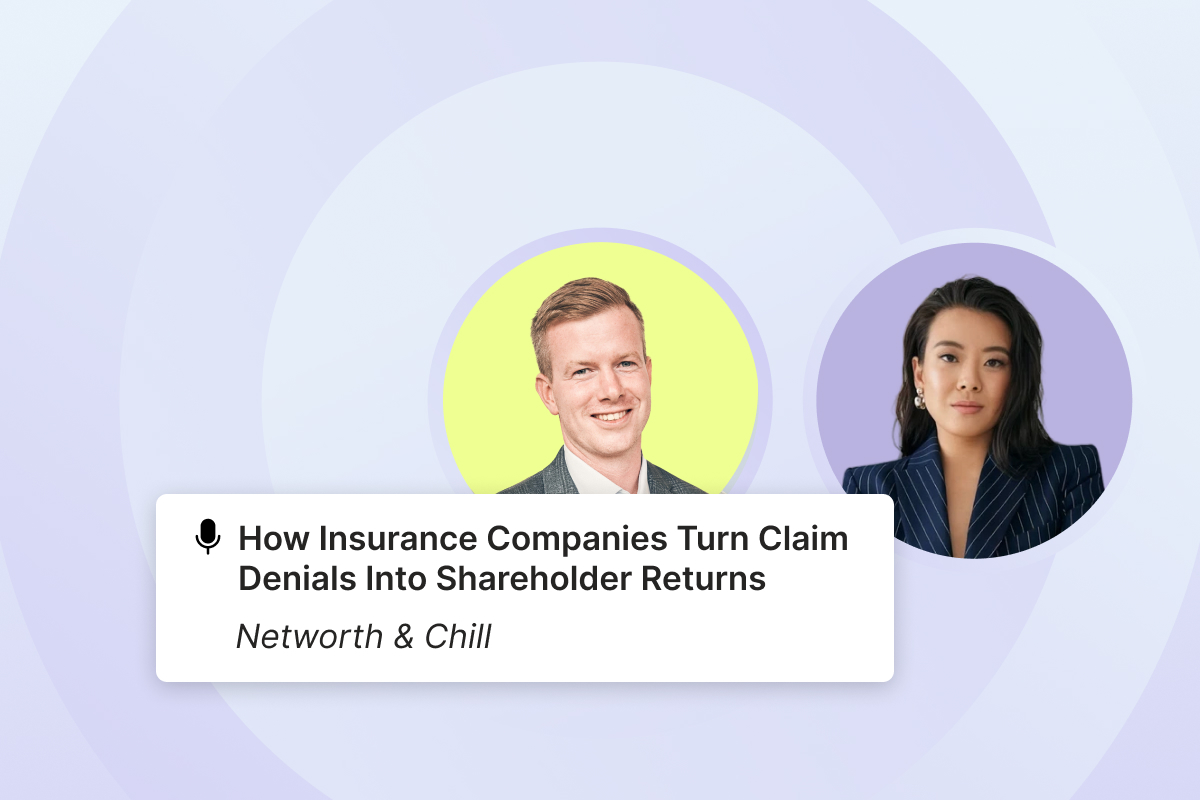
Zach Veigulis, co-founder and Chief AI Officer of Claimable, recently joined Vivian Tu — the former Wall Street trader millions know as Your Rich BFF — on her podcast Networth & Chill.
Vivian built her platform on the idea that money advice should be for everyone, in plain language. She reached out because a denied insurance claim is one of the most common financial shocks an American family can face, and most people have no idea how to fight back. The conversation covered a lot of ground. Here are the moments worth carrying with you.
The system is working exactly as designed
Health insurance began during the Great Depression as a billing arrangement: Baylor Hospital in Texas let Dallas teachers pay 50 cents a month for hospital care so the hospital could keep its doors open. Nearly a century later, roughly 5 billion claims are submitted each year across commercial and government insurance. Nearly 1 billion get denied and fewer than 1% of those denials are ever appealed. As Zach put it on the show, the insurer is betting you’ll walk away. The math keeps working in their favor for exactly as long as patients stay quiet.
A denial letter is an opening offer, not the last word
The letter is written to look final. It reads like a closed door. But patients who appeal win far more often than they lose — at Claimable, more than 80% of our appeals succeed. Zach walked Vivian’s audience through how to push back, and the steps are more straightforward than most people expect.
Start by reading your denial letter closely. Insurers are legally required to send one, and it has to spell out the reason for the denial, your appeal rights, and your deadline. Find that deadline immediately, because it drives everything that follows. Most commercial plans give you 180 days, though some windows are shorter. From there, file your internal appeal — and if your situation is urgent, request an expedited review, which can force a 72-hour response instead of the standard 30 days. If the internal appeal fails, request an external independent review. That reviewer doesn’t work for your insurer, which is a large part of why external reviews overturn denials more often than people realize.
The words that change the outcome
Zach also shared the specific language that gets an appeal evaluated correctly. If your drug isn’t on the formulary, ask for a “formulary exception.” If you’re being moved off a medication that’s already working for you, ask for a “continuity of care exception” so there’s no gap in coverage while your appeal is decided. The biggest mistake he sees is the generic appeal letter. Every denial gives a reason, and that reason tells you exactly which argument will beat it — a formulary exclusion demands a different response than a “not medically necessary” ruling, and treating them the same is how winnable appeals get lost.
What this looks like for a real patient
Zach told the story of a woman in her 50s, a stay-at-home parent who survived Stage IV melanoma and then developed severe inflammatory arthritis as a result of her cancer treatment. She couldn’t climb stairs or grip a steering wheel, and four board-certified specialists recommended the same drug to treat it. Her insurer denied it three times over nine months. Claimable prepared a 23-page appeal citing her doctors, the clinical guidelines, and the inconsistencies in the insurer’s own written policies, with copies sent to federal and state regulators. The denial was reversed in 48 hours — after nine months of fighting, it was over in two days, and the insurer issued a formal apology.
Where Claimable comes in
Most people don’t know they can appeal, and many who do don’t know how to do it correctly. Claimable exists for exactly those situations, where access to care can be genuinely life-or-death. Patients upload their denial letter, answer questions about their health story, and Claimable generates a customized appeal backed by clinical evidence and policy analysis. The whole process takes under 30 minutes, at a flat $39.95 per appeal with no success fee.
Our thanks to Vivian and the Networth & Chill team for making room for this conversation. The more people who know their rights, the faster that giving-up math stops working.
Watch the full episode on YouTube here.
Frequently asked questions
How long do I have to appeal an insurance denial?
Most commercial plans allow 180 days from the date of your denial for an internal appeal, but some windows are shorter, so check your denial letter for the exact deadline. Urgent situations may qualify for an expedited review with a much faster response.
What is an external independent review?
If your internal appeal is denied, you can request a review by an independent third party who doesn’t work for your insurer. Because the reviewer is independent, external reviews overturn denials at meaningful rates.
What’s a continuity of care exception?
It’s a request to keep you on a medication that’s already working while your appeal is decided, protecting you from a gap in coverage during a non-medical switch.
Do I have a better chance appealing myself?
Patients often have stronger legal protections and more review levels available than they realize, and appeal success rates rise sharply when the appeal is built around the specific reason for the denial and backed by clinical and policy evidence.

Over 70% of patients referred to Claimable complete and submit an appeal, with more than 80% submitted same day
SAN FRANCISCO — Claimable today announced the debut of its enterprise patient access platform, purpose-built for pharmaceutical manufacturers, health systems, and access partners, including specialty pharmacies and patient support hubs.
The AI-powered platform extends patient access programs beyond prior authorization, automating the appeal layer that sits between a patient's prescription and coverage for their needed therapy. By integrating directly into existing patient support programs and revenue cycle operations, Claimable addresses the growing denial problem without adding headcount or replacing existing systems.
The Denial Crisis
Denials are now the leading cause of treatment delays and patient dropout in specialty care. Denial rates are rising 25% year over year as payers increasingly leverage AI to automate claim reviews. The support infrastructure most manufacturers and health systems rely on was built for a different era. Call centers, manual workflows, overstretched clinical staff, disconnected case management: none of it was designed to keep pace with AI-powered denials. As a result, 99% of denials are never challenged, and 46% of patients abandon treatment after a denial, leaving medically necessary therapies out of reach for millions.
Platform Scale and Results
Claimable covers more than 85 commonly restricted treatments spanning asthma, obesity, diabetes, autoimmune disorders, and rare pediatric diseases. The enterprise platform is already live across 10 programs supporting treatments used by over one million patients nationwide, where initial denial rates can reach 70%.
"Insurers have figured out how to use AI to deny care at scale, while everyone else is left trying to fight back one appeal at a time," said Warris Bokhari, MD, CEO and Co-Founder of Claimable. "The asymmetry is stark — denials are automated, but appeals are not, and that breakdown puts lives at stake. Patients are left to make impossible choices: delay treatment, pay out of pocket for medications that can cost more than $1,000 per month — or walk away from care altogether. We built Claimable to restore that balance of power, using AI so appeals move as fast as denials do, at the scale the problem demands."
Most denied patients receive no appeal support at all, and those who do wait days or weeks for a provider to prepare and file. By contrast, Claimable scales appeal support to every denied patient, cutting the time between denial and treatment initiation. More than 70% of patients referred to Claimable complete and submit an appeal, with more than 80% submitted the same day.
Across established conditions, Claimable has achieved success rates exceeding 80%, with denials overturned in under 10 days on average. To date, the platform has recovered more than $30 million in previously denied care, reducing treatment delays, improving patient retention, and saving access and clinical teams hours of administrative work per appeal.
How It Works
The process begins with flexible intake, allowing patients to enter through direct links, support team referrals, or API-based integrations with existing workflows. A guided, self-service experience allows most patients to build a personalized appeal in under 30 minutes.
Claimable's AI appeal engine generates a case-specific appeal by combining three layers of evidence: the patient's personal health narrative, a curated library of clinical studies and guidelines, and laws and health plan policies. Each appeal is matched to the exact treatment, condition, insurer, and denial reason, producing millions of bespoke strategy combinations.
Enterprise Capabilities
The platform also provides enterprise teams with a set of operational tools to support patients throughout the appeals process:
Enterprise operations console: centralized management layer supporting referral submission, document upload, real-time case tracking, and outcome visibility with role-based access controls.
Program dashboard: aggregate, de-identified reporting to continuously optimize access strategies, including denial patterns and outcomes, conversion, and engagement analytics.
Access content suite: branded landing pages, advocacy resources, training guides, call scripts, and email templates, all built to medical-legal review and compliance standards.
Security and Compliance
Security, governance, and safety oversight are native to the platform, including HIPAA-compliant hosting, SOC 2 Type II certification, consent management, audit trails, and AI-powered pharmacovigilance workflows that monitor patient-reported responses against FDA adverse event data.
Each enterprise deployment is assigned a named appeal specialist available to review escalated cases and adjust appeal approaches as payer behavior changes.
To learn more about how Claimable supports pharmaceutical manufacturers and health systems, visit getclaimable.com/for-pharma and getclaimable.com/for-health-systems.
About Claimable
Claimable is an intelligent patient access platform that closes the gap between the care patients are prescribed and the coverage they receive by challenging insurance denials at scale. Leveraging purpose-built AI and automation, the platform analyzes clinical research, policy details, appeals data, and patients' unique medical histories to generate and submit customized appeals in minutes. Available nationwide, the platform supports denials from all insurance providers, including Medicare and Medicaid. Claimable has been recognized by Fierce Healthcare's Fierce 15, Fast Company's World Changing Ideas, and TIME100 Health for its leadership in patient access innovation. Backed by Quiet Capital, Next Level Ventures, Walkabout VC, Great Oaks, and others, the company continues to push the boundaries of AI innovation in healthcare. To learn more, visit www.getclaimable.com.
Contact:
Emily Fox
press@getclaimable.com
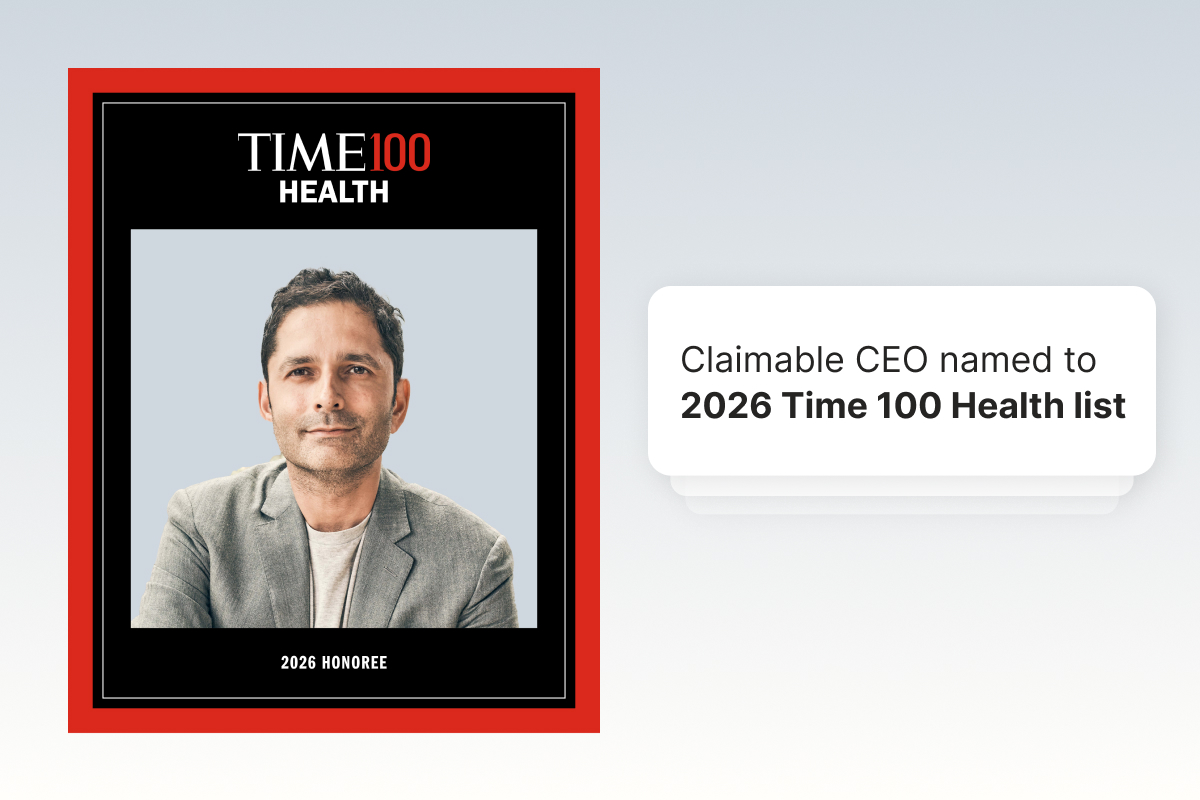
Dr. Warris Bokhari, Co-Founder and CEO of Claimable, was named to the 2026 TIME100 Health List of the World's Most Influential Leaders in Health. The annual list celebrates innovators and pioneers working to build healthier populations around the world.
The recognition is truly meaningful. And for those of us building alongside Warris, it reflects something we've seen up close for years — steady advocacy, rigorous thinking, and a deep commitment to standing up for patients when it matters most.
We wanted to take a moment to share more about the person behind the recognition and the principles that guide his work.
A path shaped by lived experience
Warris’s work has always been personal.
He was raised in England by two parents living with long-term disabilities. His mother lived with severe rheumatoid arthritis, and his father retired when Warris was still a child because of chronic back problems. Affordable, guaranteed access to healthcare wasn’t an abstract concept in their household — it was a daily reality, directly influencing stability, opportunity, and quality of life.
That experience stayed with him. Warris trained and practiced as a physician in the UK before moving to the United States, where he later held leadership roles across major healthcare and technology organizations, including GE Healthcare, Amazon, Apple, and Anthem.
Over time, he developed a clear-eyed view of how modern U.S. healthcare actually functions — not as a system optimized for care, but as one structured around financial risk, complexity, and friction — a stark contrast to the system he experienced growing up in the U.K.
Again and again, he saw the same outcome: patients prescribed necessary care, only to face delays or denials driven more by financial incentives than medical judgment.
Why Claimable exists
Claimable was born from that inequity. Warris didn’t set out to build a healthcare company. He set out to address an escalating crisis and change what happens when patient care collides with a system built around cost control.
He brought together co-founders Alicia Graham and Zach Veigulis around a clear conviction: patients deserve real support in those moments — not more paperwork, not more waiting, and not a process designed to wear them down. From the beginning, Claimable has been built on a simple principle: patients shouldn’t have to become experts, advocates, or adversaries just to access care.
For Warris, that means not only building tools that support patients at scale, but stepping in personally when the stakes demand it.
The cases people never see
Some of the most meaningful advocacy Warris does happens out of view, supporting patients in situations where access to care is genuinely life-or-death. This includes complex organ transplant denials and advanced oncology cases, where clinical nuance, timing, and judgment matter deeply.
In many of these cases, Warris has taken the lead, navigating the medical complexity and policy reasoning that ultimately shape critical coverage decisions. Being directly involved in these moments has been both sobering and instructive, reinforcing how much responsibility comes with building in this space.
That hands-on engagement doesn’t just shape his perspective — it informs our research and development efforts, pioneering strategies in new conditions and therapies before translating them into tools within Claimable. It has pushed the boundaries of what we believe can be done at scale by combining clinical rigor with purpose-built technology. And it continually sharpens our understanding of what good judgment looks like under pressure.
“I’ve worked closely with Warris on some of the most difficult cases we’ve encountered. What stands out is his steadiness — knowing when to push, when to pause, and how to carry the weight of decisions that affect real lives.” — Zach Veigulis, Co-Founder & CAIO, Claimable
Real Patient Impact
Take the story of Keaton, a 35-year-old father who was diagnosed with Stage IV bile duct cancer confined to his liver. After an extensive multidisciplinary review, he had been fully cleared for a transplant at Houston Methodist. Despite being his only potentially curative option, the transplant was denied, effectively forcing Keaton toward palliative care.
His wife, Tori, posted online asking for help, and Warris didn’t hesitate. He stepped into one of the most complex and visible cases imaginable, not because it was easy, but because it was right.
Warris immersed himself in the clinical research, the transplant criteria, and the insurer’s policy language — and just as importantly, in Keaton’s story. He got to know the family. He understood what was on the line.
Keaton later wrote, “I honestly might not be alive today if it weren’t for Warris and the team. They are highly knowledgeable and genuinely want to help people. I would recommend them to anyone and everyone if you’re having issues with insurance or being denied a life-saving treatment like I was.”
Keaton’s story isn’t unique in Warris’s world. It’s representative of the calls he answers every day — quietly, urgently, and when the outcome matters most.
Advocate first, CEO second
Warris has always led as an advocate first: for patients, for providers, and for the integrity of medicine itself. Inside the company, that philosophy becomes culture.
He stays closely connected to the lived reality of navigating denials and keeps the urgency of this mission front and center. Whether cold-calling early provider partners, supporting families facing devastating denials, or digging into emerging research on new therapies, he sets the tone for how we operate.
Leading by example, Warris encourages us to be bold in our convictions, resourceful in our approaches, and unwavering in our integrity. That mindset has led to clear non-negotiables for Claimable: the patient story must be central; evidence must be expert-curated and accurate; patients’ rights must be defended, not sidelined; and there must always be a next step.
“I’m honored to work alongside Warris, who is a doctor by training and by creed — someone who takes ‘do no harm’ seriously in every interaction. He reminds all of us that this work is about more than overturning denials. It’s about restoring trust.” — Alicia Graham, Co-Founder & COO, Claimable
Warris’s recognition on the TIME100 Health list reflects years of difficult, often invisible work, and reinforces why Claimable exists in the first place. The lessons learned alongside individual patients continue to shape how we build — embedding empathy, rigor, and real-world insight into tools designed to support patients at scale. We’re incredibly proud of Warris for this well-deserved recognition. And we’re even more committed to the journey ahead.
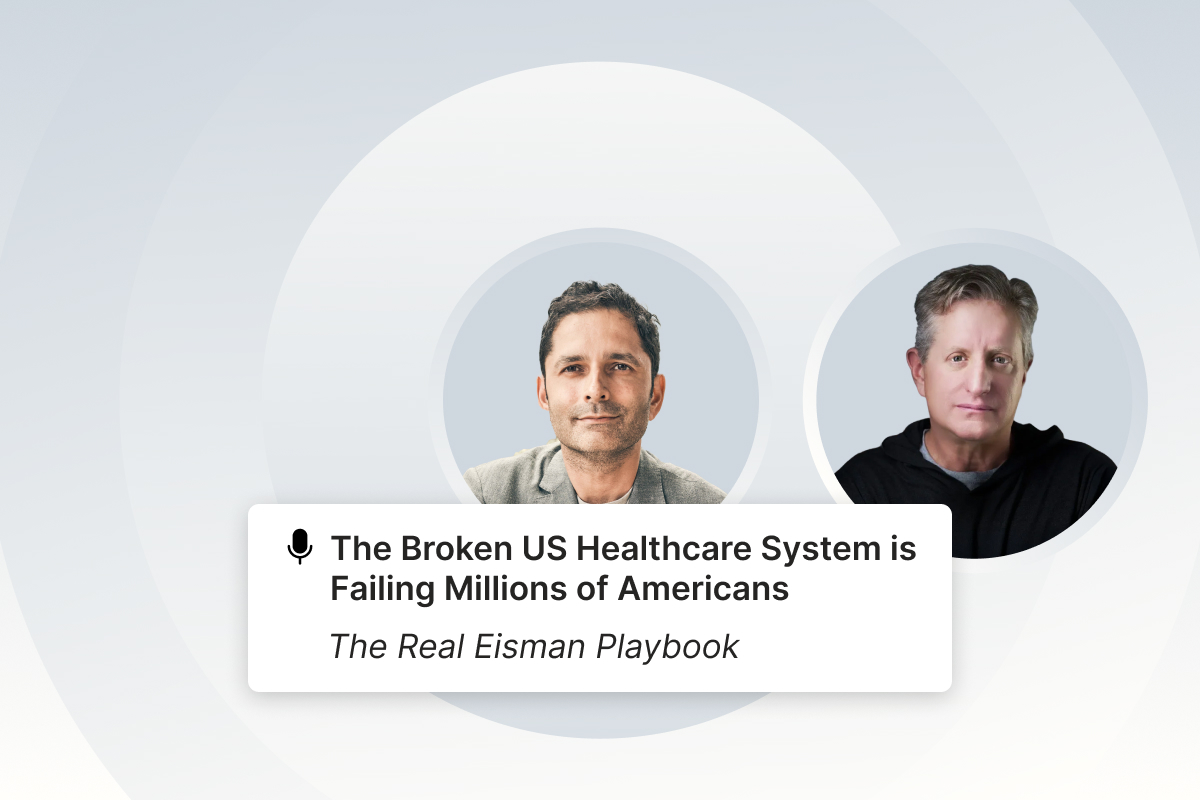
5 Key Takeaways from CEO Warris Bokhari on The Real Eisman Playbook
Health insurance is supposed to make medical care predictable. But for tens of millions of Americans each year, it becomes the opposite: a source of uncertainty, delay, and financial shock.
In a recent episode of The Real Eisman Playbook, Claimable CEO Warris Bokhari joined host Steve Eisman for a wide-ranging conversation about health insurance denial rates, what's driving them, and why the denial-and-appeal process often feels stacked against patients and providers. This post recaps the biggest themes from the episode – and what they mean for both healthcare workers and patients navigating care.
Note on sourcing: the statistics and examples below are presented as they were discussed in the episode and attributed accordingly.
What's inside – and what surprised us
A few observations from Bokhari stood out, highlighting how the system of denials is complex and layered – going beyond just denying care.
- The AI denial problem goes deeper than it looks. Bokhari's critique reveals that insurers can apply stale or poorly maintained policies at machine speed with AI, scaling old criteria and mismatched reviews faster than patients can respond.
- The system relies on you not fighting back. Bokhari argued that denial economics work because appeal rates stay tiny. If more people appeal, insurers face real cost and operational friction – quickly.
- Administrative delay is a strategy, not a side effect. Beyond initial denials, Bokhari described time-reset tactics that push payment further out and increase paperwork burden – especially crushing for small practices.
What are health insurance denial rates – and why do they matter?
Health insurance denial rates refer to the percentage of medical claims that are initially denied by an insurer. A denial can mean "not medically necessary," "not on formulary," "out of network," "missing documentation," or "needs step therapy," among other reasons. Importantly, "denied" often doesn't mean the care is inappropriate – it can mean the plan's rules, paperwork, or policy logic blocked payment.
In the episode, Bokhari points to denial rates in the mid-teens on average (he references ~17%; other figures discussed vary by segment), and he highlights the scale effect: the U.S. processes roughly 5 billion claims annually, so a ~17% denial rate implies roughly 850 million denials in a year – impacting an estimated 70–90 million Americans.
5 key takeaways from the episode
1) Denials are a scale problem, not a rare exception
One of the strongest points from the conversation was sheer magnitude. Bokhari cited the U.S. processing roughly 5 billion claims annually and described how even a "mid-teens" denial rate becomes an enormous number of denied claims in practice – around 850 million a year – impacting an estimated 70–90 million Americans.
But his argument wasn't limited to outright denials. He described a broader category of coverage friction that functions like denial in practice, interrupting care and payment even when the underlying treatment may be appropriate. These "deny-by-delay" tactics include:
- Shift delay / prompt-pay resets: insurers can request new information or submit an "edit" that resets the clock on when payment is due – extending the float and increasing paperwork.
- Predetermination: essentially prior authorization under another name – an added gate that may not guarantee coverage but still slows everything down.
- Clawbacks: care is approved and delivered, then months later the insurer reverses course and demands money back – creating major liquidity risk for providers.
Why it matters: when friction happens at scale, it becomes a population-level access barrier, not just an individual inconvenience. The result is delays for patients, administrative drag for providers, and a system that quietly shifts "care access" from clinical fit to coverage navigation.
2) Appeals can work – yet almost nobody files them
A core tension in the episode: denials may be common, but successful appeals can also be common. Bokhari referenced public reporting suggesting roughly ~50% of appealed denials can be overturned, while describing much higher outcomes in certain categories (including an anecdote from an insurance executive claiming extremely high overturn rates, and Claimable's experience in specific areas).
Then came the headline problem: fewer than 1% of denied cases are appealed – because the process is confusing, time-consuming, and hard to manage while sick.
Why it matters: low appeal volume functions like "silent acceptance." It allows friction to become a form of de facto cost control – without necessarily reflecting whether care is clinically appropriate.
3) AI is accelerating decisions—and scaling policy mistakes
The episode repeatedly returned to speed. Bokhari described claim decisions happening in seconds (he cites examples as fast as ~1.2 seconds) and argued insurers increasingly use automation to deny quickly – sometimes with logic that is outdated, inconsistently applied, or poorly matched to a patient's situation.
His point wasn't just "automation is bad." It's that bad policy applied quickly becomes a multiplier: the faster it runs, the more people it hits, and the more downstream rework it creates.
Why it matters: faster denials don't just arrive faster – they create cascading work: more paperwork, more resubmissions, more calls, more delays to treatment. That variability hits hardest in specialty and high-stakes care where timing matters.
4) Denial rates are tied to incentives—especially short-term risk vs. long-term illness
Bokhari offered a blunt framing: health insurance is often treated like a short-term financial product, while many medical needs are long-term realities. On the commercial side, he argued insurers may carry someone for roughly 18–24 months on average – job changes and plan switching—creating misaligned incentives when care is expensive and benefits accrue over years.
That incentive mismatch becomes especially acute as treatments improve (and cost more), including in oncology – something Bokhari says is increasingly showing up in what he's seeing.
Why it matters: when incentives reward delay or denial, "coverage" becomes unpredictable at the point of need. Patients face uncertainty. Providers and hospitals carry working-capital strain. And employers – who ultimately fund a lot of this – often don't realize how plans actually operate until a catastrophic case forces visibility.
5) If appeals rise from <1% to ~3%, the denial model starts to break
This was one of Bokhari's most distinctive system-level claims: the denial/appeal equilibrium depends on appeals staying rare. He described appeals as operationally expensive for insurers (he cites internal conversations suggesting roughly hundreds of dollars per appeal to process, potentially far more when claim files or escalation are involved).
His broader argument: if you move appeals from less than 1% of denials to even ~3%, insurers can't treat denials as cheap friction anymore. Processing burden rises, economics change, and blanket "deny fast" strategies become harder to sustain.
Why it matters: this reframes appeals as more than individual advocacy. If enough people appeal, it becomes a system lever – changing incentives, not just single outcomes.
Watch the full conversation
If you want the full context—including the personal stories, the incentive mechanics, and the discussion of how denial tactics spill into provider finance and consolidation—watch the episode here:
The Real Eisman Playbook featuring Claimable CEO Warris Bokhari (YouTube)
Closing thought
A denial can feel like a verdict – especially when it arrives quickly and without clear explanation. The episode's larger point is that denial rates aren't just an individual frustration; they're a structural feature of how coverage operates today.
And when more people understand that appeals can work – and that higher appeal volume changes incentives—the system's "deny fast, few fight back" equilibrium starts to weaken.
If you've faced a denial: you're not alone—and you're not powerless.

Asthma isn't often thought of as a critical condition; but for many, access to medication for it is life-saving.
In 2024, Cole Schmidtknecht's insurance denied his steroid inhaler. Shortly after, he suffered cardiac arrest induced by a severe asthma attack, and passed away following an ICU stay – just eleven days after he had to choose between paying his rent and picking up his prescription.
Since then, his parents Bil and Shanon Schmidtknecht have worked tirelessly to share Cole's story and advocate for the PBM reform that could have saved his life. In this letter, they share the real, human cost of asthma denials – and why giving people a path to coverage is so incredibly critical.

Dear Claimable Team,
We're reaching out with deep gratitude and shared purpose – as parents, advocates, and people who know all too well what it means when access to asthma medication is delayed or denied.
Asthma is not a mild or temporary inconvenience – it is a chronic, life-threatening disease that requires consistent, uninterrupted access to prescribed medications. When an insurer denies coverage for a prescribed asthma treatment – whether it's a maintenance inhaler, rescue inhaler, or biologic – it is not simply a paperwork issue. It is a decision that can disrupt care, cause physical harm, and in the most tragic cases, lead to death.
Our son, Cole Schmidtknecht, died following a sudden asthma attack during one of the happiest times in his life. He had been fighting through the obstacles put in place by a broken healthcare system – including delays, denials, and unaffordable pricing. The denial of coverage for a medically necessary asthma medication can cost someone their life.
We live with that reality every day.
Appealing a denial is not just a bureaucratic step – it is a lifeline. When insurers reconsider their decision based on additional clinical context or urgency, they have the power to correct a dangerous mistake and prevent suffering. It's not only the right thing to do – it's a matter of life and death.
We want to extend our heartfelt thanks to each of you at Claimable for taking the initiative to bring asthma denial cases into your platform. Creating a simple, accessible path for patients and families to challenge harmful decisions is a powerful act of compassion – and a concrete step toward justice and accountability in healthcare.
Most importantly, we urge everyone – patients, caregivers, providers, and even insurers-to fight back when access to care is denied. Always appeal. Always ask questions. Always push for what is right.
Because every delay, every rejection, every barrier can cost someone more than just time – it can cost them their life.
Thank you for being part of the solution, and for honoring lives like Cole's through the work you do.
With gratitude,
Bil and Shanon Schmidtknecht
Patient Advocates
Justice for Cole and All Others

Annual Awards Recognize Innovative Companies and Projects Addressing the World’s Most Urgent Challenges
Recognition Follows Claimable’s Launch of GLP-1 Support, Helping Patients Navigate One of the Most Denied Treatments in the U.S.
Sacramento, CA - [June 10, 2025] - Claimable is proud to announce that it has been named to Fast Company’s 2025 World Changing Ideas Awards list. This annual recognition honors bold and transformative efforts that tackle the world’s most pressing issues—from fresh sustainability initiatives and cutting-edge AI developments to ambitious pursuits of social equity helping mold the world.
Every year, 850 million healthcare claims are denied, forcing millions of Americans to choose between medical care and financial stability. Claimable is tackling this healthcare crisis with the first AI-powered appeals platform, helping patients and providers fight back against unjust denials. Patients upload their denial notice and insurance information, answer a few questions, and Claimable does the rest, analyzing clinical research, policy details, appeals data, and their unique medical story to generate and submit a customized appeal in minutes.
This year’s awards showcase 100 outstanding projects. A panel of Fast Company editors and reporters selected the winners from a pool of more than 1,500 entries and judged applications based on their impact, sustainability, design, creativity, scalability, and ability to improve society.
“The World Changing Ideas Awards have always been about showcasing the art of the possible,” says Fast Company editor-in-chief Brendan Vaughan. “We’re proud to recognize the organizations and leaders that are making meaningful progress on the biggest issues of our time.”
Since launching in late 2024, Claimable has recovered nearly $6 million for patients, boasting an over 80% success rate across more than 70 commonly denied treatments, including autoimmune and migraine medications, IVIG for children with PANS/PANDAS, and now GLP-1s for obesity and type 2 diabetes. For the millions facing treatment delays or crushing medical debt, Claimable offers hope, making the appeals process simple, fast, and effective, getting patients the care they deserve.
“We’re using AI to solve a deeply human problem,” said Claimable Co-Founder and Chief AI Officer Zach Veigulis. “Fast Company’s recognition reinforces what we’ve always believed at Claimable, that AI can be used to make life better. At a time when technology is often used to cut costs and deny care, we’re proving it can expand access and return power to patients.”
This recognition comes as Claimable expands its impact with support for GLP-1 medication appeals. One of today's most denied treatment categories, GLP-1s like Ozempic, Mounjaro, Zepbound, and Wegovy have transformed care for people with obesity and type 2 diabetes. However, patients are often denied access due to formulary exclusions, overly restrictive eligibility criteria, or insurer mandates to “fail first” on older or less effective treatments. With over 137 million U.S. adults now eligible for GLP-1 support, Claimable offers patients and providers a purpose-built solution designed to overcome the unique challenges of GLP-1 coverage denials.
"Insurance denials aren't just a paperwork issue, they're a public health crisis hiding in plain sight," said Alicia Graham, co-founder and COO at Claimable. "While others patch old systems, we're building something entirely new. We're reimagining how healthcare access should work, using technology to turn the tables on a system that's stacked against patients. That's why we've built Claimable alongside the people most affected: patients and providers. Our platform works because it doesn’t just make appeals faster, it makes them smarter, giving people the best chance to win."
Claimable is available nationwide and accepts denials from all insurance providers, including Medicare, Medicaid, United Healthcare, Anthem, Aetna, Cigna, and BCBS plans. To learn more about Claimable and all the treatments they support, visit www.getclaimable.com.
###
ABOUT CLAIMABLE
Claimable revolutionizes the way patients and providers fight healthcare denials, helping ensure everyone has access to the care they need and the coverage they deserve. The platform leverages purpose-built AI to analyze clinical research, policy details, appeals data, and patients’ unique medical stories, generating and submitting customized appeals in minutes. Claimable is available nationwide, accepting denials from all insurance providers, including Medicare and Medicaid. A NVIDIA Inception Program member, Claimable continues to push the boundaries of AI innovation in healthcare. For more information: www.getclaimable.com.
Contact:
Emily Fox
Completely FREE for Providers