Resources


Coverage guides
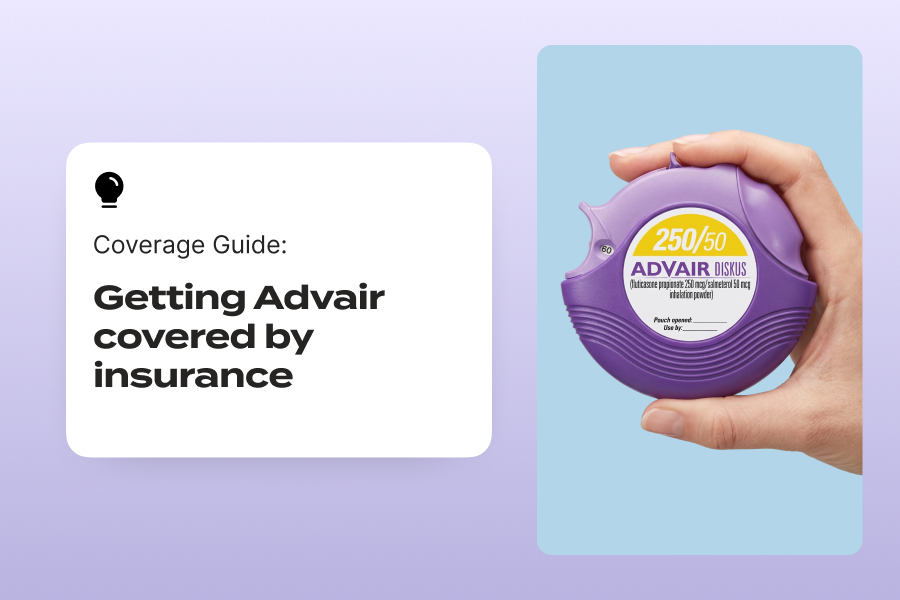
Your doctor prescribed Advair because your asthma or COPD requires a combination of an inhaled corticosteroid to reduce airway inflammation and a long-acting bronchodilator to keep your airways open, working together in every dose. Then your insurer said no.
You have the right to challenge that denial, and many patients who do succeed. Advair has been one of the most widely prescribed respiratory medications in the world for over two decades. Millions of patients with asthma and COPD rely on it, and your doctor prescribed it for a reason. When an insurer denies Advair, the dispute is almost always over which specific form, device, or brand of combination inhaler you should be using.
The specifics of which Advair you were prescribed can determine the entire denial. Advair comes in two devices, the Diskus (a dry powder inhaler) and the HFA (a metered dose inhaler). Generic versions of the Diskus have been available since 2019, including Wixela Inhub and authorized generic fluticasone/salmeterol.
An authorized generic of Advair HFA exists, but it is inconsistently stocked, and many plans still treat it as if no generic option exists. Most plans require the generic Diskus form whenever possible, but patients who need the HFA specifically face tighter coverage restrictions for a device-specific need.
Other patients face a different version of this problem. Their plan prefers a different ICS/LABA entirely, such as Breo Ellipta or Symbicort, and requires a trial of the preferred drug before covering Advair. Still others are denied because the prior authorization submission was too thin, or because the plan requires stepping through an ICS-only inhaler first.
Fewer than 1% of denied claims ever get appealed because of how confusing and intimidating the process feels. However, patients who do push back with the right evidence see dramatically better results. We see this every day at Claimable, where our appeals succeed more than 80% of the time in established conditions. This guide walks through each Advair denial type and how to respond.
Why Insurance Companies Deny Advair Coverage
The denial reason on your letter determines your strategy. A patient denied because the plan requires generic fluticasone/salmeterol is in a completely different situation than one denied because the insurer prefers Breo Ellipta. Match your denial to the corresponding response before you do anything else.
What Makes Advair Denials Different
Advair denials center on cost optimization: which form, which device, and which brand the insurer prefers.
The Diskus vs. HFA split is the coverage issue most specific to Advair. The Diskus is a dry powder inhaler (DPI) that relies on the strength of your breath to pull the powder into your lungs. The HFA is a metered dose inhaler (MDI) that sprays medication out automatically, regardless of how strongly you can inhale.
For most adults with adequate lung function, either device works. But for patients who can’t use a DPI effectively, the HFA may be their only option, and because generic HFA availability is inconsistent, they face tighter coverage restrictions.
Generic fluticasone/salmeterol is widely available and covered by most plans with lower copays than brand Advair. For patients who can use the Diskus form, switching to Wixela Inhub or authorized generic fluticasone/salmeterol usually works just as well.
What We See Across Thousands of Appeals
Here are the most common denial types, what they actually mean, and where to start:
Brand Denied, Generic Required
This is the most common Advair denial. Your plan covers fluticasone/salmeterol but requires the generic version (Wixela Inhub or authorized generic) rather than brand Advair Diskus.
When to switch: generic fluticasone/salmeterol contains the same active ingredients at the same doses and meets FDA bioequivalence standards. For most patients using the Diskus form, the generic is clinically equivalent and costs significantly less (as low as $50-$55 with a discount card vs. $200+ for brand).
When to appeal: if you’ve had a documented adverse reaction to a generic formulation, if you have difficulty using the Wixela Inhub device (which resembles the Diskus but differs slightly in design), or if your prescriber has a specific clinical reason for requiring brand. In most cases, though, switching to generic is the fastest path to coverage.
HFA Denied, Diskus or Generic Required
This is the denial most specific to Advair. Your plan covers the dry powder form (Diskus or generic) but won’t cover Advair HFA, the metered dose inhaler. Because generic HFA availability is inconsistent, most plans still restrict HFA coverage as the higher-cost option.
The argument that wins: some patients cannot use a dry powder inhaler effectively. Dry powder devices require a minimum breathing force to deliver medication properly, and your doctor can measure whether you meet that threshold. Patients who can’t meet that threshold, including young children, elderly patients with reduced lung capacity, individuals with severe COPD or acute exacerbations, and patients with neuromuscular conditions, may need the HFA because it sprays medication automatically rather than relying on the strength of your breath. If the patient can also benefit from a spacer device (which only works with MDIs, not DPIs), that’s an additional clinical reason.
Your prescriber should document the specific clinical reason the HFA form is medically necessary, including breathing test results, device technique assessments, or clinical conditions that make the dry powder form ineffective for you.
Different ICS/LABA Preferred
Some plans prefer a different ICS/LABA combination over fluticasone/salmeterol. Common preferred alternatives include Breo Ellipta (fluticasone furoate/vilanterol, once-daily dosing), Symbicort or generic budesonide/formoterol, and AirDuo (fluticasone/salmeterol in a different device).
When the switch makes sense: if you don’t have a specific clinical reason to be on fluticasone/salmeterol and haven’t tried the preferred alternative, switching may be straightforward. All ICS/LABA inhalers reduce asthma symptoms and exacerbations.
When to appeal: if you’ve already tried and failed the preferred alternative (intolerable side effects, inadequate symptom control, device issues), if you’re stable on Advair and switching introduces unnecessary risk, or if there’s a specific clinical reason fluticasone/salmeterol is the better combination for you. Document the prior trial, the outcome, and the prescriber’s rationale.
Step Therapy Required
Some plans require a trial of an ICS-only inhaler (fluticasone, budesonide, beclomethasone) before they’ll approve the addition of a LABA. This is more common for patients with a new asthma diagnosis or those stepping up therapy.
The detail that matters: if your asthma severity warrants combination therapy from the start (moderate persistent or worse, with a history of exacerbations on an ICS alone), your doctor’s appeal should cite the current treatment guidelines — specifically GINA 2026 and the NHLBI Expert Panel Report guidelines and its 2020 Focused Update — both of which support ICS/LABA for patients with persistent asthma not adequately controlled on ICS alone. If you’ve already tried an ICS-only inhaler and it wasn’t sufficient, document that trial with dates, doses, and symptom outcomes.
Not Medically Necessary
This denial usually means the PA was submitted with insufficient clinical documentation. A strong resubmission includes the following: your diagnosis with the standardized codes your insurer needs to process the claim (called ICD-10 codes), breathing test results, exacerbation history (ER visits, hospitalizations, oral steroid courses), current symptom burden, and a complete medication history showing prior therapies tried.
How to Appeal an Advair Denial (Step by Step)
Step 0: Confirm the Prescription Is Coded Correctly
Before launching a full appeal, rule out an administrative error. A surprising number of Advair denials trace back to a wrong diagnosis code, the claim being sent to the wrong part of your plan (for example, processed as a medical claim instead of a pharmacy claim, or vice versa), or a mismatch between the prescribed form and what was submitted on the prior authorization.
Ask your prescriber’s office to confirm the diagnosis codes, the exact product identifier (called an NDC) submitted, and whether the claim was routed to the correct benefit. Catching a coding error here can resolve the denial without any appeal at all.
Step 1: Find Your Deadline
Most commercial plans allow 180 days. UnitedHealthcare limits many plans to 65 calendar days. Medicare Advantage plans allow 60 days. Missing the deadline eliminates your rights.
Step 2: Use Both Tracks
This is one of the most underused strategies in the appeals process. Your doctor handles the clinical appeal (resubmitting the PA, writing a letter of medical necessity, requesting peer-to-peer review). But you also have your own, separate appeal rights as a patient — a legal track with guaranteed response timelines, the right to external review by an independent third party, and multiple levels of appeal.
Patient-initiated appeals complement provider appeals. They run on parallel tracks, and using both puts maximum pressure on the insurer to evaluate your case on the merits. Here’s why appealing yourself, not just leaving it to your doctor, matters.
Step 3: Verify Your Documentation
Confirm your diagnosis codes, severity classification, breathing test results, exacerbation history, and prior medication trials. For HFA-specific appeals, include documentation of why the dry powder form isn’t appropriate (your doctor can provide breathing force measurements and device technique assessments).
Step 4: Get a Letter of Medical Necessity
This is an important document in your appeal. It should include your diagnosis with severity scores, treatment history, and clinical rationale addressing the insurer’s specific denial reason. For HFA appeals, the rationale should explicitly address why the DPI form is inadequate. For preferred alternative denials, document why the plan’s preferred ICS/LABA doesn’t fit your situation.
Here is a plain-language way to ask your doctor: “My insurance denied Advair. I’d like to appeal, and one of the strongest pieces of evidence is a letter of medical necessity from you. It should explain my diagnosis, what we’ve already tried, and why this specific form of Advair is the right treatment for me. Can your office put that together so I can include it in my appeal?”
Step 5: Build the Appeal Package
A complete appeal includes the cover letter, letter of medical necessity, supporting clinical records (breathing tests, exacerbation history, medication history), and your personal statement.
Structure it around three pillars: your story (how uncontrolled asthma or COPD affects your daily life), clinical evidence (your doctor can reference GINA 2026 and NHLBI guidelines supporting your treatment), and policy and legal analysis (how your case meets the plan’s criteria, Affordable Care Act protections, applicable state laws).
Step 6: Submit and Track
Submit per the denial letter instructions. Insurers must respond within 30 days (standard) or 72 hours (urgent). Keep records of everything — dates, names of representatives, confirmation numbers, and copies of every document you send. If a deadline passes and you haven’t heard back about your appeal, you have options to hold the insurer accountable.
Step 7: Escalate If Denied Again
You have the right to external review by an independent third party. Their decisions are binding in most states. Additional options include state Department of Insurance complaints, remedies under ERISA, the federal law governing employer-sponsored plans, and state laws that limit when insurers can force you to switch medications or require you to try cheaper drugs first.
Appeal Timelines: How Long Does an Advair Appeal Take?
Complete submissions move faster. The average Claimable appeal gets a response in just 10 days.
FAQs
Why was my Advair denied if it’s been around for 25 years?
Coverage decisions are based on formulary placement and cost, regardless of how long a drug has been available. Most plans now require generic fluticasone/salmeterol rather than brand Advair, and some prefer a different ICS/LABA altogether. Advair HFA faces the steepest coverage barriers because generic HFA availability is inconsistent. Your plan likely covers some form of ICS/LABA combination, just not the specific form your doctor prescribed.
Is generic fluticasone/salmeterol the same as Advair Diskus?
Yes, in terms of active ingredients and FDA bioequivalence. Wixela Inhub and authorized generic fluticasone/salmeterol contain the same medications at the same strengths as Advair Diskus. The devices differ slightly in design but function similarly. For most patients, the switch is straightforward.
My plan denied Advair HFA. Can I use the Diskus instead?
It depends on why your doctor prescribed the HFA. If you can breathe in forcefully enough for a dry powder inhaler and are comfortable with the technique, the Diskus or Wixela Inhub may work just as well. If you need the metered dose inhaler because of reduced breathing strength, difficulty with DPI technique, or the need for a spacer, your appeal should document that clinical need specifically.
My insurer wants me to use Breo Ellipta instead. Is that the same?
Both are ICS/LABA combination inhalers, though they differ in important ways. Breo Ellipta uses fluticasone furoate/vilanterol and is dosed once daily. Advair uses fluticasone propionate/salmeterol and is dosed twice daily. Some patients do well on either; others respond better to one combination. If you’ve already tried the preferred alternative and it didn’t work, or if your doctor has a specific reason for choosing fluticasone/salmeterol, document that in your appeal.
Can I appeal an Advair denial myself, or does my doctor have to do it?
You can, and you should. Your doctor files a clinical appeal through the insurer’s provider process, but you have your own, independent appeal rights as a patient. Patient-initiated appeals run on a separate legal track with guaranteed timelines, external review rights, and multiple levels of appeal. Using both tracks gives you the best chance of overturning the denial.
How much does Advair cost without insurance?
Brand Advair Diskus and HFA run roughly $200-$500 per inhaler at retail. Generic fluticasone/salmeterol (Wixela Inhub) can cost as little as $50-$55 with a discount card. GSK offers a copay card that caps out-of-pocket costs at $35 per month for eligible commercially insured patients — this card is not valid for Medicare, Medicaid, or other government-funded plans. The Viatris savings card for Wixela Inhub can reduce insured patient copays to as little as $10 per fill. For patients without commercial insurance, GSK’s patient assistance program may provide the medication at no cost to eligible patients who meet income requirements.
Is it worth appealing an Advair denial?
Yes, particularly if the denial is blocking access to the specific formulation or device your doctor determined you need. Poorly controlled asthma leads to ER visits, hospitalizations, missed work and school, and progressive decline in lung function. COPD exacerbations can be life-threatening. The stakes of an asthma denial can be devastating. If the insurer’s preferred alternative isn’t clinically appropriate for your situation, the appeal puts your doctor’s reasoning in front of someone who has to evaluate it on the merits.
Claimable’s physician-led team has helped patients recover over $30 million in care access by fighting insurance denials. We’re SOC 2 Type II certified and HIPAA compliant. Learn more about how Claimable works →
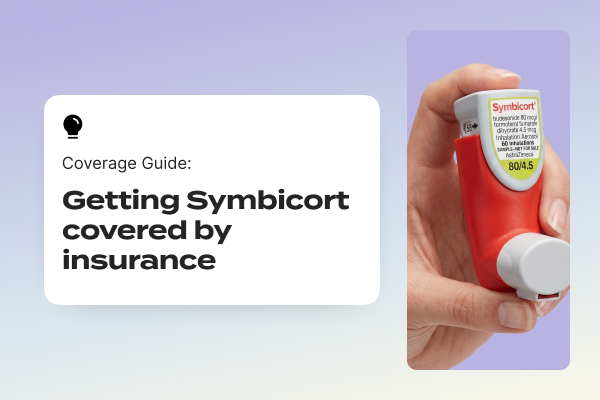
Your doctor prescribed Symbicort because your asthma or COPD needs a specific type of treatment, but your insurer denied it. The reason probably has less to do with whether you need an ICS/LABA inhaler (a combination of an inhaled steroid and a long-acting airway opener) than with the fact that your plan's formulary (its preferred drug list) ranks cheaper alternatives ahead of it.
Symbicort (budesonide/formoterol) is the only widely available ICS/LABA that can serve as both your daily controller and your rescue inhaler in a single device. It contains formoterol, an airway opener that works fast enough to also serve as a rescue medication. That fast action is what makes SMART therapy (Single Maintenance and Reliever Therapy) possible. The GINA (Global Initiative for Asthma) 2025 guidelines recommend SMART as the preferred approach for moderate-to-severe asthma. Advair and Breo Ellipta, the alternatives most drug lists prefer, contain airway openers that work more slowly and cannot double as rescue inhalers.
That hasn't stopped insurers from building their drug lists around those alternatives. Most plans prefer generic fluticasone/salmeterol or Breo over Symbicort. Most exclude the brand and only cover the generic version. And plans that do cover it often set a limit on how many inhalers you can get per month, which are frequently too few for SMART therapy patients. The result is that a treatment the guidelines recommend keeps getting blocked by drug lists that weren't designed to support it.
However, denials can be overturned. Fewer than 1% of denied claims are ever appealed, and insurers count on that. But patients who push back with specific evidence see dramatically higher success rates. At Claimable, our appeals succeed over 80% of the time in established conditions.
Symbicort denials look different depending on your diagnosis, your treatment plan, and the specific barrier your insurer put up. A patient denied because the plan caps how many inhalers it will cover each month is in a different situation than one denied because their plan prefers a different inhaler. This guide covers each type and how to respond.
Why Insurance Companies Deny Coverage for Symbicort
The specific denial reason determines your strategy. A patient denied because the plan prefers a different ICS/LABA is in a different situation than one denied because they hit a quantity limit, or one whose plan excluded brand Symbicort in favor of the generic.
What We See Across Thousands of Appeals
These are the most common denial types, what they actually mean, and where to start:
Plan Prefers a Different Inhaler
This is the most common Symbicort denial. Your plan prefers a different ICS/LABA, typically generic fluticasone/salmeterol (generic Advair), Breo Ellipta, or Wixela Inhub, and won't cover Symbicort until you've tried the preferred option.
When the switch makes sense: if your doctor prescribed Symbicort for standard twice-daily maintenance and doesn't plan to use it for SMART therapy, and you don't have a clinical reason to need formoterol specifically, the preferred alternative may work just as well for controlling your asthma or COPD. ICS/LABA inhalers in general are effective at reducing symptoms and exacerbations.
When to appeal: if your doctor prescribed Symbicort specifically for SMART therapy, the preferred alternatives simply cannot fill that role. Advair and Breo contain salmeterol or vilanterol, neither of which work fast enough to be used as a rescue inhaler. Requiring a trial of those alternatives first asks you to fail a medication that cannot perform the function your doctor prescribed Symbicort for. Your appeal should cite the GINA 2025 guidelines, which recommend ICS-formoterol as the preferred treatment approach, and explain the plan's preferred alternatives cannot substitute for Symbicort in SMART therapy. When the block is a straight formulary exclusion rather than a step requirement, a formulary exception request is often the fastest route to coverage.
Other clinical reasons to appeal include: documented intolerance or side effects with the preferred alternative, better symptom control on Symbicort than on the preferred option (if you've already tried it), or a specific clinical feature like exercise-triggered symptoms where formoterol's fast action matters.
Brand Not Covered, Generic Only
Most plans now exclude brand Symbicort and cover only generic budesonide/formoterol or Breyna. This is one of the more straightforward denials.
When to switch: generic budesonide/formoterol contains the same active ingredients at the same doses and meets the same FDA standards proving it works the same way in your body. For most patients, switching to the generic is clinically equivalent and often cheaper.
When to appeal: if you've had a documented adverse reaction to a generic formulation (differences in inactive ingredients or propellant can occasionally cause issues), or if the generic isn't available at your pharmacy. In most cases, though, the generic is usually the simplest option.
Quantity Limit Exceeded
This denial is specific to SMART therapy patients. Standard Symbicort dosing is 2 puffs twice daily (4 puffs per day, 120 puffs per inhaler, roughly a 30-day supply). SMART therapy adds as-needed rescue puffs on top of that maintenance dose, which means patients may need more than one inhaler per month. Most plans set quantity limits at one inhaler per 30 days.
The argument that wins: SMART therapy is the GINA-recommended approach for moderate-to-severe asthma. The additional puffs replace a separate rescue inhaler (typically albuterol), which reduces total medication use and exacerbations over time. Your prescriber should submit a quantity override request with documentation of your asthma severity, the SMART therapy protocol, and the clinical evidence showing that SMART reduces severe exacerbations by roughly 60–65% compared with using only a short-acting rescue inhaler.
Step Therapy Required
Some plans require a trial of a different ICS/LABA before they'll cover Symbicort. This overlaps with the "preferred alternative" denial but is more rigid. Instead of just preferring the alternative, the plan won't approve Symbicort at all until you've tried the required drug and shown it didn't work.
The detail that matters: if the step therapy drug cannot serve the clinical purpose your doctor intended (SMART therapy), requiring you to try it first doesn't make clinical sense. Your appeal should state that the required step therapy drug and budesonide/formoterol are not interchangeable for your prescribed use. Cite the GINA 2025 guidelines and the NHLBI (National Heart, Lung, and Blood Institute) 2020 asthma management guidelines, both of which support SMART therapy with ICS-formoterol specifically. Many states also have step therapy exception protections that require insurers to grant an exception when the required drug is expected to be ineffective for your situation.
Not Medically Necessary
This denial typically means the prior authorization submission didn't include enough clinical detail. A strong resubmission includes your diagnosis with ICD-10 codes (the standard diagnostic codes doctors use) — for example, your asthma severity classification or COPD staging — along with measurable data showing how severe your condition is: spirometry results (a breathing test that measures lung function), exacerbation history, symptom frequency, and current controller medications.
It should also include a clear clinical reason why budesonide/formoterol is the appropriate treatment. For asthma, include your current step level per GINA or NHLBI guidelines. For COPD, include your GOLD classification (the international standard for rating COPD severity) and exacerbation history.
How to Appeal a Symbicort Denial (Step by Step)
Step 0: Verify Your Coding and Benefit Routing
Before you start a formal appeal, confirm that the denial is actually a clinical or formulary decision and not a billing error. Many Symbicort denials trace back to incorrect ICD-10 coding (for example, unspecified asthma instead of moderate persistent asthma), a wrong NDC (the drug's product identification number) or quantity field, or the claim being routed to the wrong benefit (for example, pharmacy instead of medical, or vice versa).
Ask your prescriber's office to verify the diagnosis codes and your pharmacy to confirm the NDC submitted. If the denial letter references a coding or administrative reason, fixing and resubmitting the claim may resolve it without a full appeal.
Step 1: Find Your Deadline
Most commercial plans allow 180 days. UnitedHealthcare limits many plans to 65 calendar days. Medicare Advantage plans allow 60 calendar days. If you miss these windows, you may lose your right to appeal, so mark the deadline as soon as the denial arrives.
Step 2: Use Both Tracks
Your doctor handles the clinical appeal — resubmitting the prior authorization, writing a letter of medical necessity, and requesting a peer-to-peer review (a call where your doctor speaks directly with the insurer's doctor). You file your own patient-initiated appeal on a separate legal track with guaranteed response timelines and the right to external review. These tracks complement each other, and using both gives you the strongest position.
Step 3: Verify Your Documentation
Confirm your diagnosis codes, your disease severity measures (spirometry, exacerbation count, symptom frequency), and treatment history. For SMART therapy appeals specifically, confirm that your prescriber has documented the SMART protocol and the clinical reason for using budesonide/formoterol as both maintenance and rescue.
Step 4: Get a Letter of Medical Necessity
This is an important document in your appeal. It should include your diagnosis with severity classification, treatment history (including any prior ICS/LABA trials and outcomes), and the clinical reason for choosing Symbicort, directly addressing the insurer's denial reason. For SMART therapy appeals, the letter should explain why a formoterol-containing inhaler is clinically necessary and why the plan's preferred alternatives cannot serve the same role.
Ask your doctor directly: "I need a letter of medical necessity for my Symbicort appeal. It should address why I specifically need budesonide/formoterol and why the plan's preferred alternatives won't work for my treatment plan."
Step 5: Build the Appeal Package
A complete appeal includes the cover letter, letter of medical necessity, supporting clinical records (spirometry results, exacerbation history, medication history), and your personal statement. Structure it around three parts: your story (how poorly controlled asthma or COPD affects your daily life, work, sleep, and physical activity), clinical evidence (GINA 2025, NHLBI 2020 guidelines, SMART therapy evidence), and policy and legal analysis (how your case meets the plan's criteria, ACA (Affordable Care Act) protections, and any applicable state laws that let you skip required drug trials when they don't apply to your situation).
Step 6: Submit and Track
Submit per the denial letter instructions. Insurers must respond within 30 days (standard) or 72 hours (urgent). For asthma patients with frequent exacerbations or recent ER visits, an expedited appeal may be appropriate. Keep records of everything.
Step 7: Escalate If Denied Again
You have the right to external review by an independent third party. Their decisions are binding in most states. Additional options include state Department of Insurance complaints, ERISA protections (federal rules that govern employer-sponsored health plans), and state step therapy exception laws.
Appeal Timelines: How Long Does a Symbicort Appeal Take?
Complete submissions move faster. The average Claimable appeal gets a response in just 10 days.
FAQs
Why was my Symbicort denied when my doctor prescribed it?
Most Symbicort denials are driven by which ICS/LABA your plan prefers, not whether you need one at all. Many drug lists favor generic fluticasone/salmeterol (generic Advair) or Breo Ellipta over budesonide/formoterol, and most now exclude brand Symbicort in favor of the generic version. Your doctor chose budesonide/formoterol for a clinical reason. The insurer is applying its own drug-list preferences on top of that.
Can I appeal a Symbicort denial myself?
Yes. Patient appeals run on a separate legal track from your doctor's clinical appeal, with guaranteed response timelines, the right to external review, and multiple levels of internal appeal. Filing your own appeal complements your doctor's efforts and gives you access to protections and escalation options that the provider track alone does not offer.
Is generic budesonide/formoterol the same as Symbicort?
Yes, in terms of active ingredients, dosing, and FDA standards proving the generic works the same way in your body. Generic budesonide/formoterol (including Breyna) contains the same medications at the same strengths. For most patients, the switch is clinically equivalent. If your plan requires the generic and you don't have a documented reason to stay on brand, switching is usually the fastest path to coverage.
My plan wants me to use Advair or Breo instead. Are they the same?
They're all ICS/LABA combination inhalers, but they're not interchangeable for every use. Advair contains fluticasone/salmeterol. Breo Ellipta contains fluticasone/vilanterol. Neither contains formoterol, which means neither can be used for SMART therapy (using the same inhaler for both maintenance and rescue). If your doctor prescribed Symbicort specifically for SMART, the plan's preferred alternatives cannot serve that clinical purpose.
What is SMART therapy, and why does it affect my coverage?
SMART (Single Maintenance and Reliever Therapy) uses a budesonide/formoterol inhaler for both daily maintenance and as-needed rescue instead of carrying a separate albuterol inhaler. The GINA 2025 guidelines recommend it as the preferred approach for asthma because clinical evidence shows it reduces severe exacerbations by roughly 60–65% compared with using only a short-acting rescue inhaler. SMART affects coverage because it requires more puffs per month than standard maintenance dosing, which can trigger quantity limit denials. It also requires a formoterol-containing inhaler, which conflicts with plans that prefer non-formoterol ICS/LABAs.
How much does Symbicort cost without insurance?
Brand Symbicort runs $350–$500 per inhaler without insurance. Generic budesonide/formoterol costs $150–$300 at retail, or as low as $90–$150 with a discount card. AstraZeneca offers a savings card for brand Symbicort that can cap the cost at $35 per 30-day supply for eligible commercially insured patients. Viatris offers a savings card for Breyna that can reduce the cost to as little as $20 per month for eligible commercially insured patients. For uninsured or underinsured patients who qualify, AstraZeneca's AZ&Me program may provide the medication at no cost.
Is it worth appealing a Symbicort denial?
Yes, especially if the denial is blocking access to SMART therapy or forcing you onto an inhaler that your doctor has already determined isn't appropriate for your situation. Poorly controlled asthma leads to ER visits, hospitalizations, missed work, and gradual loss of lung function. COPD exacerbations carry even more serious consequences. Getting the inhaler your doctor prescribed can mean the difference between controlled disease and a trip to the emergency room. The Schmidtknecht family's story is a stark reminder of what's at stake when asthma medication is delayed. If your doctor prescribed budesonide/formoterol for a clinical reason, an appeal puts that reasoning in front of someone who has to evaluate it.
Claimable's physician-led team has helped patients recover over $30 million in care access by fighting insurance denials. We're SOC 2 Type II certified and HIPAA compliant. Learn more about how Claimable works →
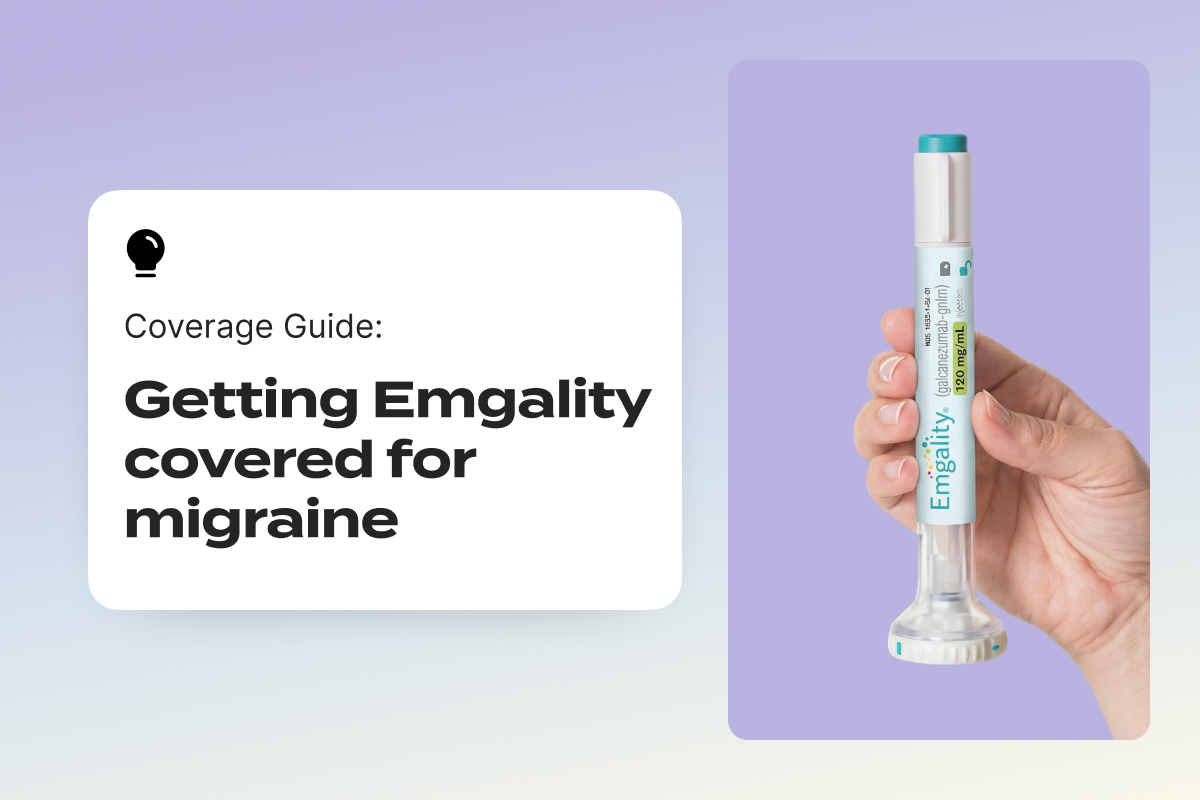
Your neurologist prescribed Emgality because it’s the right preventive treatment for your migraines. Your health insurer decided otherwise. But an insurance denial isn’t the end of the conversation, and you have legal rights that most patients never exercise.
Emgality (galcanezumab-gnlm) is a calcitonin gene-related peptide (CGRP) monoclonal antibody, one of a class of injectable therapies specifically designed to prevent migraine attacks before they start. Unlike older preventive medications that were originally developed for other conditions and repurposed for migraines, Emgality was built from the ground up to target the CGRP pathway, a biological mechanism central to how migraines work. It received FDA approval in September 2018 for preventive treatment of migraine in adults and is also approved for episodic cluster headache.
Despite strong clinical evidence and more than 90% of commercial health plans including Emgality coverage on their formularies, actually getting that coverage activated is a different story. Most plans require prior authorization, and the majority demand that you try and fail two or more older preventive medications before they’ll approve a CGRP drug like Emgality. If you’re reading this, you’ve likely already hit that wall.
Here’s the reality insurance companies don’t advertise: fewer than 1% of denied claims are ever appealed. When patients do appeal with the right evidence, the results are dramatically different. At Claimable, over 80% of our appeals succeed in established conditions.
This guide explains exactly why Emgality gets denied, what makes these denials often medically unjustifiable, and how to build an appeal that wins, including the clinical arguments, documentation strategies, and legal protections that actually change outcomes.
Our physician-led team has built a database of over 4 million clinical studies, insurer policies, and legal standards to fight denials like yours. We know which arguments overturn Emgality denials, and we know the step therapy tactics insurers use to delay access to CGRP drugs.
Why Insurance Companies Deny Emgality Coverage
Before you do anything else, find the specific reason your insurer denied your prescription. The denial reason determines your entire appeal strategy, and using the wrong argument wastes time you don’t have.
The Step Therapy Problem: Months of Medication Roulette Before You Get What Actually Works
Most Emgality denials come down to one thing: step therapy. Your health insurer requires you to try and fail older, cheaper standard preventatives before they’ll approve a migraine-specific CGRP inhibitor, even when the leading medical society in headache medicine says that requirement is no longer clinically justified.
The medications insurers typically demand you try first weren’t designed for migraines at all. They’re repurposed therapies from other fields: beta-blockers originally developed for blood pressure and heart conditions (propranolol, metoprolol), antidepressants (amitriptyline, venlafaxine), and antiepileptic drugs (topiramate, valproate). Some of these drugs do help some patients, but the side effect profiles are significant, and the dropout rates tell the real story.
Consider topiramate, one of the most commonly required step therapy medications. In clinical trials for migraine prevention, approximately 25% of patients on the standard 100mg dose discontinued treatment due to adverse events. The most common reasons: paresthesia (tingling and numbness), fatigue, and difficulty with concentration and memory. These side effects are severe enough that patients often call topiramate “Dopamax” for its cognitive effects. Beta-blockers can cause fatigue, depression, and exercise intolerance. Antidepressants carry their own constellation of side effects including weight gain, dry mouth, and sedation.
Insurers know all of this. Step therapy isn’t a medical strategy. It’s a cost strategy. The older drugs are cheaper, and the insurer saves money for every month you spend trying medications that may not work and may make you feel worse.
The American Headache Society’s 2024 position statement directly challenges this approach. After reviewing more than a decade of clinical evidence and real-world experience, the AHS now recommends that CGRP inhibitors, including Emgality, should be considered a first-line option for effective migraine prevention, without requiring prior failure of other drug classes. The statement is unequivocal: the cumulative evidence for efficacy, safety, and tolerability of CGRP therapies is significantly greater than that for any established migraine preventive treatment.
When your insurer requires you to spend months cycling through medications with high discontinuation rates and substantial side effects before approving Emgality, they’re overriding the judgment of both your prescribing neurologist and the nation’s leading headache specialists.
The Most Common Emgality Denial Types
| Denial Type | What Your Letter Says | What It Actually Means | Best First Move |
|---|---|---|---|
| Step Therapy Required | “Must try preferred alternatives first” | Insurer wants proof you failed 2+ classes of older preventives | Document prior failures, side effects, or contraindications |
| Not Medically Necessary | “Does not meet medical necessity criteria” | Documentation was insufficient or key details were missing | Resubmit with comprehensive clinical evidence |
| Not on Formulary | “Drug not on preferred drug list” | Plan prefers a different CGRP medication | Request formulary exception with clinical rationale |
| Frequency Threshold Not Met | “Does not meet minimum migraine days” | Insurer says your migraine frequency doesn’t qualify | Document true migraine burden with headache diary |
| Incorrect Diagnosis Code | Varies | Wrong or incomplete ICD-10 code submitted | Work with prescriber to correct coding |
| Prior Authorization Expired | “Authorization no longer active” | Previous PA lapsed and needs renewal | Resubmit with updated treatment response data |
Step Therapy Required
This is the most common reason Emgality injections are denied. Insurers including Aetna, Anthem Blue Cross, Cigna, UnitedHealthcare, Blue Shield, and Humana all typically require documented failure of at least two classes of preventive medications before approving CGRP drugs. The specific requirements vary by plan, but the pattern is consistent: try the cheap options first, even if your doctor has already determined they’re not right for you.
“Failure” is defined more broadly than most patients realize, and that’s where your appeal leverage lives. You don’t need to prove a medication was completely useless. Any of the following counts: the drug didn’t reduce your migraine frequency enough, side effects or intolerances made the drug unbearable, you have a medical condition that contraindicates the drug (cardiovascular disease for beta-blockers, kidney stones for topiramate, pregnancy planning for valproate), or you had to discontinue for any documented medical reason. Prior medication trials from other doctors or previous insurers also count. You shouldn’t have to restart the failure clock every time your coverage changes.
Important: The AHS 2024 position statement specifically states that initiation of CGRP-targeting therapies should not require trial and failure of non-specific migraine preventive medication approaches. This is your strongest clinical argument in any step therapy appeal.
Not Medically Necessary
A medical necessity denial usually means the initial submission didn’t include enough clinical detail, not that your insurer made a careful medical judgment. Common documentation gaps for Emgality include: not specifying the number of migraine days per month, not providing a complete treatment history with specific drug names, dosages, durations, and outcomes, not documenting how migraines impact your ability to work and function, or not explaining why Emgality specifically is the right choice.
For Emgality, your prescriber’s documentation should establish your migraine diagnosis with the correct ICD-10 code, quantify your migraine burden (frequency, severity, and disability), list every prior preventive medication tried with specific reasons each was inadequate, and articulate the clinical rationale for choosing a CGRP monoclonal antibody.
Not on Formulary / Non-Preferred Brand
Some health insurance plans prefer a different injectable CGRP medication, often Aimovig (erenumab), Ajovy (fremanezumab), or Vyepti (eptinezumab), over Emgality. This is typically a pricing decision, not a clinical one. All four injectable CGRP drugs are effective preventive therapies, but they’re not interchangeable for every patient.
This matters for your appeal: Emgality and Ajovy work by binding the CGRP ligand (the protein itself), while Aimovig targets the CGRP receptor. These are meaningfully different mechanisms, and patients who don’t respond to one may respond well to another. If your insurer is asking you to switch to a preferred alternative, and you’ve already tried that medication without adequate results or your neurologist has a specific clinical reason for choosing Emgality, that’s a strong basis for a formulary exception.
The CONQUER trial specifically demonstrated that Emgality is effective in patients who have failed two to four prior preventive medication categories, meaning it has published evidence of working in exactly the population most likely to face insurance barriers.
Frequency Threshold Not Met
Most insurers require a minimum of 4 migraine days per month to qualify for Emgality coverage. If your denial cites this reason, it often means the documentation didn’t clearly establish your migraine frequency, not that you don’t actually meet the threshold. A detailed headache diary showing your true migraine burden, corroborated by your neurologist’s clinical assessment, is typically what’s needed to address this.
Keep in mind that many patients underreport migraine frequency in routine visits. If you experience 4 or more migraine days per month (the standard clinical threshold for considering preventive treatment), make sure that number is explicitly documented in your medical records.
Incorrect Diagnosis Code
Emgality coverage requires specific ICD-10 migraine diagnosis codes. Common codes that support Emgality prescriptions include: migraine without aura (G43.00, G43.01), migraine with aura (G43.10, G43.11), chronic migraine without aura (G43.709, G43.711), and migraine, unspecified (G43.90, G43.91). Using a general headache code like R51.9 (“headache, unspecified”) will almost certainly trigger a denial.
If your denial stems from a coding issue, this is often the simplest fix. Work with your prescriber’s office to verify and correct the submitted diagnosis code.
Prior Authorization Expired
Emgality typically requires reauthorization every 6 to 12 months. If your PA has lapsed, you’ll need to resubmit with updated documentation showing that the medication is still working, ideally including migraine diary data demonstrating continued response (a 50% or greater reduction in monthly migraine days is the standard clinical benchmark). Start the renewal process 30 to 45 days before your current authorization expires to avoid gaps in treatment.
How to Appeal an Emgality Denial: Step by Step
A denial is not a final answer. It’s the beginning of a process that patients are legally entitled to, and that works far more often than the insurance industry would like you to believe.
Step 1: Read Your Denial Letter Carefully
Your denial letter must include the specific reason for the denial, your appeal rights, and the deadline to file. Find the deadline immediately. Most commercial plans allow 180 days, but some insurers set shorter windows. UnitedHealthcare allows 65 days. Medicare Advantage plans follow CMS guidelines of 60 days. Missing your deadline forfeits your right to appeal.
Step 2: Understand That You Can Appeal Independently
You can file a patient-initiated appeal separate from anything your doctor’s office submits. This isn’t just a backup. Patient appeals carry their own legal protections under the ACA, including mandated response timelines, the right to escalate to an independent external reviewer, and multiple levels of appeal. If your neurologist’s prior authorization was denied, your path is still open.
Step 3: Verify Clinical Details With Your Prescriber
Before building your appeal, confirm with your doctor’s office: Is your migraine frequency clearly documented? Are all prior preventive medication trials listed with specific drugs, dosages, durations, and reasons for discontinuation? Is the correct ICD-10 diagnosis code on file? Was the Emgality prescription written for the correct loading and maintenance dose? If the denial stems from a documentation gap, a corrected PA resubmission may resolve it without a formal appeal.
Step 4: Get a Letter of Medical Necessity
This is the most important document in your appeal. For Emgality, a strong letter of medical necessity from your prescribing neurologist or headache specialist should include your migraine diagnosis and monthly frequency, a detailed history of every prior preventive medication tried (names, doses, duration of each trial, and specific reason each was discontinued, whether for side effects, lack of efficacy, or contraindications), how migraines affect your ability to work, care for your family, and function in daily life, and the clinical rationale for choosing Emgality, including references to the AHS guidelines supporting CGRP therapies as first-line prevention.
How to ask: “My insurance denied Emgality. Would you write a letter of medical necessity for my appeal? I can bring a list of every preventive I’ve tried and what happened with each one.” Specificity wins appeals. Vague statements like “patient failed prior therapies” are far less effective than naming the exact drugs, doses, and outcomes. If your primary care provider submitted the original prescription, consider asking a neurologist or headache specialist to write the appeal letter. Clinicians with specialized headache expertise carry additional weight with insurance medical directors.
Step 5: Build Your Appeal Package
A complete appeal should include a cover letter summarizing your case, the letter of medical necessity from your prescriber, supporting clinical documentation (office notes, headache diary data, treatment history), and a personal statement about how the denial affects your health and life.
The three pillars of a winning appeal:
Your story — How migraines disrupt your daily life. Missed work days, canceled plans, emergency room visits, the toll on your family. This isn’t supplemental. It provides the human weight that clinical data alone can’t communicate.
Clinical evidence — Peer-reviewed studies including the EVOLVE-1 and EVOLVE-2 trial results showing significant reductions in monthly migraine days vs. placebo, the AHS 2024 position statement supporting CGRP therapies as first-line, and any published evidence specific to your situation (the CONQUER trial is especially relevant if you’ve failed multiple prior preventives).
Policy and legal analysis — How your situation meets your plan’s own coverage criteria, applicable state laws, and federal protections under the ACA for appeals and external review.
Step 6: Submit and Track
Follow your denial letter’s submission instructions precisely. Your insurer must respond within 30 days for standard appeals or 72 hours for an expedited appeal (also called an urgent appeal; request this if a delay in treatment could seriously harm your health). Keep records of everything: submission date, method (fax, mail, portal), and all confirmation numbers.
Step 7: Escalate If Needed
If your internal appeal is denied, you have the right to an external review by an independent third party who doesn’t work for your health insurer. External reviewers evaluate medical justification, not the insurer’s financial preferences. These reviews overturn denials more often than most patients expect, because the standard shifts from the insurer’s internal criteria to independent clinical judgment.
The system is designed to wear you down. Persistence is part of the strategy.
An Easier Path: Let Claimable Handle Your Emgality Appeal
If building an appeal from scratch isn’t realistic, or if you’ve already been denied and don’t have the bandwidth for another round, Claimable can handle it for you.
Here’s how it works:
Answer a few questions about your Emgality denial and medical history. We build your case using our database of 4+ million clinical studies, insurer policies, and legal standards. We create a fully customized appeal with your personal story, clinical evidence, and policy analysis. We submit it for you, faxed and mailed directly to your insurer. We guide you through escalation if needed.
Over 80% of Claimable appeals succeed, with most resolved in 10 days or less.
“When my insurance company denied my claim to continue with my medicine, I felt defeated at first… Then I found Claimable. In the end I ended up winning my claim and I couldn’t have done it without Claimable. I highly recommend them.” — April A.
Appealing with Claimable costs $39.95. No success fees, no hidden costs, just a flat fee. When Emgality runs $700 to $970 per month without insurance coverage, the math is straightforward.
Appeal Timelines: How Long Does an Emgality Appeal Take?
| Appeal Stage | Typical Timeline |
|---|---|
| Internal appeal (standard) | Up to 30 days |
| Internal appeal (urgent/expedited) | 72 hours (expedited appeal) |
| External review | 45–60 days |
| Full process (internal + external) | 6–10 weeks |
A complete, well-documented appeal submitted from the start is the fastest path to a decision. The average Claimable appeal gets a response in just 10 days.
FAQs
Why was my Emgality denied if my plan covers it?
Having Emgality on your plan’s formulary doesn’t guarantee automatic approval. Most plans require prior authorization, and those PA criteria typically include step therapy (proof that you’ve tried and failed older preventive medications), minimum migraine frequency thresholds, and specific documentation requirements. Your plan may technically cover Emgality, but “covered” and “approved without a fight” are very different things.
Do I really have to try older medications like topiramate before getting Emgality?
That depends on your insurer’s current policies, but you may not need to start from scratch. If you’ve previously tried and discontinued standard preventatives for any documented medical reason (side effects, intolerances, lack of efficacy, or contraindications) those prior trials should satisfy step therapy requirements. And if your healthcare provider can cite the AHS 2024 position statement recommending CGRP inhibitors as first-line, that strengthens the argument that step therapy shouldn’t apply to your case at all.
Can I appeal an Emgality denial myself, or does my doctor have to do it?
You can appeal yourself. Patient-initiated appeals carry their own legal protections: mandated timelines, the right to external review, and multiple appeal levels. Your appeal is independent of anything your doctor files. Both can proceed simultaneously.
What’s the difference between Emgality and other CGRP injections like Aimovig?
All four injectable CGRP drugs, Emgality, Aimovig (erenumab), Ajovy (fremanezumab), and Vyepti (eptinezumab), are effective preventive therapies for migraines, but they work through slightly different mechanisms. Emgality and Ajovy target the CGRP protein itself (the ligand), while Aimovig blocks the CGRP receptor. Oral CGRP options also exist: Qulipta (atogepant) for prevention and Nurtec (rimegepant) for both prevention and acute treatment. But the injectable monoclonal antibodies offer a different pharmacological approach with once-monthly dosing. The key point: patients who don’t respond adequately to one CGRP medication may respond well to another. Failing on one doesn’t mean the entire class won’t work for you. Your doctor chose Emgality for a reason specific to your clinical situation.
How does the Emgality injection work?
Emgality is a once-monthly injection that you self-administer at home using a prefilled pen or syringe. The first dose is a loading dose of 240mg (two 120mg injections), followed by 120mg once monthly. In clinical trials, patients treated with Emgality experienced approximately 4.7 fewer migraine headache days per month compared to 2.8 fewer days with placebo, with 50% responder rates of approximately 60% over 6 months of treatment. That means about 6 in 10 patients saw their migraine days cut in half or more.
How much does Emgality cost without insurance?
Without insurance or discounts, Emgality costs approximately $700 to $970 per month for the maintenance dose (one 120mg prefilled pen). The first month’s loading dose requires two pens, roughly doubling the initial cost. Eli Lilly offers the Emgality Savings Card for commercially insured patients, which can reduce the monthly cost to as little as $35 (up to $4,900 in annual savings). Patients without commercial insurance may qualify for the Lilly Cares Foundation Patient Assistance Program, which provides Emgality at no cost to qualifying individuals. Note that neither the savings card nor the patient assistance program is available to patients enrolled in Medicare, Medicaid, or other government-funded programs, but Medicaid plans in many states do cover Emgality with copays as low as $4 to $9 per month.
What if my insurer wants me to switch to a different CGRP medication?
If your plan prefers Aimovig, Ajovy, or Vyepti over Emgality, your appeal should explain why your neurologist specifically chose Emgality. Strong grounds for a formulary exception include: you’ve previously tried the preferred alternative without adequate results, the preferred drug is contraindicated for you, or there’s a specific clinical rationale (such as Emgality’s mechanism of targeting the CGRP ligand vs. the receptor). The CONQUER trial demonstrated Emgality’s efficacy specifically in patients who had failed multiple prior preventive categories, evidence that strengthens your case if you’ve been through this before.
Is it worth appealing an Emgality denial?
Yes. The insurance industry relies on patients accepting denials without challenge. Fewer than 1% ever appeal. But denials are frequently the result of incomplete documentation, misapplied criteria, or step therapy requirements that contradict current medical guidelines. Your neurologist prescribed Emgality because your migraines are serious enough to warrant targeted preventive treatment. The appeal is your chance to make that case with the right evidence and legal framework behind you.
Claimable’s physician-led team has helped patients recover millions in care access by fighting insurance denials. We’re SOC 2 Type II certified and HIPAA compliant. Learn more about how Claimable works →
Related: Insurance Denied Ubrelvy? How to Appeal and Get Covered
Insights & updates
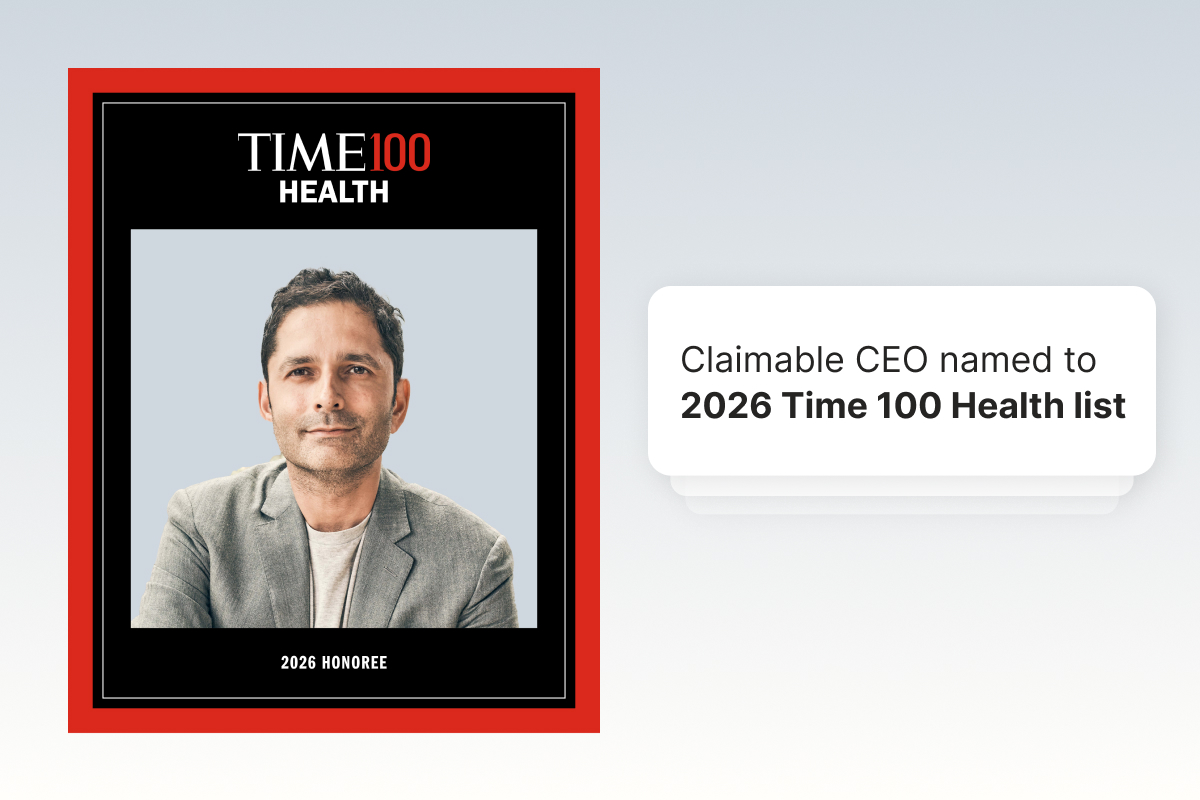
Dr. Warris Bokhari, Co-Founder and CEO of Claimable, was named to the 2026 TIME100 Health List of the World's Most Influential Leaders in Health. The annual list celebrates innovators and pioneers working to build healthier populations around the world.
The recognition is truly meaningful. And for those of us building alongside Warris, it reflects something we've seen up close for years — steady advocacy, rigorous thinking, and a deep commitment to standing up for patients when it matters most.
We wanted to take a moment to share more about the person behind the recognition and the principles that guide his work.
A path shaped by lived experience
Warris’s work has always been personal.
He was raised in England by two parents living with long-term disabilities. His mother lived with severe rheumatoid arthritis, and his father retired when Warris was still a child because of chronic back problems. Affordable, guaranteed access to healthcare wasn’t an abstract concept in their household — it was a daily reality, directly influencing stability, opportunity, and quality of life.
That experience stayed with him. Warris trained and practiced as a physician in the UK before moving to the United States, where he later held leadership roles across major healthcare and technology organizations, including GE Healthcare, Amazon, Apple, and Anthem.
Over time, he developed a clear-eyed view of how modern U.S. healthcare actually functions — not as a system optimized for care, but as one structured around financial risk, complexity, and friction — a stark contrast to the system he experienced growing up in the U.K.
Again and again, he saw the same outcome: patients prescribed necessary care, only to face delays or denials driven more by financial incentives than medical judgment.
Why Claimable exists
Claimable was born from that inequity. Warris didn’t set out to build a healthcare company. He set out to address an escalating crisis and change what happens when patient care collides with a system built around cost control.
He brought together co-founders Alicia Graham and Zach Veigulis around a clear conviction: patients deserve real support in those moments — not more paperwork, not more waiting, and not a process designed to wear them down. From the beginning, Claimable has been built on a simple principle: patients shouldn’t have to become experts, advocates, or adversaries just to access care.
For Warris, that means not only building tools that support patients at scale, but stepping in personally when the stakes demand it.
The cases people never see
Some of the most meaningful advocacy Warris does happens out of view, supporting patients in situations where access to care is genuinely life-or-death. This includes complex organ transplant denials and advanced oncology cases, where clinical nuance, timing, and judgment matter deeply.
In many of these cases, Warris has taken the lead, navigating the medical complexity and policy reasoning that ultimately shape critical coverage decisions. Being directly involved in these moments has been both sobering and instructive, reinforcing how much responsibility comes with building in this space.
That hands-on engagement doesn’t just shape his perspective — it informs our research and development efforts, pioneering strategies in new conditions and therapies before translating them into tools within Claimable. It has pushed the boundaries of what we believe can be done at scale by combining clinical rigor with purpose-built technology. And it continually sharpens our understanding of what good judgment looks like under pressure.
“I’ve worked closely with Warris on some of the most difficult cases we’ve encountered. What stands out is his steadiness — knowing when to push, when to pause, and how to carry the weight of decisions that affect real lives.” — Zach Veigulis, Co-Founder & CAIO, Claimable
Real Patient Impact
Take the story of Keaton, a 35-year-old father who was diagnosed with Stage IV bile duct cancer confined to his liver. After an extensive multidisciplinary review, he had been fully cleared for a transplant at Houston Methodist. Despite being his only potentially curative option, the transplant was denied, effectively forcing Keaton toward palliative care.
His wife, Tori, posted online asking for help, and Warris didn’t hesitate. He stepped into one of the most complex and visible cases imaginable, not because it was easy, but because it was right.
Warris immersed himself in the clinical research, the transplant criteria, and the insurer’s policy language — and just as importantly, in Keaton’s story. He got to know the family. He understood what was on the line.
Keaton later wrote, “I honestly might not be alive today if it weren’t for Warris and the team. They are highly knowledgeable and genuinely want to help people. I would recommend them to anyone and everyone if you’re having issues with insurance or being denied a life-saving treatment like I was.”
Keaton’s story isn’t unique in Warris’s world. It’s representative of the calls he answers every day — quietly, urgently, and when the outcome matters most.
Advocate first, CEO second
Warris has always led as an advocate first: for patients, for providers, and for the integrity of medicine itself. Inside the company, that philosophy becomes culture.
He stays closely connected to the lived reality of navigating denials and keeps the urgency of this mission front and center. Whether cold-calling early provider partners, supporting families facing devastating denials, or digging into emerging research on new therapies, he sets the tone for how we operate.
Leading by example, Warris encourages us to be bold in our convictions, resourceful in our approaches, and unwavering in our integrity. That mindset has led to clear non-negotiables for Claimable: the patient story must be central; evidence must be expert-curated and accurate; patients’ rights must be defended, not sidelined; and there must always be a next step.
“I’m honored to work alongside Warris, who is a doctor by training and by creed — someone who takes ‘do no harm’ seriously in every interaction. He reminds all of us that this work is about more than overturning denials. It’s about restoring trust.” — Alicia Graham, Co-Founder & COO, Claimable
Warris’s recognition on the TIME100 Health list reflects years of difficult, often invisible work, and reinforces why Claimable exists in the first place. The lessons learned alongside individual patients continue to shape how we build — embedding empathy, rigor, and real-world insight into tools designed to support patients at scale. We’re incredibly proud of Warris for this well-deserved recognition. And we’re even more committed to the journey ahead.

On July 1, CVS Caremark began forcing patients to switch from Zepbound to Wegovy – and we quickly took action to help folks fight back by appealing. With many patients protected by step therapy and non-medical switching laws, we were confident in their cases. The majority of these denials should have been overturned easily.
They weren't.
Our team quickly started noticing an unusual – and troubling – pattern. Appeals were getting denied at a high rate and at unusual speed. Denials were coming back not in the standard hours or days, but in minutes – all following the same script and formula, returned with almost identical responses. Same wording. Same rationale. Same disregard for the patient's actual medical needs.
Under federal law, every appeal is supposed to get a full, fair, individualized review by a human reviewer. These weren't reviews. They were copy-paste auto-replies. This falls well outside of what we've been used to from insurers, and it raised serious legal concerns.
Seeing the patterns in the data
The appeals process is typically fragmented, with individual patients and providers rarely compiling or comparing notes. Spotting trends is nearly impossible. But by handling hundreds of appeals specifically for CVS's Zepbound forced-switch patients, Claimable had a unique vantage point. We saw systemic, policy-wide denials unfolding in real time. These weren't a few isolated cases; we were seeing a consistent, repeated pattern of patients being denied their legal rights.
We immediately began supporting second-level appeals and escalation to independent review, including a detailed opinion from our Senior Legal Advisor, D. Brian Hufford, Esq., of The Hufford Law Firm PLLC, to help patients fight for the coverage they deserved. More appeals began to succeed – but not nearly enough.
Our success rate doubled after escalating cases with stronger legal arguments, but it remained below our usual benchmarks. That wasn't good enough. We knew something was deeply wrong. So even while individual appeals were starting to work, it was clear that this broader pattern of systemic denials raised bigger legal questions – questions that went beyond what the appeals process alone can fix.
So with Brian, we began investigating additional options.
The CVS Caremark Zepbound lawsuit and your right to a full, fair, individualized review
Working closely with patients we'd supported through their appeals, Brian took the evidence to Berger Montague, a firm that specializes in healthcare class action litigation.
On September 3, 2025, they filed a class action lawsuit against CVS Caremark on behalf of patients in ERISA-governed employer-sponsored health plans whose coverage for Zepbound was denied and whose appeals were rejected based on medical necessity.
The lawsuit alleges that CVS Caremark wrongfully denied coverage by issuing denials that appeared to rely on templated language, despite patients meeting the plans' criteria for medical necessity. Filed under ERISA, the suit alleges that CVS Caremark:
- Breached its fiduciary duties by prioritizing financial gain over medical appropriateness or plan obligations;
- Engaged in prohibited transactions by entering formulary agreements that benefit its own bottom line;
- Violated the terms of employer health plans by denying coverage for an FDA-approved, medically necessary treatment – while steering patients toward non-equivalent or off-label alternatives; and
- Ignored federal claims procedure standards by failing to provide timely, transparent, and individualized appeal reviews.
The complaint asks the court to issue injunctive relief, requiring CVS to change its policies going forward. It also seeks other appropriate equitable relief if those remedies are found insufficient to fully address the harm to patients.
Advocacy doesn't end with the appeal
Since July 1st, we've helped hundreds of patients file appeals for Zepbound denials. That's only a tiny slice of the hundreds of thousands of patients affected. But it's enough to spot the trend and push for accountability.
To be clear: Claimable isn't a party to this suit. The relief it seeks isn't on our behalf. But for us, being a patient-first company means taking a root cause approach to solving problems whenever possible. In this case, it meant going beyond the appeals process we operate within and connecting patients to legal options they might not otherwise access.
We built Claimable to make appealing easier and more successful. But just as importantly, we built it to expose what's really happening behind the scenes. Denials don't happen in isolation, and neither can our response.
That's why we're proud to support a broader movement for change, alongside legal teams, advocacy organizations, and policy leaders. Appeals are one piece. Litigation is another. Legislative reform is critical too. The only way to deter unjust denials is to challenge them—again and again—until insurers and pharmacy benefit managers face real consequences for saying no without cause.
What's next for Zepbound appeals
Legal action takes time, and we'll be watching closely as this case makes its way through the courts. But while the system may be slow, we're not slowing down. We will continue helping patients appeal these Zepbound forced switches – and we'll keep evolving our strategies as new evidence and appeal precedents emerge.
We hope this lawsuit sends a clear message: insurer misconduct that puts patients at risk will not go unnoticed or unchallenged.
Our job isn't just to make paperwork easier and arguments stronger. It's to fight back when something feels wrong. To listen to patients. To advocate. To act.
And we won't stop until everyone gets the care they need and coverage they deserve.

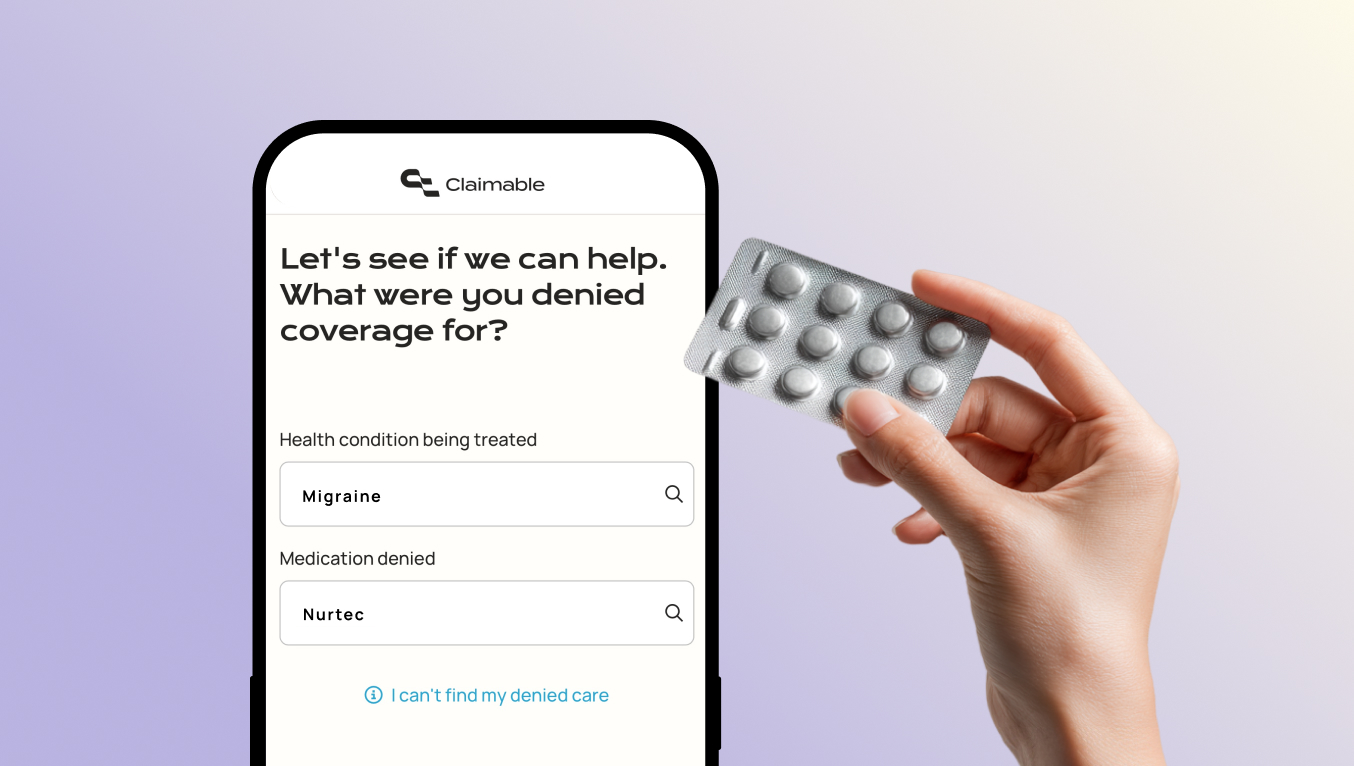
The past few years have brought major progress in how we prevent and manage migraine. CGRP-targeting medications like Aimovig, Emgality, Vyepti, Nurtec ODT, and Qulipta represent a shift in both the science and strategy of treating this condition.
They're often better tolerated and more effective than older medications, and they allow for more personalized care, whether that means a daily pill, a monthly injection, or a quarterly infusion.
But while the science has advanced, insurance coverage hasn't kept up. Patients are still being denied access to these medications due to outdated policies, arbitrary formulary changes, and one-size-fits-all coverage rules. At Claimable, we're working with patients, providers, and advocacy partners to challenge these barriers—and win.
If you're facing a denied claim for a migraine medication, read on to understand the tactics insurance companies take to limit access to these treatments – and what you can do to get covered.
Understanding the migraine treatment landscape
As a migraine sufferer, I know that migraines are more than a bad headache. It's a disabling neurological disease that affects over 40 million people in the U.S. and is a leading cause of missed work and reduced quality of life.
CGRP (calcitonin gene-related peptide) medications have transformed our ability to treat and prevent migraine. Unlike older medications developed for other conditions (like epilepsy or depression), CGRP drugs are designed specifically for migraine. They target the biological mechanisms believed to drive attacks, offering relief with fewer side effects.
Why migraine coverage is so challenging
Even though these medications are FDA-approved and supported by professional guidelines, insurance plans often:
- Require you to fail older, less effective drugs first
- Only cover one CGRP drug despite clinical differences
- Force patients to switch medications mid-year due to rebate deals
- Approve treatment only temporarily, requiring re-authorization every few months
- Use vague or bureaucratic reasons to deny access altogether
This system doesn't reflect the complexity of migraine or the individual needs of patients. It reflects cost-saving tactics that delay care.
Common migraine insurance denial reasons – and how we fight them
Step Therapy Requirements
What it is: Insurance insists you try and fail older medications (like triptans, topiramate or amitriptyline) before approving CGRP drugs.
Why it's wrong: These older medications often come with tough side effects and weren't designed for migraine. The American Headache Society supports CGRP drugs as a first-line option.
How we fight it: We submit detailed appeals outlining your treatment history, side effects from older meds, and professional guidelines that justify bypassing step therapy.
Formulary exclusions
What it is: Only one CGRP medication is covered. All others are denied.
Why it's wrong: CGRP drugs aren't interchangeable. A daily pill may work better for one person than a monthly injection. Side effects and effectiveness vary.
How we fight it: We explain the medical rationale for your chosen medication, using provider notes and evidence that shows why it's not just a preference—it's a necessity.
Mid-Year medication switching
What it is: Your plan changes coverage mid-year due to PBM rebate deals, forcing you to switch medications from a medication you're stable on to what they prefer.
Why it's wrong: Migraine treatment relies on consistency. Switching meds can cause rebound attacks and destabilize your care.
How we fight it: We focus on treatment stability and cite ERISA protections (if applicable) to challenge the fairness of mid-year changes.
Short-term or conditional approvals
What it is: You get approved for 30 or 60 days at a time, with constant re-authorization requirements.
Why it's wrong: Migraine is chronic. Short-term approvals create anxiety, disrupt care, and burden providers.
How we fight it: We argue for long-term approval based on your condition and medication response, using both legal framing and clinical support.
"Not medically necessary" determinations
What it is: Your insurer denies a medication without a clear reason, claiming it's not necessary.
Why it's wrong: This ignores your provider's judgment and contradicts clinical guidelines.
How we fight it: We present peer-reviewed studies, your provider's rationale, and documentation showing how the treatment improves your quality of life.
Administrative or documentation barriers
What it is: Missing forms, technicalities, or unclear instructions result in denials.
Why it's wrong: The insurer is making medical decisions by burying you in paperwork. Most people give up and concede to insurance demands. It's generally understood that patients who accept non-medical switches have adverse side effects and poorer outcomes.
How we fight it: We ensure everything is submitted cleanly and correctly, with language that anticipates common administrative objections.
How Claimable builds strong migraine appeals
As a patient, you have the right to challenge these denied claims. Insurers are required to comply with state and federal laws – which often require their denial rationale to be based on medical necessity, FDA standards, and other clinical, legal, and policy standards.
That means a strong appeal should include clinical evidence, legal standards, and policy compliance to hold insurance accountable to deliver your care and coverage. At Claimable, we use a multi-layered approach:
- Personal narrative: We capture your history, prior treatments, and how migraine affects your life. In particular this could be how you're not able to enjoy your hobbies or do basic things like drive safely at night. We hear of patients becoming socially isolated.
- Clinical evidence: We include the latest guidelines, studies, and medication-specific data. This includes the guidance from the American Headache Society, and other peer-reviewed studies and randomized controlled trials proving these medications are right for you.
- Legal leverage: We reference plan terms, medical necessity requirements, and ERISA protections. This helps reinforce your rights to have a full and fair review of your care. An insurance doctor who has never met you shouldn't get to make the call.
- Collaborative advocacy: Your primary care doctor or neurologist can refer you for an appeal if they have a denial, or you can simply add their letter of medical necessity to your appeal to increase its strength.
Why this work matters – unlocking migraine coverage
The medications now available can change lives. But they only work if you can access and stay on them. No one should be forced to suffer just because their insurer hasn't updated its playbook.
At Claimable, we don't just file paperwork. We build appeals that reflect who you are, what you've been through, and why your treatment plan matters. If your migraine medication has been denied, disrupted, or downgraded, we'll help you fight back—with precision, evidence, and persistence. Your journey matters to us.
Facing an insurance denial for Aimovig, Emgality, Nurtec or other migraine medication?
We're here to help. Let's make the system work for you—not against you.
Get started on your migraine appeal today.
Appeal education

Your doctor prescribed therapeutic Botox for chronic migraine. Your insurer said no. That denial is the start of a process you have every right to challenge, and this guide covers exactly how to do it.
Botox (onabotulinumtoxinA) is the only botulinum toxin product FDA-approved for the preventive treatment of chronic migraine. The FDA label describes the approved population as adults with chronic migraine: “≥15 days per month with headache lasting 4 hours a day or longer.” Treatment follows the PREEMPT protocol, the clinical trial program that established the standard injection plan: 155 units delivered as 31 injections of 5 units each, across seven head and neck muscle areas, repeated every 12 weeks.
That clinical specificity should make coverage straightforward. But Botox carries a liability no other specialty drug has: it shares a name with the most recognized cosmetic brand in medicine. Insurers exploit that dual identity.
Automated claims systems flag therapeutic Botox as cosmetic. Reviewers who do engage with the medical record apply step therapy requirements — you must try and fail cheaper treatments first — along with documentation thresholds and treatment frequency limits that rank among the most aggressive in specialty medicine.
Each of those barriers can be challenged. Fewer than 1% of denied claims are ever appealed, and insurers count on that. Patients who push back with the right evidence win at dramatically higher rates. We see this daily at Claimable, where our appeals succeed over 80% of the time in established conditions.
Chronic migraine Botox denials fall into a few categories. Either the claim gets auto-flagged as cosmetic before a clinical reviewer ever sees it, the insurer demands more medication failures than the clinical evidence supports, or the prior authorization submission lacks the headache diary or severity documentation the reviewer needs. This guide covers each denial type and how to respond.
Why Insurance Companies Deny Botox for Chronic Migraine
The specific reason on your denial letter determines your entire appeal strategy. It shapes what evidence to gather, which clinical arguments carry weight, and whether a corrected resubmission could resolve the issue before a formal appeal becomes necessary.
How Chronic Migraine Botox Denials Work
Therapeutic Botox is billed under the medical benefit as a physician-administered injection, rather than through the pharmacy benefit. The drug is billed under HCPCS code J0585 — “Injection, onabotulinumtoxinA, 1 unit” — so a 155-unit session appears on the claim as 155 units of J0585, with the injection procedure billed separately. That billing structure means the prior authorization pathway, the documentation requirements, and the appeals process all follow the medical benefit track, which is different from the pharmacy route most other specialty drug denials take.
One diagnostic detail matters more than any other, and most patients never hear it. The FDA label's description of chronic migraine is an indication descriptor, not a diagnostic definition. The formal definition (ICHD-3) is stricter: headache on 15 or more days per month for more than three months, of which at least eight days meet full migraine criteria. Insurers write both requirements into their coverage policies. UnitedHealthcare's botulinum toxin policy, effective April 2026, requires 15 or more headache days per month and eight or more migraine days per month and headaches lasting four or more hours a day. A patient who documents only the 15 headache days gets denied, and never learns why.
There is no generic or biosimilar version of Botox. FDA's biosimilar product list contains no onabotulinumtoxinA entry, so a plan cannot point you toward a cheaper equivalent version of the same drug. Branded competitors exist — Dysport, Xeomin, Daxxify, Myobloc — but they are distinct formulations with different potency units and different approved indications, and none of them carries an FDA-approved indication for chronic migraine prevention.
AbbVie's published wholesale acquisition cost for the 200-unit Botox vial was $1,302 as of its July 2026 price list, with the 100-unit vial at $651. WAC is a manufacturer list price, not what a clinic pays or what you will be billed — but it is a useful anchor when a plan characterizes the treatment as routine or asks you to pay cash.
What We See Across Thousands of Botox Appeals
Denial letters are written to shut the conversation down. These are the most common types, what they mean, and your best first move.
Cosmetic Reclassification
This denial is unique to Botox, and it happens more often than it should. Insurers' claims processing systems sometimes default to a cosmetic classification when they encounter onabotulinumtoxinA, regardless of the diagnosis code attached to the claim. The result is a denial that reads as if you sought wrinkle treatment when your neurologist prescribed migraine prevention.
Why this happens: Botox and Botox Cosmetic are the same active ingredient licensed under the same FDA biologics license, BLA 103000, marketed under different trade names with different approved indications, different NDC codes, and different vial sizes. Therapeutic Botox comes in 100-unit and 200-unit vials; Botox Cosmetic comes in 50-unit and 100-unit vials. The 200-unit vial — the presentation typically used for a 155-unit chronic migraine session — exists only in the therapeutic line. Billing errors, an incorrect NDC, or a missing diagnosis code can route a therapeutic claim into a cosmetic denial workflow. Some plans also maintain blanket exclusions for “botulinum toxin” without distinguishing between cosmetic and medical use.
The argument that wins: Your appeal should establish three things clearly. First, that you are being treated for the FDA-approved indication of chronic migraine. Second, that the prescribing physician is a neurologist or headache specialist treating a documented medical condition. Third, that the dosing, injection sites, and treatment protocol match the FDA-approved treatment plan. A 155-unit, 31-site injection pattern across the head and neck is the chronic migraine protocol. A cosmetic treatment uses a fraction of that dose in entirely different locations. Name the license, the indication, and the product code, and the miscode has nowhere to hide.
Step Therapy and Prior Treatment Required
Most plans require documented failure of, or intolerance to, preventive medications from at least two different classes before they will approve Botox. The usual classes are beta-blockers (propranolol, metoprolol, atenolol, nadolol, timolol), antiepileptics (topiramate, divalproex sodium), and antidepressants — note that this means antidepressants generally, not just tricyclics: venlafaxine, an SNRI, counts on UnitedHealthcare's policy. Some plans additionally require a trial of a CGRP-targeting therapy.
The requirement patients most often miss is duration. UnitedHealthcare's policy requires a trial of at least two months with agents from two of those three classes. A three-week trial that you abandoned because of side effects may not satisfy the criterion on its face, even though intolerance should — which is exactly why documentation matters. Check your own plan's policy document: the number of classes, the named drugs, and the required trial length all vary.
The detail that changes outcomes: “Failure” includes intolerable side effects, contraindications, and clinical reasons a required medication is inappropriate for you. If topiramate causes cognitive impairment that prevents you from working, that counts as failure. If valproate is inappropriate because of pregnancy risk, document that contraindication explicitly. If a beta-blocker is contraindicated because of asthma, that is a documented failure even without a single dose taken.
The argument that wins: In 2024 the American Headache Society issued a position statement update (Charles AC, Digre KB, Goadsby PJ, Robbins MS, Hershey A. Headache. 2024;64(4):333–341) stating that “CGRP-targeting migraine therapies are a first-line option for migraine prevention. Initiation of these therapies should not require trial and failure of non-specific migraine preventive medication approaches.”
Read that scope carefully, because a plan's medical director will. The recommendation covers CGRP-targeting drugs — the monoclonal antibodies and the gepants — and does not extend first-line status to onabotulinumtoxinA, which appears in the statement only among existing chronic migraine preventives. So this statement is a powerful argument against step therapy for a CGRP drug, and a strong signal of where headache medicine is moving. What it does not do, on its own, is make Botox first-line. Use it as evidence that rigid fail-first sequencing has fallen out of step with current practice, and pair it with the PREEMPT data and your own clinical record.
One point of precision worth having right, since insurers blur it: Aimovig (erenumab) and Ajovy (fremanezumab) are both monoclonal antibodies targeting the CGRP pathway, but they work at different points. Erenumab blocks the CGRP receptor; fremanezumab binds CGRP itself so the protein never reaches its receptor. Both differ again from the gepants — Nurtec, Ubrelvy, Qulipta — which are small-molecule pills. If a plan treats these as interchangeable, that imprecision is itself something to challenge.
Not Medically Necessary
This denial typically signals that the prior authorization submission lacked the clinical detail the reviewer needed. For chronic migraine, that usually means a missing headache diary, a missing migraine day count, or insufficient documentation of how prior treatments failed.
A strong resubmission should include the diagnosis with ICD-10 codes, disease severity documented with migraine-specific measures — headache frequency, migraine day frequency, HIT-6 and MIDAS scores — a complete treatment history with dates, doses, trial lengths and specific reasons each prior therapy was stopped, and a detailed clinical rationale for Botox. If the initial PA was thin, a thorough resubmission can often resolve this without a formal appeal.
Frequency Cap Exceeded
The FDA label specifies re-treatment every 12 weeks, which works out to roughly four sessions a year. If your treatment schedule deviates from that interval, or you have reached an annual session cap your plan imposes, the denial reflects a limit on how often the plan will pay — not a disagreement about whether the treatment works.
Your appeal should cite the FDA-approved dosing schedule and document the clinical rationale for your frequency. If your provider is following the labeled interval and the plan's cap is more restrictive than the label, that inconsistency belongs in your appeal.
One related trap worth knowing: the FDA label stops at 155 units across 31 sites. The PREEMPT trials also permitted an optional additional 40 units using a “follow the pain” approach, up to 195 units and 39 sites, but that option is not in the label — and payers cap at 155. If your physician administered more than 155 units, expect that to be the denial reason, and have the clinical rationale ready.
Prior Authorization Not Obtained
If your provider administered the injection before securing prior authorization, the denial is procedural — but do not assume it is fixable. Some plans will review a request after the fact in narrow circumstances: retroactive eligibility, an emergency, or a documented plan or system error. Many now refuse post-service authorization requests outright and simply deny the claim. Where retroactive review does exist, it is usually a provider-side appeal with a short filing window, not a patient entitlement.
The safe sequence is to get authorization in writing before the session. If a session has already happened without it, ask your clinic's billing office to file a post-service review or appeal immediately, check your plan document for the filing deadline, and be prepared to escalate through the formal appeal process and then external review.
Alternative Preferred Product
Some plans prefer Dysport (abobotulinumtoxinA) or Xeomin (incobotulinumtoxinA) for botulinum toxin indications. As of 2026, Botox is the only botulinum toxin product with an FDA-approved indication for chronic migraine prevention — Dysport, Xeomin, Myobloc, Daxxify, Jeuveau and Letybo are approved for other uses only. That is worth saying plainly in an appeal, because plans sometimes cite a “therapeutic alternative” that has no migraine indication at all.
The FDA label is also explicit that potency units are product-specific, and this sentence is worth quoting directly: “The potency Units of BOTOX are specific to the preparation and assay method utilized. They are not interchangeable with other preparations of botulinum toxin products and, therefore, units of biological activity of BOTOX cannot be compared to nor converted into units of any other botulinum toxin products assessed with any other specific assay method.” That language appears in the label's Warnings and Description sections. If a plan proposes a different toxin as a substitute or tries to convert your dose, quote it.
How to Appeal a Botox Chronic Migraine Denial (Step by Step)
Step 0: Confirm the Claim Is Coded Correctly
Before building a formal appeal, rule out an administrative error. Therapeutic Botox denials frequently trace back to incorrect diagnosis codes, a cosmetic procedure code billed instead of a medical one, or a missing J0585 code.
Confirm the claim was submitted with the correct ICD-10 code: G43.709 (chronic migraine without aura, not intractable, without status migrainosus) or G43.711 (chronic migraine without aura, intractable, with status migrainosus). Get both qualifiers right — ICD-10-CM encodes intractability and status migrainosus on separate axes, and a truncated or mismatched code is itself a routine denial reason. Note also that the chronic migraine subcategory (G43.7-) covers chronic migraine without aura only; patients with aura are coded under G43.1- with frequency documented separately. If the claim was miscoded, a corrected resubmission can resolve the denial without a full appeal.
Step 1: Find Your Deadline
Federal law guarantees you at least 180 days from the date you receive your denial notice to file an internal appeal, and plans can give you longer but never less (29 CFR 2560.503-1(h)(3)(i)). On a UnitedHealthcare commercial plan, that 180-day window is exactly what UHC publishes.
Medicare Advantage is different and catches people out. The deadline is 60 calendar days from receiving your notice — but because CMS assumes you received it five days after it was dated, plans publish it as 65 calendar days from the date on the notice. This is the standard CMS deadline for every Medicare Advantage plan, not one insurer's restriction, and it can be extended for good cause (42 CFR 422.582). Your exact deadline is printed on your denial letter. Mark it the day the letter arrives.
Step 2: Use Both Tracks
Your doctor can perform a clinical appeal: resubmitting the PA, writing a letter of medical necessity, and requesting peer-to-peer review — particularly effective for Botox, where a headache specialist speaking directly to the insurer's medical director can overturn a written denial. You file your own patient-initiated appeal on a separate legal track, with guaranteed response timelines and the right to external review. Both tracks work in parallel and strengthen each other.
Step 3: Verify Your Documentation
Confirm ICD-10 codes, headache day counts and migraine day counts, a headache diary spanning at least three months, HIT-6 (Headache Impact Test-6) or MIDAS (Migraine Disability Assessment) scores, and a complete treatment history with dates, doses, trial lengths and reasons each prior therapy was stopped.
Your headache diary is the single most important supporting document. It establishes the 15-or-more headache days per month that the FDA label describes and the eight-or-more migraine days that most insurer policies require. If the insurer denied for cosmetic reclassification, your documentation package needs to make the therapeutic indication unmistakable.
Step 4: Get a Letter of Medical Necessity
Ask your neurologist or headache specialist directly: “I need a letter of medical necessity for my Botox appeal. Can you include my diagnosis with severity documentation, treatment history, the clinical reasons you prescribed onabotulinumtoxinA, and why the alternatives the insurer is requiring are not appropriate?”
The letter should address your specific denial reason, reference the FDA-approved dosing protocol, document your headache and migraine day counts, and detail the preventive medications you have already tried. For any cosmetic reclassification denial, the letter is especially important because it establishes the therapeutic indication directly from the treating physician.
Step 5: Build the Appeal Package
A complete appeal includes a cover letter, the letter of medical necessity, supporting clinical records, and your personal statement. Structure it around three pillars: your story (how chronic migraine affects daily life, and what effective treatment means for your function, work and independence), clinical evidence (PREEMPT trial data, AHS guidance on migraine prevention, and headache specialty society support for your treatment plan), and policy and legal analysis (how your case meets the plan's own written criteria, Affordable Care Act protections, and applicable state laws).
Step 6: Submit and Track
Submit per the denial letter instructions, and keep records of everything.
How fast your plan must answer depends on the claim (29 CFR 2560.503-1(i)). Urgent or expedited appeals: 72 hours. Pre-service appeals, for care you haven't received yet: 30 days. Post-service appeals, for a bill you've already incurred: 60 days. If your plan is cutting off treatment you are already receiving, it must decide before coverage stops and keep covering you in the meantime.
If a treatment gap risks worsening headache frequency, medication overuse, or loss of treatment response, request expedited review.
Step 7: Escalate If Denied Again
After you exhaust internal appeals, you have the right to an independent external review — file within four months of your final internal denial. A standard review is decided within 45 days; an urgent one within 72 hours.
Here is the part most people get wrong, and it matters: if the external reviewer overturns the denial, your plan is required by law to pay, and must do so without delay even if it intends to challenge the decision in court (45 CFR 147.136(c)(2)(xi)). This is not a state-by-state variable. What varies is which process applies, never whether the decision binds.
Additional options include state Department of Insurance complaints, ERISA remedies for employer-sponsored plans, and state step therapy exception laws. One caveat on that last one: state step therapy laws generally do not apply to self-funded employer plans, which cover most people with job-based insurance. Your HR department or plan documents can tell you which kind you have.
An Easier Way: Let Claimable Handle Your Botox Appeal
If the appeal process is more than you can manage, or if you've been denied once and need a stronger approach, Claimable can take it from here.
You answer a few questions about your Botox denial and medical history. We build a fully customized appeal using our database of clinical studies, insurer policies and legal standards — a purpose-built library of real studies, real laws and real policy data, not a general-purpose chatbot guessing at citations. The appeal includes your personal narrative, clinical evidence matched to your migraine history and denial type, and a policy and legal analysis targeting your insurer's reasoning. We submit it directly to your insurer, and we guide you through escalation if it's needed.
Our volume of therapeutic Botox appeals in chronic migraine means we know which plans auto-deny with cosmetic codes, which respond to guideline-based step therapy exceptions, and which escalation paths produce results.
Appealing with Claimable costs $39.95 plus shipping. No success fees, no hidden charges.
Appeal Timelines: How Long Does a Botox Appeal Take?
Complete submissions move faster. Most Claimable appeals are resolved in 10 days or less. Worth planning for the ceiling, though: the regulations allow up to 60 days for a post-service internal appeal and another 45 for external review, so a worst case runs closer to 15 weeks.
FAQs
Why was my therapeutic Botox denied when my doctor prescribed it?
Therapeutic Botox for chronic migraine requires prior authorization from virtually every insurer, and PA criteria typically include step therapy requirements, disease severity thresholds, and specific documentation requirements such as headache diaries and HIT-6 or MIDAS scores. Many denials also stem from the claim being automatically categorized as cosmetic, which can happen before a clinical reviewer ever sees the file. Your doctor made the clinical decision. The insurer is applying its own coverage rules on top.
Can I appeal a Botox denial myself?
Yes. Patient appeals run on a separate legal track from your doctor's clinical appeal, with guaranteed response timelines, the right to external review, and multiple levels of internal appeal. For Botox specifically, requesting a peer-to-peer review between your headache specialist and the insurer's medical director can be especially effective.
My insurer denied Botox and said it's a cosmetic procedure. I'm using it for chronic migraine. What do I do?
This is one of the most common and most correctable Botox denials. The insurer's system likely coded the claim as cosmetic without clinical review. Your appeal should document the therapeutic indication with the correct ICD-10 code, confirm that dosing follows the FDA-approved protocol, and include a letter of medical necessity from your neurologist or headache specialist. The strongest single point: Botox and Botox Cosmetic are licensed under the same FDA biologics license with different indications and different product codes, and the 200-unit vial used for migraine treatment does not exist in the cosmetic line. See the Cosmetic Reclassification section above for the full strategy.
Is there a generic or biosimilar version of Botox?
No. As of 2026 there is no FDA-licensed biosimilar or generic version of Botox — FDA's biosimilar product list does not include onabotulinumtoxinA as a reference product. Branded competitors (Dysport, Xeomin, Daxxify, Myobloc) are clinically distinct products with non-interchangeable potency units, and Botox is the only botulinum toxin product FDA-approved for the preventive treatment of chronic migraine.
How much does therapeutic Botox cost without insurance?
Costs vary widely by setting and by what's counted. The drug alone runs roughly $1,000 to $1,300 per 155-unit session, and the injection procedure adds roughly $150 to $350 on most commercial fee schedules — so a typical allowed amount lands in the $1,200 to $1,600 range. Hospital outpatient departments bill considerably more once a facility fee is added, and billed charges before insurance adjustments frequently reach $2,000 to $3,000 or higher. Ask your clinic for the specific billing codes and their contracted rate rather than relying on a general range.
AbbVie runs the BOTOX Complete Savings Program for patients with commercial insurance. It applies to copay, coinsurance and deductible — up to $1,400 for your first treatment of the year, $1,000 for each subsequent treatment, and $4,000 per calendar year, for up to five treatments in 12 months. It does not apply if you have Medicare, Medicaid or TRICARE, or if you are paying cash. Separately, patients with limited or no insurance coverage who meet income criteria can apply to myAbbVie Assist, AbbVie's patient assistance program, which can provide medicine at no cost. Approval is case by case and requires proof of household income, so confirm current Botox eligibility with the program directly rather than assuming coverage.
My insurer wants me to try Dysport or Xeomin instead of Botox. Are they the same?
No. They are different formulations with different potency units, different approved indications, and different clinical trial profiles. The FDA label for every botulinum toxin product states that units are not interchangeable. Botox is the only botulinum toxin with an FDA-approved indication for chronic migraine, and the PREEMPT clinical trial program that established the standard injection protocol was conducted exclusively with onabotulinumtoxinA. If your physician chose onabotulinumtoxinA for clinical reasons, your appeal should document that rationale and quote the label's non-interchangeability language.
Does the American Headache Society support Botox as first-line for chronic migraine?
Not directly, and it's important to get this right in an appeal. The AHS 2024 position statement update elevated CGRP-targeting therapies — the monoclonal antibodies and gepants — to first-line status, recommending that patients should not have to fail other preventive classes first. That recommendation is scoped to CGRP drugs; Botox appears in the statement only among existing chronic migraine preventives. What the statement does establish is a broad consensus in headache medicine that rigid step therapy delays effective treatment. OnabotulinumtoxinA remains a well-established, FDA-approved preventive with strong clinical trial support in the PREEMPT program. If your insurer demands multiple oral medication failures before approving Botox and your clinical record supports earlier intervention, that gap between insurer policy and clinical practice strengthens your appeal.
Is it worth appealing a Botox denial?
In most cases, yes. Chronic migraine affects patients on 15 or more days every month, and untreated chronic migraine carries real clinical consequences: escalating headache frequency, medication overuse, lost work days, and deteriorating quality of life. The appeals process exists for situations where an administrative or formulary decision diverges from your clinical reality. Your doctor prescribed Botox because the evidence supports it. The appeal forces the insurer to respond to that evidence on the record.
Claimable's physician-led team has helped patients recover over $30 million in care access by fighting insurance denials. We're SOC 2 Type II certified and HIPAA compliant. Learn more about how Claimable works →
Insurer coverage policy details in this guide were verified in August 2026. Plan criteria are typically revised at least annually — check your own plan's current policy document before filing.
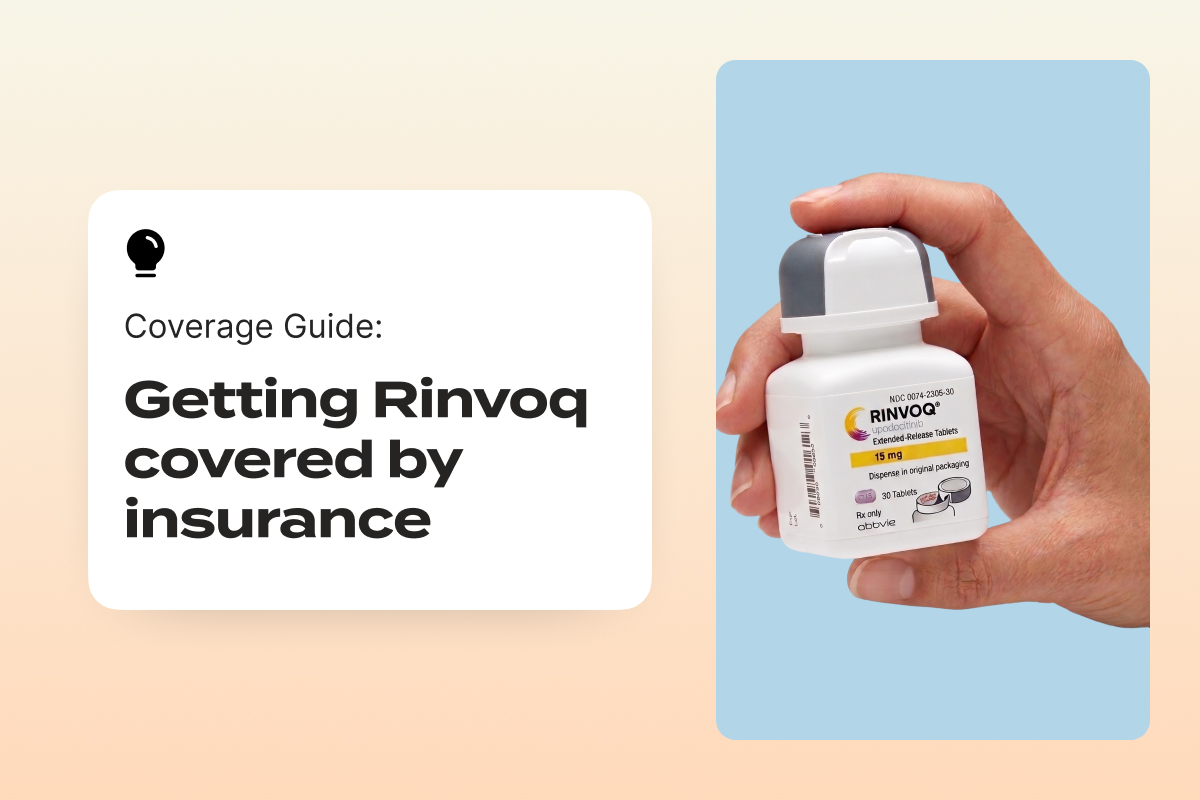
Your doctor prescribed Rinvoq because it’s the right treatment for your condition. Your insurer denied it. And the reason likely traces back to a safety study of a different drug, in a different patient population.
Rinvoq (upadacitinib) is a JAK1 inhibitor, a pill that targets a specific enzyme driving inflammation in autoimmune disease. It’s FDA-approved for nine conditions across rheumatology, dermatology, and gastroenterology. The AAD, ACR, ACG, and AGA all include it in their treatment recommendations.
Insurers still treat it like a last resort. Every JAK inhibitor used for autoimmune and inflammatory conditions carries a boxed warning for serious infections, heart problems, cancer, and blood clots, based primarily on a trial called ORAL Surveillance that studied Xeljanz (tofacitinib) – not Rinvoq – in rheumatoid arthritis patients 50 and older with preexisting heart disease risk factors. The FDA applied that warning across all JAK inhibitors, to ensure awareness of potential risks. Insurers took it as a green light to make Rinvoq one of the hardest specialty medications to get approved.
However, denials can be overturned. Fewer than 1% of denied claims are ever appealed, and insurers count on that. Patients who push back with specific evidence see dramatically higher success rates. We see this daily at Claimable, where our appeals succeed over 80% of the time in established conditions.
Rinvoq denials look different depending on your diagnosis, your dose, and the specific barrier your insurer raised. An RA patient denied because they haven’t tried a TNF blocker (a type of biologic that targets a specific inflammatory protein) is in a different situation than an atopic dermatitis patient whose insurer won’t approve the 30 mg dose. This guide covers each denial type and how to respond.
Why Insurance Companies Deny Rinvoq Coverage
The reason on your denial letter shapes every part of your response. It determines what evidence to gather, which arguments to lead with, and whether a corrected resubmission might resolve the issue before you need a formal appeal.
How Rinvoq Denials Differ
Rinvoq treats nine conditions across three medical specialties, but its denial patterns share a common thread: the boxed warning. Unlike biologics such as Skyrizi or Stelara, which face restrictions driven primarily by cost and competition from biosimilars (cheaper near-copies of brand-name drugs), Rinvoq faces an additional barrier rooted in a class-wide safety label that many clinicians consider overly broad.
Dosing adds complexity. For rheumatology conditions, the dose is 15 mg once daily. Atopic dermatitis may require 15 mg or 30 mg. Ulcerative colitis starts with a 45 mg daily induction dose for 8 weeks, while Crohn’s disease starts with 45 mg daily for 12 weeks; both then transition to 15 mg or 30 mg for maintenance. Insurers that approve the 15 mg dose may deny the higher doses that clinical circumstances demand.
There is no generic version of Rinvoq. AbbVie holds patent protection through at least 2037. At over $7,000 per month without insurance, nearly every major insurer aggressively restricts who can get it.
What We See Across Thousands of Appeals
Denial letters are written to shut the conversation down. These are the most common types, what they mean, and your best first move:
Step Therapy and TNF Failure Required
Most insurers require documented failure on at least one TNF blocker before they’ll approve Rinvoq. This requirement is baked into the FDA labeling itself for most of Rinvoq’s uses, giving insurers regulatory backing. Some plans go further, requiring failure on two or more biologics or conventional therapies.
The specifics vary by diagnosis. RA and PsA patients typically need conventional DMARD failure plus at least one TNF blocker. AS/nr-axSpA requires NSAIDs plus TNF blocker failure. Atopic dermatitis requires topical therapies and may require systemic immunosuppressant or biologic failure before a JAK inhibitor is considered. For UC and Crohn’s, conventional therapies and TNF blocker failure are standard requirements, though the updated FDA indication (October 2025) now allows use when TNF blockers are not a safe option for the patient, as long as they’ve tried at least one approved systemic therapy. Giant cell arteritis (approved April 2025) is so new that many plans are still developing criteria.
The detail that changes outcomes: “failure” includes side effects, contraindications, and documented clinical reasons a drug is inappropriate. If a TNF blocker carries risks your doctor has identified (history of demyelinating disease, heart failure, recurrent infections), that counts as failure even if you never took a single dose.
The argument that wins: For RA, the SELECT-SWITCH study showed that patients did better switching to Rinvoq than cycling to another TNF blocker. The ACR guidelines support JAK inhibitors after inadequate response to conventional DMARDs. For UC, the 2025 ACG guidelines give upadacitinib a strong recommendation with high-quality evidence. For atopic dermatitis, the AAD guidelines recommend upadacitinib for moderate-to-severe disease. Citing these guidelines challenges the insurer to explain why their step therapy requirements exceed what clinical evidence supports.
Boxed Warning / Safety-Based Restriction
This denial is unique to JAK inhibitors. Some insurers impose additional screening requirements, age-based restrictions, or outright denials citing the class-wide boxed warning for serious infections, cancer, heart problems, and blood clots.
Why this matters: The ORAL Surveillance study tested a different drug (Xeljanz) in a specific high-risk population (RA patients aged 50+ with heart disease risk factors). The FDA extended the findings to all JAK inhibitors based on shared mechanism. Upadacitinib’s own clinical trial data has not shown the same safety problems, and many clinicians and published safety analyses have questioned whether the class-wide application was warranted. Insurers use the warning to justify restrictions that go beyond what the FDA requires.
The argument that wins: Address the safety concern head-on. If you’re under 50, have no heart disease risk factors, and no history of cancer, those facts should be front and center. Document that your physician has evaluated the risks and benefits specific to your case. Show that the benefits outweigh the risks for your situation — your physician has already made that determination, and the appeal puts it on the record.
Not Medically Necessary
This denial usually means the PA submission was incomplete. A strong resubmission should include your diagnosis with ICD-10 codes, disease severity documented with objective measures appropriate to your condition (DAS28 for RA, EASI/IGA for atopic dermatitis, partial Mayo for UC, CDAI for Crohn’s), complete treatment history with dates and reasons each therapy was stopped, and clinical rationale for upadacitinib. A thorough resubmission often resolves this without a formal appeal.
Formulary Exclusion
If your plan doesn’t cover Rinvoq at all, a formulary exception with medical necessity documentation is your primary path forward. Document why the formulary alternatives are not appropriate for your specific situation. Plans that cover tofacitinib (Xeljanz) but not Rinvoq should be challenged on the clinical differences: upadacitinib’s more selective JAK1 inhibition, broader range of approved indications, and comparative real-world data.
Dose Denial (30 mg or 45 mg)
Some insurers approve 15 mg but refuse the higher doses. For UC, the 45 mg induction dose is the FDA-approved starting point for the indication. For Crohn’s disease, the same applies: 45 mg daily for 12 weeks is the labeled induction regimen. Denying the induction dose means denying the treatment.
The argument that wins: Cite the FDA-approved dosing for the specific indication. For AD dose escalation, document objective severity scores showing inadequate response at 15 mg. For UC, the 45 mg daily induction for 8 weeks is the labeled regimen. For Crohn’s, it is 45 mg daily for 12 weeks. Both are FDA-approved starting protocols for their respective indications.
Specialty Pharmacy Restriction
Rinvoq is dispensed through specialty pharmacies. If your plan requires a specific one and you tried to fill elsewhere, the fix is typically straightforward: identify the plan’s designated specialty pharmacy and have your prescriber route the prescription there.
How to Appeal a Rinvoq Denial (Step by Step)
Step 1: Find Your Deadline
Most commercial plans allow 180 days. Medicare Advantage plans follow CMS timelines with a 60-day window from receipt of the denial notice (plans often state this as 65 calendar days from the notice date). Your exact deadline is printed on your denial letter. Missing the deadline eliminates your rights.
Step 2: Use Both Tracks
Your doctor handles the clinical appeal (resubmitting the PA, writing a letter of medical necessity, requesting peer-to-peer review). You file your own patient-initiated appeal on a separate legal track with guaranteed response timelines and the right to external review. Patient appeals and your doctor’s clinical appeal work on parallel tracks. Filing your own gives you additional leverage, additional levels of review, and an independent external review that is binding on your insurer. Use both.
Step 3: Verify Your Documentation
Confirm ICD-10 codes, disease severity scores appropriate to your condition, and treatment history with dates, doses, and reasons each prior therapy was stopped. For safety-based denials, include documentation of heart disease risk assessment and baseline labs.
Step 4: Get a Letter of Medical Necessity
This is an important document in your appeal. It should cover your diagnosis with severity scores, complete treatment history, clinical rationale for upadacitinib, and a direct response to the insurer’s stated denial reason.
Ask your doctor directly: “I need a letter of medical necessity for my Rinvoq appeal. Can you include my diagnosis, severity scores, treatment history, and the clinical reasons you chose upadacitinib over the alternatives the insurer is requiring?”
Step 5: Build the Appeal Package
A complete appeal includes the cover letter, the LMN, supporting clinical records, and your personal statement. Structure it around the three pillars: your story (how your condition affects daily life), clinical evidence (relevant specialty guidelines plus head-to-head trial data), and policy and legal analysis (how your case meets the plan’s own criteria, ACA protections, applicable state step therapy laws).
Step 6: Submit and Track
Submit per the denial letter instructions. Insurers must respond within 30 days (standard) or 72 hours (urgent). Keep records of everything.
Step 7: Escalate If Denied Again
You have the right to external review by an independent third party. Their decisions are binding on your insurer. Additional options include state Department of Insurance complaints, ERISA remedies, and state step therapy exception laws.
An Easier Way: Let Claimable Handle Your Rinvoq Appeal
If the appeal process is more than you can manage, or if you’ve been denied and need a stronger approach, Claimable can take it from here.
Here’s how it works:
- You answer a few questions about your Rinvoq denial and medical history.
- We build a fully customized appeal using our database of millions of clinical studies, insurer policies, and legal standards.
- The appeal includes your personal narrative, clinical evidence matched to your condition and denial type, and a policy and legal analysis targeting your insurer’s reasoning.
- We submit it directly to your insurer.
- We guide you through escalation if it’s needed.
Appealing with Claimable costs $39.95 plus shipping for Rinvoq. No success fees, no hidden costs. When Rinvoq runs over $7,000 per month and untreated autoimmune disease can progress to permanent joint damage or surgical complications, the cost of not appealing is far higher.
Appeal Timelines: How Long Does a Rinvoq Appeal Take?
Complete submissions move faster. For example, in most cases, Claimable appeals get a response in just 10 days.
FAQs
Why was my Rinvoq denied when my doctor prescribed it?
Rinvoq requires prior authorization from virtually every insurer, and PA criteria typically include step therapy mandates, disease severity thresholds, safety screening tied to the JAK inhibitor boxed warning, and specialty pharmacy routing. Your doctor made the clinical decision. The insurer is applying its own utilization rules on top.
Can I appeal a Rinvoq denial myself?
Yes. Patient appeals run on a separate legal track from your doctor’s clinical appeal, with guaranteed response timelines, the right to external review, and up to two levels of internal appeal depending on your plan. Your appeal and your doctor’s appeal work on parallel tracks and strengthen each other.
Why does Rinvoq have a boxed warning if it’s safe enough for the FDA to approve?
The boxed warning was applied to all JAK inhibitors after the ORAL Surveillance study found higher rates of heart problems and cancer with Xeljanz (a different JAK inhibitor) in older RA patients with heart disease risk factors. The FDA extended this warning to upadacitinib based on shared mechanism, even though upadacitinib’s own clinical program has not shown the same problems. The FDA still determined that Rinvoq’s benefits outweigh its risks across all nine approved indications.
Is there a generic version of Rinvoq?
No. AbbVie holds patent protection through at least 2037 based on settlement agreements with generic manufacturers. No generic entry is expected before then.
My insurer wants me to try Humira first. Is Rinvoq actually better?
In the SELECT-SWITCH trial studying RA patients who had already failed a TNF blocker, those who switched to Rinvoq achieved low disease activity by week 12 at nearly double the rate of those who switched to Humira: 43.3% versus 22.4%. In atopic dermatitis, the Heads Up head-to-head trial showed Rinvoq 30 mg cleared skin and reduced itch better than Dupixent. Whether Rinvoq is right for your situation depends on your clinical picture, but the data support switching mechanisms rather than cycling through another TNF blocker after failure.
How much does Rinvoq cost without insurance?
A 30-day supply of Rinvoq 15 mg tablets has a list price over $7,000 without insurance. The manufacturer’s list price (WAC) is $7,090.41 as of January 2026, though retail prices vary by pharmacy. Annualized, that exceeds $80,000. AbbVie offers the RINVOQ Complete Savings Card, which may reduce the out-of-pocket cost to as little as $0 per month for eligible commercially insured patients. AbbVie also maintains a bridge program that provides Rinvoq at no charge for up to two years (or until coverage is approved, whichever comes first) for commercially insured patients aged 63 and younger whose coverage is denied, provided an appeal is submitted every 180 days.
What’s the difference between Rinvoq dosing for RA vs. IBD vs. atopic dermatitis?
For rheumatology conditions (RA, PsA, AS, nr-axSpA, GCA), the dose is 15 mg once daily. For atopic dermatitis, the starting dose is 15 mg with escalation to 30 mg available based on clinical response. For UC, treatment starts with 45 mg daily for 8 weeks (induction), then transitions to 15 mg or 30 mg for maintenance. For Crohn’s disease, treatment starts with 45 mg daily for 12 weeks (induction), then transitions to 15 mg or 30 mg for maintenance. This dosing variation is a common source of denials when insurers fail to recognize that the prescribed dose matches the FDA-labeled regimen for the patient’s condition.
Is it worth appealing a Rinvoq denial?
Almost always. Rinvoq is typically prescribed after other options have been tried or ruled out. Untreated RA leads to progressive joint destruction. Uncontrolled atopic dermatitis degrades quality of life through constant itch and skin breakdown. IBD progresses to strictures, fistulas, and surgical complications. The appeals process exists for situations where a formulary restriction doesn’t reflect clinical reality. Your doctor prescribed Rinvoq because the evidence supports it. The appeal forces the insurer to respond to that evidence on the record.
Claimable’s physician-led team has helped patients recover over $60 million in care access by fighting insurance denials. We’re SOC 2 Type II certified and HIPAA compliant. Learn more about how Claimable works →

Wegovy is one of the most frequently denied medications in the country. It’s also one of the medications where patients have the most arguments available to fight back. Most patients have a case. The challenge is figuring out which one to make.
A Wegovy appeal letter that argues weight management when your denial is based on a blanket plan exclusion will fail. So will one that cites cardiovascular data when the insurer’s actual objection is a documentation gap. Wegovy’s FDA label now spans three distinct indications, and each one opens a different set of clinical, policy, and legal arguments. Your letter needs to match your evidence to your specific denial, or it’s wasted effort.
This guide walks through a proven appeal letter structure section by section, explains how to customize each part for your specific Wegovy denial, and covers what to do if the first response comes back unfavorable. We’ve also put together a free downloadable template to give you a starting point.
If you’d prefer not to build this from scratch, Claimable generates fully customized Wegovy appeal letters backed by a purpose-built database of clinical studies, insurer policies, and legal standards, then submits them directly to your insurer on your behalf.
Start Here: Identify Your Denial Type
Before writing anything, find the exact denial reason on your letter. The entire strategy changes depending on which barrier you’re facing, and submitting the wrong type of argument wastes time and appeal opportunities. Wegovy’s FDA label now covers chronic weight management, cardiovascular risk reduction, and MASH with liver fibrosis, which means a blanket “weight loss drug” exclusion doesn’t necessarily close the door.
Our guide to Wegovy denials breaks down each denial type, what it actually means, and the best first move for each, including when an alternate indication can bypass the denial entirely.
If the denial traces back to a correctable issue (a missing lab result, an outdated BMI measurement, or a wrong diagnosis code) you may not need a formal appeal at all. A resubmission with the missing documentation can sometimes resolve it faster.
Wegovy Appeal Letter: What to Include, Plus a Customizable Template
We’ve created a free, customizable appeal letter template you can use as a starting point for your Wegovy appeal:
Download the free appeal letter template
Each section of a strong Wegovy appeal serves a specific function. Here’s what to include and why.
Section 1: Identifying Information, Claim Details, and Denial Reference
Start with a header block that identifies you, your insurer’s appeals department, and the specific claim at issue. The opening paragraph should name the medication, the prescribing physician, your diagnosis, and the insurer’s stated denial reason, quoted directly from the letter. Reproducing their exact language matters. Everything that follows is a targeted response to that specific rationale.
If a gap in treatment poses a medical risk (disease progression, cardiovascular events, weight regain that worsens comorbidities), this is also where you request an expedited review. Most plans must decide expedited appeals within 72 hours.
Note your appeal deadline immediately. Most commercial plans allow 180 days for an internal appeal, but timelines vary by plan type and insurer. UnitedHealthcare allows just 65 days for many plan types. Medicare Advantage plans allow 60 days under CMS rules. ERISA employer plans and Medicaid each run on their own schedules, and some are considerably shorter.
Your exact deadline is printed on your denial letter. Mark your calendar the day the denial arrives and file as early as you can.
Section 2: Your Diagnosis and Its Impact on Your Life
This section establishes your clinical profile and makes the human cost of the denial concrete. Include your diagnosis with ICD-10 codes if available, all relevant comorbidities, and a specific description of how your condition affects daily life.
For Wegovy, the indication your prescriber documented matters enormously. If the prescription is for cardiovascular risk reduction, your appeal needs to center your cardiovascular history (prior heart attack, stroke, peripheral arterial disease) and the risk of being denied a medication with proven event reduction data. If it’s for MASH with liver fibrosis, the framing is hepatic, not metabolic.
If it’s for chronic weight management, the appeal should document the full clinical picture, including BMI, comorbidities, functional limitations, and the impact of obesity on your overall health trajectory.
A reviewer who reads that you’re managing heart failure, sleep apnea, or progressive liver disease reads the clinical sections that follow with a different frame than one who sees a vague reference to weight concerns.
Section 3: Prior Treatments and Their Outcomes
This section demonstrates that you’ve already done what the plan requires, or that there’s a documented clinical reason those requirements don’t apply to you. Present prior treatments in a clear table, with specific dates, drug names, and documented outcomes are what turn a general claim into evidence the insurer is required to address.
Two details that patients frequently overlook. First, “failure” includes intolerable side effects, medical contraindications, and results that didn’t reach or sustain a clinically meaningful threshold, not just complete non-response. Second, if you’re currently on Wegovy and responding well, the continuity of care argument (that switching or stopping would reverse clinical progress) belongs here as well.
Section 4: Why Wegovy Is Medically Necessary
This section connects your physician’s clinical judgment, your treatment history, and your current health trajectory into a single argument. It should explain why Wegovy specifically is the appropriate medication, not just “a GLP-1,” and what happens without it, such as disease progression, cardiovascular events, weight regain that worsens existing comorbidities, liver disease advancement, or loss of function.
Medical necessity is the standard most denials ultimately turn on, and the section should meet it directly. If your prescriber has written a letter of medical necessity, this section of your appeal letter reinforces and builds on that clinical reasoning with your own perspective and supporting evidence.
One detail for patients already on Wegovy that’s easy to miss. Use your baseline BMI from before starting treatment, not your current weight. Insurers have denied coverage based on improved numbers, essentially penalizing patients for responding to the medication. Your pre-treatment clinical picture is what establishes the need.
Section 5: Clinical Evidence Supporting Wegovy
This section does the heaviest lifting, and it’s where most generic appeal letters miss. Cite specific clinical trials, match each to your indication, and connect the data to the insurer’s stated reason for denial.
Match the trial data to your situation. Citing SELECT, a cardiovascular risk reduction trial, in a weight management appeal won’t strengthen your case. Citing weight management studies for a MASH-coded prescription misses the point. Use the trial that matches your indication.
A serious caution: never cite a study you haven’t verified. General-purpose AI tools and template letters routinely generate fabricated clinical references that look convincing. A single invented citation gives the reviewer a clean justification to dismiss your entire appeal. If you can’t produce a real citation for a claim, remove it.
Section 6: The Denial Doesn’t Align With Your Insurer’s Own Criteria
Insurers publish their Wegovy coverage policies, and those documents are publicly available. Pull the relevant policy, identify each criterion, and show point by point that your clinical profile satisfies them.
If the policy requires a BMI of 30 or above and your records show 34, say so. If the policy requires documented comorbidities and your chart lists three of them, list them against the criteria. If the policy requires prior treatment attempts and you’ve already completed them, show the match.
Section 7: Applicable State and Federal Law
Legal citations move your appeal from a request to a demand, and insurers treat those differently. The specific protections available depend on your plan type and your state, but they often include ACA-guaranteed rights to internal appeal and independent external review, state step therapy override laws, and ERISA protections for employer-sponsored plans. Several states now mandate coverage for FDA-approved anti-obesity medications, and if yours is one of them, that belongs in this section.
If your plan excludes weight loss drugs but covers cardiovascular treatment, and you have an established cardiovascular condition, the argument that Wegovy’s CV indication falls outside the weight loss exclusion is both a clinical argument and a legal one. The same applies to MASH, which is a liver disease indication that is categorically different from a weight management one, and your appeal should make that distinction explicit.
Section 8: Request for Review and Approval
Close with a formal, specific request. Ask the insurer to approve coverage for Wegovy, override the cited denial barrier, and if the situation is time-sensitive, process the appeal on an expedited basis. Ask for written confirmation of the decision. If the appeal is denied, request the complete claim file so you can see every document the reviewer considered and identify any gaps for the next level of review.
Section 9: Supporting Documentation
List everything you’re including with the letter, such as the physician’s letter of medical necessity, medical records documenting your diagnosis and treatment history, relevant lab results, the clinical studies cited in the letter, the original denial letter, and any prior appeal decisions. Nothing should require the reviewer to go searching.
Section 10: Citations and References
End with a full reference list of every clinical trial, guideline, insurer policy, and statute cited. This doubles as your own quality check. If you can’t produce a clean, verifiable citation for a claim, that claim should not be in the letter.
An Alternative Approach: Use Claimable
The template above provides the architecture of a strong appeal. But the sections that determine whether it succeeds (clinical evidence, policy analysis, legal citations) are also the ones that require hours of targeted research and where errors weaken your case. A misquoted trial or a misapplied statute does more harm than leaving the section blank.
Claimable does this work for you. You answer a set of questions about your denial, your diagnosis, and your treatment history, and Claimable generates a fully personalized appeal drawing on a specialized database of verified clinical studies, insurer-specific policies, and applicable law. Every citation is verified, every argument is matched to your insurer and plan type, and we mail and fax it directly to your plan on your behalf.
Over 80% of Claimable appeals succeed, with most resolved in 10 days or less. Appealing with Claimable costs $39.95 for Wegovy, with no success fees and no hidden costs.
Start your Wegovy appeal with Claimable.
Common Mistakes That Get Wegovy Appeals Denied
Building the Appeal Around the Wrong Indication
Wegovy’s multi-indication label is an asset, but only if you’re using the one that fits your clinical profile. An appeal that argues cardiovascular risk reduction without documenting established cardiovascular disease won’t land. One that argues weight management when a MASH-coded prescription would bypass the plan exclusion entirely is a missed opportunity. Before drafting, identify which indication gives you the strongest case given your clinical profile and your denial type, and build the entire letter around it.
Using Current Weight Instead of Baseline BMI
If you’ve already been on Wegovy and lost weight, your current BMI may no longer meet the plan’s threshold. That’s the medication working, not a reason to deny coverage. Your appeal should document your pre-treatment baseline, not the number on the scale today. This is a common and avoidable mistake that hands the insurer an easy rationale.
Vague Language That Doesn’t Engage With the Denial
A letter that says “my doctor says I need this medication” without clinical specifics gives the reviewer nothing to evaluate. Spell out your disease activity, your comorbidities, your prior treatments and exactly why they were insufficient, and the precise clinical reasoning for Wegovy over alternatives. Personal impact belongs in the letter, but it reinforces the clinical evidence rather than replacing it.
Citing Fabricated Studies or Incorrect Legal References
General-purpose AI tools generate convincing-looking clinical citations that don’t exist and legal references that don’t say what the letter claims. A reviewer who catches one fabricated source has every reason to treat the entire submission as unreliable. Verify every reference before it goes near your insurer. This is exactly why Claimable runs on a proprietary database of real, verified sources rather than a general-purpose language model.
Missing the Filing Deadline
Deadlines are printed on your denial letter and they are absolute. Most commercial plans allow 180 days for an internal appeal, but not all do. UnitedHealthcare gives just 65 days for many plan types. Medicare Advantage plans allow 60 days under current CMS guidelines.
Missing the window eliminates your right to appeal entirely. Mark the deadline the day the letter arrives and file with as much lead time as possible.
Don’t Navigate This Alone If You Don’t Have To
You have the legal right to appeal, the clinical evidence to support it, and a process designed to give you multiple chances to make your case. The template above gives you the structure to build a strong Wegovy appeal on your own.
If you’d rather not spend hours verifying clinical studies and tracking down insurer policies, Claimable handles the research-intensive work, builds an appeal customized to your insurer and plan type, and submits it on your behalf. Over 80% of our appeals succeed, with most resolved in 10 days or less.
Download a winning sample appeal
Want to see what it takes to successfully overturn a health insurance denial? Download our sample appeal to learn how we build strong, evidence-based cases that get results.

///////////////////////////////////////////////////////////////////////
//////////////////////////////////////////////////////////////////////////
////////////////////////////////////////////////////////////////////
/////////////////////////////////////////////
Each month, I endure about eight major episodes, each one leaving me exhausted, unable to concentrate, and too unwell to take part in daily life.
The frequency and unpredictability of these symptoms have isolated me socially and limited my capacity to take part in activities most people take for granted.
///////////////////////////////////////////////////////////////////////
//////////////////////////////////////////////////////////////////////////
////////////////////////////////////////////////////////////////////
/////////////////////////////////////////////
Featured stories


In the news
Be the first to know
Get the latest updates on new tools, inspiring patient stories, expert appeal tips, and more—delivered to your inbox.
You're on the list!

One of our core principles is to help patients protect their rights and level the playing field with their insurance company. This includes rights to multiple appeals, fair reviews, decision rationale, exceptions when needed, and adequate network access, among others. For more, read our post on patients rights.
For many medications, there's no cost to use Claimable to appeal for qualifying patients – thanks to our network of support partners working to expand access to care.
If you aren't eligible for a no cost appeal, Claimable charges a flat fee of $39.95 + shipping. One simple, straightforward price – no success fees or hidden charges. If appealing with Claimable is unaffordable for you, visit our nonprofit partner Coverage Fund.
Check how much Claimable will cost for your specific situation by starting an appeal and entering your insurance information. So you always know what to expect ahead of time – no surprises.
Claimable’s AI-powered platform analyzes millions of data points from clinical research, appeal precedents, policy details, and your personal medical story to generate a customized appeals in minutes. This personalized approach sets Claimable apart, combining proprietary and public data, advanced analysis and your unique circumstances to deliver fast, affordable, and successful results.
We currently support appeals for over 85 life-changing treatments. Denial reasons may vary from medical necessity to out of network, and we even cover special situation like appealing plans that won’t count your copay assistance towards your deductible (hint: those policies were banned at the federal level in 2023). That said, we are rapidly growing our list of supported conditions, treatments and reasons. You can quickly check eligibility and ask to be notified when your interest becomes available. It helps us know where to focus next 🙂
We think about appeal times in a few ways. First, many professional advocates and experienced patients spend 15, 30 or even 100 hours building an appeal–but with Claimable, this takes minutes. We automate the process of analyzing, researching, strategizing and wordsmithing appeals. Next, there is the process of figuring out where you will send it (hint: expand your reach beyond appeal departments), then printing, mailing and/or faxing your submission. We handle that, too. Finally, there is the time it takes to get a decision. We request urgent reviews when appropriate, and typically receive standard appeal decisions within a couple weeks.
Review periods are mandated by applicable laws, from 72 hours for urgent, 7 days for experimental, 30 days for upcoming and 60 days for received services. Our goal is to get a response as fast as possible, since most of our clients are experiencing long care delays or extreme pain and suffering.
Claims are denied for a variety of reasons, many of which blur definitions. We focus on helping people challenge denials by proving care is needed and meets clinical standards, in addition to addressing specific issues like experimental treatments, network adequacy, formulary or site of care preference exceptions. We don't support denials for administrative errors or missing information, as we think those are best handled by simply resubmitting the claim in partnership with your provider. That said, many of our most rewarding successes have been cases previously though 'unwinnable', with providers and patients who fought tirelessly for months without appropriate response or resolution.
A denial letter is a formal notice from your insurance company explaining why a claim was denied and how you can appeal the decision. Sometimes the notice is included within an Explanation of Benefits. It is a legal requirements; if you didn’t receive one, contact your insurance company.
A letter of medical necessity is a statement from your doctor justifying why a specific treatment is critical to your care and/or urgently needed. You can attach it to your patient appeal to strengthen your case, especially if you are requesting an urgent appeal or need to skip standard ‘step therapy’ requirements. That said, we don’t require them and are often successful without them.
A claim file contains all the documents and communications your health plan used to decide whether to approve or deny your claim. Most health plans are legally required to share this information upon request. According to a ProPublica investigation, reviewing your claim file can help expose mistakes or misconduct by your health plan, which can make your appeal stronger.
Your insurer is required by law to give you written information about how to appeal, including the name of the company that reviewed your claim and where to send your appeal. Your health insurer may work with other companies, such as Pharmacy Benefit Managers (PBMs), Third-Party Administrators (TPAs), or Specialty Pharmacies, to manage your claims. These companies might be responsible for denying your claim and handling the appeal process on behalf of your insurer.
If you don't win your first appeal– don't give up! Many people are successful on their 2nd, 3rd or even 4th try, and future appeals are reviewed by independent entities. That said, we wrote a whole guide to understanding your options, including escalating your appeal and seeking other assistance for covering costs, forgiving debt or even seeking legal or regulatory support.
While both denial rates and appeal success rates vary widely by the type of health plan, state, and insurance company, studies have shown more than 50% of people win their appeal–and we apply strategies to boost your chances of success. Claimable has an 80% appeal success rate. The biggest denial challenge is that most people never appeal–allowing unjust denials to control their healthcare options because they are unaware of their rights or lack the support needed to fight back. No one needs to fight alone–Claimable is here to help. We know first hand that many denials are based on errors, inconsistencies or auto-decisions, and have proven strategies for fighting back against this injustice.
Let’s get you covered.