Resources

Latest posts
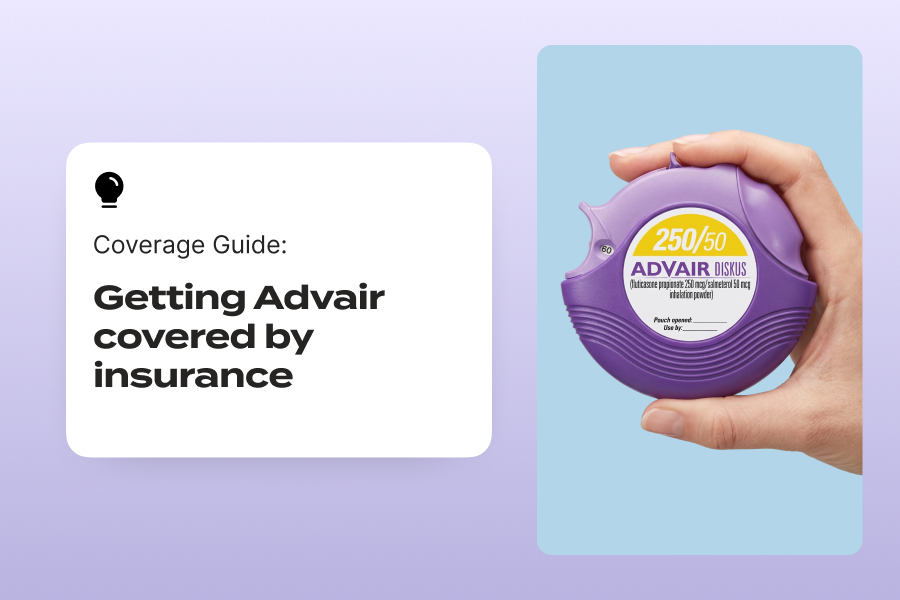
Your doctor prescribed Advair because your asthma or COPD requires a combination of an inhaled corticosteroid to reduce airway inflammation and a long-acting bronchodilator to keep your airways open, working together in every dose. Then your insurer said no.
You have the right to challenge that denial, and many patients who do succeed. Advair has been one of the most widely prescribed respiratory medications in the world for over two decades. Millions of patients with asthma and COPD rely on it, and your doctor prescribed it for a reason. When an insurer denies Advair, the dispute is almost always over which specific form, device, or brand of combination inhaler you should be using.
The specifics of which Advair you were prescribed can determine the entire denial. Advair comes in two devices, the Diskus (a dry powder inhaler) and the HFA (a metered dose inhaler). Generic versions of the Diskus have been available since 2019, including Wixela Inhub and authorized generic fluticasone/salmeterol.
An authorized generic of Advair HFA exists, but it is inconsistently stocked, and many plans still treat it as if no generic option exists. Most plans require the generic Diskus form whenever possible, but patients who need the HFA specifically face tighter coverage restrictions for a device-specific need.
Other patients face a different version of this problem. Their plan prefers a different ICS/LABA entirely, such as Breo Ellipta or Symbicort, and requires a trial of the preferred drug before covering Advair. Still others are denied because the prior authorization submission was too thin, or because the plan requires stepping through an ICS-only inhaler first.
Fewer than 1% of denied claims ever get appealed because of how confusing and intimidating the process feels. However, patients who do push back with the right evidence see dramatically better results. We see this every day at Claimable, where our appeals succeed more than 80% of the time in established conditions. This guide walks through each Advair denial type and how to respond.
Why Insurance Companies Deny Advair Coverage
The denial reason on your letter determines your strategy. A patient denied because the plan requires generic fluticasone/salmeterol is in a completely different situation than one denied because the insurer prefers Breo Ellipta. Match your denial to the corresponding response before you do anything else.
What Makes Advair Denials Different
Advair denials center on cost optimization: which form, which device, and which brand the insurer prefers.
The Diskus vs. HFA split is the coverage issue most specific to Advair. The Diskus is a dry powder inhaler (DPI) that relies on the strength of your breath to pull the powder into your lungs. The HFA is a metered dose inhaler (MDI) that sprays medication out automatically, regardless of how strongly you can inhale.
For most adults with adequate lung function, either device works. But for patients who can’t use a DPI effectively, the HFA may be their only option, and because generic HFA availability is inconsistent, they face tighter coverage restrictions.
Generic fluticasone/salmeterol is widely available and covered by most plans with lower copays than brand Advair. For patients who can use the Diskus form, switching to Wixela Inhub or authorized generic fluticasone/salmeterol usually works just as well.
What We See Across Thousands of Appeals
Here are the most common denial types, what they actually mean, and where to start:
Brand Denied, Generic Required
This is the most common Advair denial. Your plan covers fluticasone/salmeterol but requires the generic version (Wixela Inhub or authorized generic) rather than brand Advair Diskus.
When to switch: generic fluticasone/salmeterol contains the same active ingredients at the same doses and meets FDA bioequivalence standards. For most patients using the Diskus form, the generic is clinically equivalent and costs significantly less (as low as $50-$55 with a discount card vs. $200+ for brand).
When to appeal: if you’ve had a documented adverse reaction to a generic formulation, if you have difficulty using the Wixela Inhub device (which resembles the Diskus but differs slightly in design), or if your prescriber has a specific clinical reason for requiring brand. In most cases, though, switching to generic is the fastest path to coverage.
HFA Denied, Diskus or Generic Required
This is the denial most specific to Advair. Your plan covers the dry powder form (Diskus or generic) but won’t cover Advair HFA, the metered dose inhaler. Because generic HFA availability is inconsistent, most plans still restrict HFA coverage as the higher-cost option.
The argument that wins: some patients cannot use a dry powder inhaler effectively. Dry powder devices require a minimum breathing force to deliver medication properly, and your doctor can measure whether you meet that threshold. Patients who can’t meet that threshold, including young children, elderly patients with reduced lung capacity, individuals with severe COPD or acute exacerbations, and patients with neuromuscular conditions, may need the HFA because it sprays medication automatically rather than relying on the strength of your breath. If the patient can also benefit from a spacer device (which only works with MDIs, not DPIs), that’s an additional clinical reason.
Your prescriber should document the specific clinical reason the HFA form is medically necessary, including breathing test results, device technique assessments, or clinical conditions that make the dry powder form ineffective for you.
Different ICS/LABA Preferred
Some plans prefer a different ICS/LABA combination over fluticasone/salmeterol. Common preferred alternatives include Breo Ellipta (fluticasone furoate/vilanterol, once-daily dosing), Symbicort or generic budesonide/formoterol, and AirDuo (fluticasone/salmeterol in a different device).
When the switch makes sense: if you don’t have a specific clinical reason to be on fluticasone/salmeterol and haven’t tried the preferred alternative, switching may be straightforward. All ICS/LABA inhalers reduce asthma symptoms and exacerbations.
When to appeal: if you’ve already tried and failed the preferred alternative (intolerable side effects, inadequate symptom control, device issues), if you’re stable on Advair and switching introduces unnecessary risk, or if there’s a specific clinical reason fluticasone/salmeterol is the better combination for you. Document the prior trial, the outcome, and the prescriber’s rationale.
Step Therapy Required
Some plans require a trial of an ICS-only inhaler (fluticasone, budesonide, beclomethasone) before they’ll approve the addition of a LABA. This is more common for patients with a new asthma diagnosis or those stepping up therapy.
The detail that matters: if your asthma severity warrants combination therapy from the start (moderate persistent or worse, with a history of exacerbations on an ICS alone), your doctor’s appeal should cite the current treatment guidelines — specifically GINA 2026 and the NHLBI Expert Panel Report guidelines and its 2020 Focused Update — both of which support ICS/LABA for patients with persistent asthma not adequately controlled on ICS alone. If you’ve already tried an ICS-only inhaler and it wasn’t sufficient, document that trial with dates, doses, and symptom outcomes.
Not Medically Necessary
This denial usually means the PA was submitted with insufficient clinical documentation. A strong resubmission includes the following: your diagnosis with the standardized codes your insurer needs to process the claim (called ICD-10 codes), breathing test results, exacerbation history (ER visits, hospitalizations, oral steroid courses), current symptom burden, and a complete medication history showing prior therapies tried.
How to Appeal an Advair Denial (Step by Step)
Step 0: Confirm the Prescription Is Coded Correctly
Before launching a full appeal, rule out an administrative error. A surprising number of Advair denials trace back to a wrong diagnosis code, the claim being sent to the wrong part of your plan (for example, processed as a medical claim instead of a pharmacy claim, or vice versa), or a mismatch between the prescribed form and what was submitted on the prior authorization.
Ask your prescriber’s office to confirm the diagnosis codes, the exact product identifier (called an NDC) submitted, and whether the claim was routed to the correct benefit. Catching a coding error here can resolve the denial without any appeal at all.
Step 1: Find Your Deadline
Most commercial plans allow 180 days. UnitedHealthcare limits many plans to 65 calendar days. Medicare Advantage plans allow 60 days. Missing the deadline eliminates your rights.
Step 2: Use Both Tracks
This is one of the most underused strategies in the appeals process. Your doctor handles the clinical appeal (resubmitting the PA, writing a letter of medical necessity, requesting peer-to-peer review). But you also have your own, separate appeal rights as a patient — a legal track with guaranteed response timelines, the right to external review by an independent third party, and multiple levels of appeal.
Patient-initiated appeals complement provider appeals. They run on parallel tracks, and using both puts maximum pressure on the insurer to evaluate your case on the merits. Here’s why appealing yourself, not just leaving it to your doctor, matters.
Step 3: Verify Your Documentation
Confirm your diagnosis codes, severity classification, breathing test results, exacerbation history, and prior medication trials. For HFA-specific appeals, include documentation of why the dry powder form isn’t appropriate (your doctor can provide breathing force measurements and device technique assessments).
Step 4: Get a Letter of Medical Necessity
This is an important document in your appeal. It should include your diagnosis with severity scores, treatment history, and clinical rationale addressing the insurer’s specific denial reason. For HFA appeals, the rationale should explicitly address why the DPI form is inadequate. For preferred alternative denials, document why the plan’s preferred ICS/LABA doesn’t fit your situation.
Here is a plain-language way to ask your doctor: “My insurance denied Advair. I’d like to appeal, and one of the strongest pieces of evidence is a letter of medical necessity from you. It should explain my diagnosis, what we’ve already tried, and why this specific form of Advair is the right treatment for me. Can your office put that together so I can include it in my appeal?”
Step 5: Build the Appeal Package
A complete appeal includes the cover letter, letter of medical necessity, supporting clinical records (breathing tests, exacerbation history, medication history), and your personal statement.
Structure it around three pillars: your story (how uncontrolled asthma or COPD affects your daily life), clinical evidence (your doctor can reference GINA 2026 and NHLBI guidelines supporting your treatment), and policy and legal analysis (how your case meets the plan’s criteria, Affordable Care Act protections, applicable state laws).
Step 6: Submit and Track
Submit per the denial letter instructions. Insurers must respond within 30 days (standard) or 72 hours (urgent). Keep records of everything — dates, names of representatives, confirmation numbers, and copies of every document you send. If a deadline passes and you haven’t heard back about your appeal, you have options to hold the insurer accountable.
Step 7: Escalate If Denied Again
You have the right to external review by an independent third party. Their decisions are binding in most states. Additional options include state Department of Insurance complaints, remedies under ERISA, the federal law governing employer-sponsored plans, and state laws that limit when insurers can force you to switch medications or require you to try cheaper drugs first.
Appeal Timelines: How Long Does an Advair Appeal Take?
Complete submissions move faster. The average Claimable appeal gets a response in just 10 days.
FAQs
Why was my Advair denied if it’s been around for 25 years?
Coverage decisions are based on formulary placement and cost, regardless of how long a drug has been available. Most plans now require generic fluticasone/salmeterol rather than brand Advair, and some prefer a different ICS/LABA altogether. Advair HFA faces the steepest coverage barriers because generic HFA availability is inconsistent. Your plan likely covers some form of ICS/LABA combination, just not the specific form your doctor prescribed.
Is generic fluticasone/salmeterol the same as Advair Diskus?
Yes, in terms of active ingredients and FDA bioequivalence. Wixela Inhub and authorized generic fluticasone/salmeterol contain the same medications at the same strengths as Advair Diskus. The devices differ slightly in design but function similarly. For most patients, the switch is straightforward.
My plan denied Advair HFA. Can I use the Diskus instead?
It depends on why your doctor prescribed the HFA. If you can breathe in forcefully enough for a dry powder inhaler and are comfortable with the technique, the Diskus or Wixela Inhub may work just as well. If you need the metered dose inhaler because of reduced breathing strength, difficulty with DPI technique, or the need for a spacer, your appeal should document that clinical need specifically.
My insurer wants me to use Breo Ellipta instead. Is that the same?
Both are ICS/LABA combination inhalers, though they differ in important ways. Breo Ellipta uses fluticasone furoate/vilanterol and is dosed once daily. Advair uses fluticasone propionate/salmeterol and is dosed twice daily. Some patients do well on either; others respond better to one combination. If you’ve already tried the preferred alternative and it didn’t work, or if your doctor has a specific reason for choosing fluticasone/salmeterol, document that in your appeal.
Can I appeal an Advair denial myself, or does my doctor have to do it?
You can, and you should. Your doctor files a clinical appeal through the insurer’s provider process, but you have your own, independent appeal rights as a patient. Patient-initiated appeals run on a separate legal track with guaranteed timelines, external review rights, and multiple levels of appeal. Using both tracks gives you the best chance of overturning the denial.
How much does Advair cost without insurance?
Brand Advair Diskus and HFA run roughly $200-$500 per inhaler at retail. Generic fluticasone/salmeterol (Wixela Inhub) can cost as little as $50-$55 with a discount card. GSK offers a copay card that caps out-of-pocket costs at $35 per month for eligible commercially insured patients — this card is not valid for Medicare, Medicaid, or other government-funded plans. The Viatris savings card for Wixela Inhub can reduce insured patient copays to as little as $10 per fill. For patients without commercial insurance, GSK’s patient assistance program may provide the medication at no cost to eligible patients who meet income requirements.
Is it worth appealing an Advair denial?
Yes, particularly if the denial is blocking access to the specific formulation or device your doctor determined you need. Poorly controlled asthma leads to ER visits, hospitalizations, missed work and school, and progressive decline in lung function. COPD exacerbations can be life-threatening. The stakes of an asthma denial can be devastating. If the insurer’s preferred alternative isn’t clinically appropriate for your situation, the appeal puts your doctor’s reasoning in front of someone who has to evaluate it on the merits.
Claimable’s physician-led team has helped patients recover over $30 million in care access by fighting insurance denials. We’re SOC 2 Type II certified and HIPAA compliant. Learn more about how Claimable works →
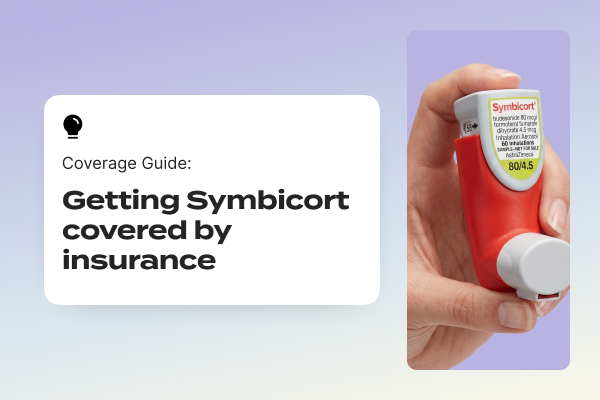
Your doctor prescribed Symbicort because your asthma or COPD needs a specific type of treatment, but your insurer denied it. The reason probably has less to do with whether you need an ICS/LABA inhaler (a combination of an inhaled steroid and a long-acting airway opener) than with the fact that your plan's formulary (its preferred drug list) ranks cheaper alternatives ahead of it.
Symbicort (budesonide/formoterol) is the only widely available ICS/LABA that can serve as both your daily controller and your rescue inhaler in a single device. It contains formoterol, an airway opener that works fast enough to also serve as a rescue medication. That fast action is what makes SMART therapy (Single Maintenance and Reliever Therapy) possible. The GINA (Global Initiative for Asthma) 2025 guidelines recommend SMART as the preferred approach for moderate-to-severe asthma. Advair and Breo Ellipta, the alternatives most drug lists prefer, contain airway openers that work more slowly and cannot double as rescue inhalers.
That hasn't stopped insurers from building their drug lists around those alternatives. Most plans prefer generic fluticasone/salmeterol or Breo over Symbicort. Most exclude the brand and only cover the generic version. And plans that do cover it often set a limit on how many inhalers you can get per month, which are frequently too few for SMART therapy patients. The result is that a treatment the guidelines recommend keeps getting blocked by drug lists that weren't designed to support it.
However, denials can be overturned. Fewer than 1% of denied claims are ever appealed, and insurers count on that. But patients who push back with specific evidence see dramatically higher success rates. At Claimable, our appeals succeed over 80% of the time in established conditions.
Symbicort denials look different depending on your diagnosis, your treatment plan, and the specific barrier your insurer put up. A patient denied because the plan caps how many inhalers it will cover each month is in a different situation than one denied because their plan prefers a different inhaler. This guide covers each type and how to respond.
Why Insurance Companies Deny Coverage for Symbicort
The specific denial reason determines your strategy. A patient denied because the plan prefers a different ICS/LABA is in a different situation than one denied because they hit a quantity limit, or one whose plan excluded brand Symbicort in favor of the generic.
What We See Across Thousands of Appeals
These are the most common denial types, what they actually mean, and where to start:
Plan Prefers a Different Inhaler
This is the most common Symbicort denial. Your plan prefers a different ICS/LABA, typically generic fluticasone/salmeterol (generic Advair), Breo Ellipta, or Wixela Inhub, and won't cover Symbicort until you've tried the preferred option.
When the switch makes sense: if your doctor prescribed Symbicort for standard twice-daily maintenance and doesn't plan to use it for SMART therapy, and you don't have a clinical reason to need formoterol specifically, the preferred alternative may work just as well for controlling your asthma or COPD. ICS/LABA inhalers in general are effective at reducing symptoms and exacerbations.
When to appeal: if your doctor prescribed Symbicort specifically for SMART therapy, the preferred alternatives simply cannot fill that role. Advair and Breo contain salmeterol or vilanterol, neither of which work fast enough to be used as a rescue inhaler. Requiring a trial of those alternatives first asks you to fail a medication that cannot perform the function your doctor prescribed Symbicort for. Your appeal should cite the GINA 2025 guidelines, which recommend ICS-formoterol as the preferred treatment approach, and explain the plan's preferred alternatives cannot substitute for Symbicort in SMART therapy. When the block is a straight formulary exclusion rather than a step requirement, a formulary exception request is often the fastest route to coverage.
Other clinical reasons to appeal include: documented intolerance or side effects with the preferred alternative, better symptom control on Symbicort than on the preferred option (if you've already tried it), or a specific clinical feature like exercise-triggered symptoms where formoterol's fast action matters.
Brand Not Covered, Generic Only
Most plans now exclude brand Symbicort and cover only generic budesonide/formoterol or Breyna. This is one of the more straightforward denials.
When to switch: generic budesonide/formoterol contains the same active ingredients at the same doses and meets the same FDA standards proving it works the same way in your body. For most patients, switching to the generic is clinically equivalent and often cheaper.
When to appeal: if you've had a documented adverse reaction to a generic formulation (differences in inactive ingredients or propellant can occasionally cause issues), or if the generic isn't available at your pharmacy. In most cases, though, the generic is usually the simplest option.
Quantity Limit Exceeded
This denial is specific to SMART therapy patients. Standard Symbicort dosing is 2 puffs twice daily (4 puffs per day, 120 puffs per inhaler, roughly a 30-day supply). SMART therapy adds as-needed rescue puffs on top of that maintenance dose, which means patients may need more than one inhaler per month. Most plans set quantity limits at one inhaler per 30 days.
The argument that wins: SMART therapy is the GINA-recommended approach for moderate-to-severe asthma. The additional puffs replace a separate rescue inhaler (typically albuterol), which reduces total medication use and exacerbations over time. Your prescriber should submit a quantity override request with documentation of your asthma severity, the SMART therapy protocol, and the clinical evidence showing that SMART reduces severe exacerbations by roughly 60–65% compared with using only a short-acting rescue inhaler.
Step Therapy Required
Some plans require a trial of a different ICS/LABA before they'll cover Symbicort. This overlaps with the "preferred alternative" denial but is more rigid. Instead of just preferring the alternative, the plan won't approve Symbicort at all until you've tried the required drug and shown it didn't work.
The detail that matters: if the step therapy drug cannot serve the clinical purpose your doctor intended (SMART therapy), requiring you to try it first doesn't make clinical sense. Your appeal should state that the required step therapy drug and budesonide/formoterol are not interchangeable for your prescribed use. Cite the GINA 2025 guidelines and the NHLBI (National Heart, Lung, and Blood Institute) 2020 asthma management guidelines, both of which support SMART therapy with ICS-formoterol specifically. Many states also have step therapy exception protections that require insurers to grant an exception when the required drug is expected to be ineffective for your situation.
Not Medically Necessary
This denial typically means the prior authorization submission didn't include enough clinical detail. A strong resubmission includes your diagnosis with ICD-10 codes (the standard diagnostic codes doctors use) — for example, your asthma severity classification or COPD staging — along with measurable data showing how severe your condition is: spirometry results (a breathing test that measures lung function), exacerbation history, symptom frequency, and current controller medications.
It should also include a clear clinical reason why budesonide/formoterol is the appropriate treatment. For asthma, include your current step level per GINA or NHLBI guidelines. For COPD, include your GOLD classification (the international standard for rating COPD severity) and exacerbation history.
How to Appeal a Symbicort Denial (Step by Step)
Step 0: Verify Your Coding and Benefit Routing
Before you start a formal appeal, confirm that the denial is actually a clinical or formulary decision and not a billing error. Many Symbicort denials trace back to incorrect ICD-10 coding (for example, unspecified asthma instead of moderate persistent asthma), a wrong NDC (the drug's product identification number) or quantity field, or the claim being routed to the wrong benefit (for example, pharmacy instead of medical, or vice versa).
Ask your prescriber's office to verify the diagnosis codes and your pharmacy to confirm the NDC submitted. If the denial letter references a coding or administrative reason, fixing and resubmitting the claim may resolve it without a full appeal.
Step 1: Find Your Deadline
Most commercial plans allow 180 days. UnitedHealthcare limits many plans to 65 calendar days. Medicare Advantage plans allow 60 calendar days. If you miss these windows, you may lose your right to appeal, so mark the deadline as soon as the denial arrives.
Step 2: Use Both Tracks
Your doctor handles the clinical appeal — resubmitting the prior authorization, writing a letter of medical necessity, and requesting a peer-to-peer review (a call where your doctor speaks directly with the insurer's doctor). You file your own patient-initiated appeal on a separate legal track with guaranteed response timelines and the right to external review. These tracks complement each other, and using both gives you the strongest position.
Step 3: Verify Your Documentation
Confirm your diagnosis codes, your disease severity measures (spirometry, exacerbation count, symptom frequency), and treatment history. For SMART therapy appeals specifically, confirm that your prescriber has documented the SMART protocol and the clinical reason for using budesonide/formoterol as both maintenance and rescue.
Step 4: Get a Letter of Medical Necessity
This is an important document in your appeal. It should include your diagnosis with severity classification, treatment history (including any prior ICS/LABA trials and outcomes), and the clinical reason for choosing Symbicort, directly addressing the insurer's denial reason. For SMART therapy appeals, the letter should explain why a formoterol-containing inhaler is clinically necessary and why the plan's preferred alternatives cannot serve the same role.
Ask your doctor directly: "I need a letter of medical necessity for my Symbicort appeal. It should address why I specifically need budesonide/formoterol and why the plan's preferred alternatives won't work for my treatment plan."
Step 5: Build the Appeal Package
A complete appeal includes the cover letter, letter of medical necessity, supporting clinical records (spirometry results, exacerbation history, medication history), and your personal statement. Structure it around three parts: your story (how poorly controlled asthma or COPD affects your daily life, work, sleep, and physical activity), clinical evidence (GINA 2025, NHLBI 2020 guidelines, SMART therapy evidence), and policy and legal analysis (how your case meets the plan's criteria, ACA (Affordable Care Act) protections, and any applicable state laws that let you skip required drug trials when they don't apply to your situation).
Step 6: Submit and Track
Submit per the denial letter instructions. Insurers must respond within 30 days (standard) or 72 hours (urgent). For asthma patients with frequent exacerbations or recent ER visits, an expedited appeal may be appropriate. Keep records of everything.
Step 7: Escalate If Denied Again
You have the right to external review by an independent third party. Their decisions are binding in most states. Additional options include state Department of Insurance complaints, ERISA protections (federal rules that govern employer-sponsored health plans), and state step therapy exception laws.
Appeal Timelines: How Long Does a Symbicort Appeal Take?
Complete submissions move faster. The average Claimable appeal gets a response in just 10 days.
FAQs
Why was my Symbicort denied when my doctor prescribed it?
Most Symbicort denials are driven by which ICS/LABA your plan prefers, not whether you need one at all. Many drug lists favor generic fluticasone/salmeterol (generic Advair) or Breo Ellipta over budesonide/formoterol, and most now exclude brand Symbicort in favor of the generic version. Your doctor chose budesonide/formoterol for a clinical reason. The insurer is applying its own drug-list preferences on top of that.
Can I appeal a Symbicort denial myself?
Yes. Patient appeals run on a separate legal track from your doctor's clinical appeal, with guaranteed response timelines, the right to external review, and multiple levels of internal appeal. Filing your own appeal complements your doctor's efforts and gives you access to protections and escalation options that the provider track alone does not offer.
Is generic budesonide/formoterol the same as Symbicort?
Yes, in terms of active ingredients, dosing, and FDA standards proving the generic works the same way in your body. Generic budesonide/formoterol (including Breyna) contains the same medications at the same strengths. For most patients, the switch is clinically equivalent. If your plan requires the generic and you don't have a documented reason to stay on brand, switching is usually the fastest path to coverage.
My plan wants me to use Advair or Breo instead. Are they the same?
They're all ICS/LABA combination inhalers, but they're not interchangeable for every use. Advair contains fluticasone/salmeterol. Breo Ellipta contains fluticasone/vilanterol. Neither contains formoterol, which means neither can be used for SMART therapy (using the same inhaler for both maintenance and rescue). If your doctor prescribed Symbicort specifically for SMART, the plan's preferred alternatives cannot serve that clinical purpose.
What is SMART therapy, and why does it affect my coverage?
SMART (Single Maintenance and Reliever Therapy) uses a budesonide/formoterol inhaler for both daily maintenance and as-needed rescue instead of carrying a separate albuterol inhaler. The GINA 2025 guidelines recommend it as the preferred approach for asthma because clinical evidence shows it reduces severe exacerbations by roughly 60–65% compared with using only a short-acting rescue inhaler. SMART affects coverage because it requires more puffs per month than standard maintenance dosing, which can trigger quantity limit denials. It also requires a formoterol-containing inhaler, which conflicts with plans that prefer non-formoterol ICS/LABAs.
How much does Symbicort cost without insurance?
Brand Symbicort runs $350–$500 per inhaler without insurance. Generic budesonide/formoterol costs $150–$300 at retail, or as low as $90–$150 with a discount card. AstraZeneca offers a savings card for brand Symbicort that can cap the cost at $35 per 30-day supply for eligible commercially insured patients. Viatris offers a savings card for Breyna that can reduce the cost to as little as $20 per month for eligible commercially insured patients. For uninsured or underinsured patients who qualify, AstraZeneca's AZ&Me program may provide the medication at no cost.
Is it worth appealing a Symbicort denial?
Yes, especially if the denial is blocking access to SMART therapy or forcing you onto an inhaler that your doctor has already determined isn't appropriate for your situation. Poorly controlled asthma leads to ER visits, hospitalizations, missed work, and gradual loss of lung function. COPD exacerbations carry even more serious consequences. Getting the inhaler your doctor prescribed can mean the difference between controlled disease and a trip to the emergency room. The Schmidtknecht family's story is a stark reminder of what's at stake when asthma medication is delayed. If your doctor prescribed budesonide/formoterol for a clinical reason, an appeal puts that reasoning in front of someone who has to evaluate it.
Claimable's physician-led team has helped patients recover over $30 million in care access by fighting insurance denials. We're SOC 2 Type II certified and HIPAA compliant. Learn more about how Claimable works →
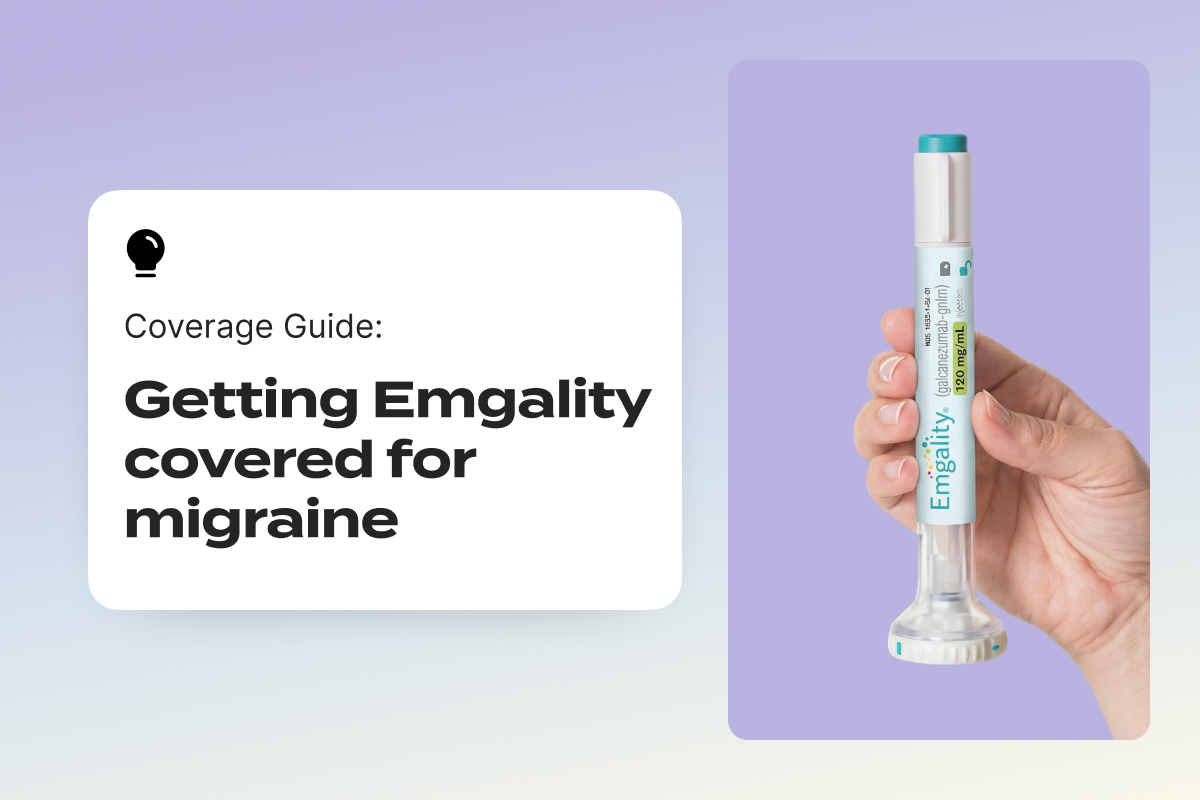
Your neurologist prescribed Emgality because it’s the right preventive treatment for your migraines. Your health insurer decided otherwise. But an insurance denial isn’t the end of the conversation, and you have legal rights that most patients never exercise.
Emgality (galcanezumab-gnlm) is a calcitonin gene-related peptide (CGRP) monoclonal antibody, one of a class of injectable therapies specifically designed to prevent migraine attacks before they start. Unlike older preventive medications that were originally developed for other conditions and repurposed for migraines, Emgality was built from the ground up to target the CGRP pathway, a biological mechanism central to how migraines work. It received FDA approval in September 2018 for preventive treatment of migraine in adults and is also approved for episodic cluster headache.
Despite strong clinical evidence and more than 90% of commercial health plans including Emgality coverage on their formularies, actually getting that coverage activated is a different story. Most plans require prior authorization, and the majority demand that you try and fail two or more older preventive medications before they’ll approve a CGRP drug like Emgality. If you’re reading this, you’ve likely already hit that wall.
Here’s the reality insurance companies don’t advertise: fewer than 1% of denied claims are ever appealed. When patients do appeal with the right evidence, the results are dramatically different. At Claimable, over 80% of our appeals succeed in established conditions.
This guide explains exactly why Emgality gets denied, what makes these denials often medically unjustifiable, and how to build an appeal that wins, including the clinical arguments, documentation strategies, and legal protections that actually change outcomes.
Our physician-led team has built a database of over 4 million clinical studies, insurer policies, and legal standards to fight denials like yours. We know which arguments overturn Emgality denials, and we know the step therapy tactics insurers use to delay access to CGRP drugs.
Why Insurance Companies Deny Emgality Coverage
Before you do anything else, find the specific reason your insurer denied your prescription. The denial reason determines your entire appeal strategy, and using the wrong argument wastes time you don’t have.
The Step Therapy Problem: Months of Medication Roulette Before You Get What Actually Works
Most Emgality denials come down to one thing: step therapy. Your health insurer requires you to try and fail older, cheaper standard preventatives before they’ll approve a migraine-specific CGRP inhibitor, even when the leading medical society in headache medicine says that requirement is no longer clinically justified.
The medications insurers typically demand you try first weren’t designed for migraines at all. They’re repurposed therapies from other fields: beta-blockers originally developed for blood pressure and heart conditions (propranolol, metoprolol), antidepressants (amitriptyline, venlafaxine), and antiepileptic drugs (topiramate, valproate). Some of these drugs do help some patients, but the side effect profiles are significant, and the dropout rates tell the real story.
Consider topiramate, one of the most commonly required step therapy medications. In clinical trials for migraine prevention, approximately 25% of patients on the standard 100mg dose discontinued treatment due to adverse events. The most common reasons: paresthesia (tingling and numbness), fatigue, and difficulty with concentration and memory. These side effects are severe enough that patients often call topiramate “Dopamax” for its cognitive effects. Beta-blockers can cause fatigue, depression, and exercise intolerance. Antidepressants carry their own constellation of side effects including weight gain, dry mouth, and sedation.
Insurers know all of this. Step therapy isn’t a medical strategy. It’s a cost strategy. The older drugs are cheaper, and the insurer saves money for every month you spend trying medications that may not work and may make you feel worse.
The American Headache Society’s 2024 position statement directly challenges this approach. After reviewing more than a decade of clinical evidence and real-world experience, the AHS now recommends that CGRP inhibitors, including Emgality, should be considered a first-line option for effective migraine prevention, without requiring prior failure of other drug classes. The statement is unequivocal: the cumulative evidence for efficacy, safety, and tolerability of CGRP therapies is significantly greater than that for any established migraine preventive treatment.
When your insurer requires you to spend months cycling through medications with high discontinuation rates and substantial side effects before approving Emgality, they’re overriding the judgment of both your prescribing neurologist and the nation’s leading headache specialists.
The Most Common Emgality Denial Types
| Denial Type | What Your Letter Says | What It Actually Means | Best First Move |
|---|---|---|---|
| Step Therapy Required | “Must try preferred alternatives first” | Insurer wants proof you failed 2+ classes of older preventives | Document prior failures, side effects, or contraindications |
| Not Medically Necessary | “Does not meet medical necessity criteria” | Documentation was insufficient or key details were missing | Resubmit with comprehensive clinical evidence |
| Not on Formulary | “Drug not on preferred drug list” | Plan prefers a different CGRP medication | Request formulary exception with clinical rationale |
| Frequency Threshold Not Met | “Does not meet minimum migraine days” | Insurer says your migraine frequency doesn’t qualify | Document true migraine burden with headache diary |
| Incorrect Diagnosis Code | Varies | Wrong or incomplete ICD-10 code submitted | Work with prescriber to correct coding |
| Prior Authorization Expired | “Authorization no longer active” | Previous PA lapsed and needs renewal | Resubmit with updated treatment response data |
Step Therapy Required
This is the most common reason Emgality injections are denied. Insurers including Aetna, Anthem Blue Cross, Cigna, UnitedHealthcare, Blue Shield, and Humana all typically require documented failure of at least two classes of preventive medications before approving CGRP drugs. The specific requirements vary by plan, but the pattern is consistent: try the cheap options first, even if your doctor has already determined they’re not right for you.
“Failure” is defined more broadly than most patients realize, and that’s where your appeal leverage lives. You don’t need to prove a medication was completely useless. Any of the following counts: the drug didn’t reduce your migraine frequency enough, side effects or intolerances made the drug unbearable, you have a medical condition that contraindicates the drug (cardiovascular disease for beta-blockers, kidney stones for topiramate, pregnancy planning for valproate), or you had to discontinue for any documented medical reason. Prior medication trials from other doctors or previous insurers also count. You shouldn’t have to restart the failure clock every time your coverage changes.
Important: The AHS 2024 position statement specifically states that initiation of CGRP-targeting therapies should not require trial and failure of non-specific migraine preventive medication approaches. This is your strongest clinical argument in any step therapy appeal.
Not Medically Necessary
A medical necessity denial usually means the initial submission didn’t include enough clinical detail, not that your insurer made a careful medical judgment. Common documentation gaps for Emgality include: not specifying the number of migraine days per month, not providing a complete treatment history with specific drug names, dosages, durations, and outcomes, not documenting how migraines impact your ability to work and function, or not explaining why Emgality specifically is the right choice.
For Emgality, your prescriber’s documentation should establish your migraine diagnosis with the correct ICD-10 code, quantify your migraine burden (frequency, severity, and disability), list every prior preventive medication tried with specific reasons each was inadequate, and articulate the clinical rationale for choosing a CGRP monoclonal antibody.
Not on Formulary / Non-Preferred Brand
Some health insurance plans prefer a different injectable CGRP medication, often Aimovig (erenumab), Ajovy (fremanezumab), or Vyepti (eptinezumab), over Emgality. This is typically a pricing decision, not a clinical one. All four injectable CGRP drugs are effective preventive therapies, but they’re not interchangeable for every patient.
This matters for your appeal: Emgality and Ajovy work by binding the CGRP ligand (the protein itself), while Aimovig targets the CGRP receptor. These are meaningfully different mechanisms, and patients who don’t respond to one may respond well to another. If your insurer is asking you to switch to a preferred alternative, and you’ve already tried that medication without adequate results or your neurologist has a specific clinical reason for choosing Emgality, that’s a strong basis for a formulary exception.
The CONQUER trial specifically demonstrated that Emgality is effective in patients who have failed two to four prior preventive medication categories, meaning it has published evidence of working in exactly the population most likely to face insurance barriers.
Frequency Threshold Not Met
Most insurers require a minimum of 4 migraine days per month to qualify for Emgality coverage. If your denial cites this reason, it often means the documentation didn’t clearly establish your migraine frequency, not that you don’t actually meet the threshold. A detailed headache diary showing your true migraine burden, corroborated by your neurologist’s clinical assessment, is typically what’s needed to address this.
Keep in mind that many patients underreport migraine frequency in routine visits. If you experience 4 or more migraine days per month (the standard clinical threshold for considering preventive treatment), make sure that number is explicitly documented in your medical records.
Incorrect Diagnosis Code
Emgality coverage requires specific ICD-10 migraine diagnosis codes. Common codes that support Emgality prescriptions include: migraine without aura (G43.00, G43.01), migraine with aura (G43.10, G43.11), chronic migraine without aura (G43.709, G43.711), and migraine, unspecified (G43.90, G43.91). Using a general headache code like R51.9 (“headache, unspecified”) will almost certainly trigger a denial.
If your denial stems from a coding issue, this is often the simplest fix. Work with your prescriber’s office to verify and correct the submitted diagnosis code.
Prior Authorization Expired
Emgality typically requires reauthorization every 6 to 12 months. If your PA has lapsed, you’ll need to resubmit with updated documentation showing that the medication is still working, ideally including migraine diary data demonstrating continued response (a 50% or greater reduction in monthly migraine days is the standard clinical benchmark). Start the renewal process 30 to 45 days before your current authorization expires to avoid gaps in treatment.
How to Appeal an Emgality Denial: Step by Step
A denial is not a final answer. It’s the beginning of a process that patients are legally entitled to, and that works far more often than the insurance industry would like you to believe.
Step 1: Read Your Denial Letter Carefully
Your denial letter must include the specific reason for the denial, your appeal rights, and the deadline to file. Find the deadline immediately. Most commercial plans allow 180 days, but some insurers set shorter windows. UnitedHealthcare allows 65 days. Medicare Advantage plans follow CMS guidelines of 60 days. Missing your deadline forfeits your right to appeal.
Step 2: Understand That You Can Appeal Independently
You can file a patient-initiated appeal separate from anything your doctor’s office submits. This isn’t just a backup. Patient appeals carry their own legal protections under the ACA, including mandated response timelines, the right to escalate to an independent external reviewer, and multiple levels of appeal. If your neurologist’s prior authorization was denied, your path is still open.
Step 3: Verify Clinical Details With Your Prescriber
Before building your appeal, confirm with your doctor’s office: Is your migraine frequency clearly documented? Are all prior preventive medication trials listed with specific drugs, dosages, durations, and reasons for discontinuation? Is the correct ICD-10 diagnosis code on file? Was the Emgality prescription written for the correct loading and maintenance dose? If the denial stems from a documentation gap, a corrected PA resubmission may resolve it without a formal appeal.
Step 4: Get a Letter of Medical Necessity
This is the most important document in your appeal. For Emgality, a strong letter of medical necessity from your prescribing neurologist or headache specialist should include your migraine diagnosis and monthly frequency, a detailed history of every prior preventive medication tried (names, doses, duration of each trial, and specific reason each was discontinued, whether for side effects, lack of efficacy, or contraindications), how migraines affect your ability to work, care for your family, and function in daily life, and the clinical rationale for choosing Emgality, including references to the AHS guidelines supporting CGRP therapies as first-line prevention.
How to ask: “My insurance denied Emgality. Would you write a letter of medical necessity for my appeal? I can bring a list of every preventive I’ve tried and what happened with each one.” Specificity wins appeals. Vague statements like “patient failed prior therapies” are far less effective than naming the exact drugs, doses, and outcomes. If your primary care provider submitted the original prescription, consider asking a neurologist or headache specialist to write the appeal letter. Clinicians with specialized headache expertise carry additional weight with insurance medical directors.
Step 5: Build Your Appeal Package
A complete appeal should include a cover letter summarizing your case, the letter of medical necessity from your prescriber, supporting clinical documentation (office notes, headache diary data, treatment history), and a personal statement about how the denial affects your health and life.
The three pillars of a winning appeal:
Your story — How migraines disrupt your daily life. Missed work days, canceled plans, emergency room visits, the toll on your family. This isn’t supplemental. It provides the human weight that clinical data alone can’t communicate.
Clinical evidence — Peer-reviewed studies including the EVOLVE-1 and EVOLVE-2 trial results showing significant reductions in monthly migraine days vs. placebo, the AHS 2024 position statement supporting CGRP therapies as first-line, and any published evidence specific to your situation (the CONQUER trial is especially relevant if you’ve failed multiple prior preventives).
Policy and legal analysis — How your situation meets your plan’s own coverage criteria, applicable state laws, and federal protections under the ACA for appeals and external review.
Step 6: Submit and Track
Follow your denial letter’s submission instructions precisely. Your insurer must respond within 30 days for standard appeals or 72 hours for an expedited appeal (also called an urgent appeal; request this if a delay in treatment could seriously harm your health). Keep records of everything: submission date, method (fax, mail, portal), and all confirmation numbers.
Step 7: Escalate If Needed
If your internal appeal is denied, you have the right to an external review by an independent third party who doesn’t work for your health insurer. External reviewers evaluate medical justification, not the insurer’s financial preferences. These reviews overturn denials more often than most patients expect, because the standard shifts from the insurer’s internal criteria to independent clinical judgment.
The system is designed to wear you down. Persistence is part of the strategy.
An Easier Path: Let Claimable Handle Your Emgality Appeal
If building an appeal from scratch isn’t realistic, or if you’ve already been denied and don’t have the bandwidth for another round, Claimable can handle it for you.
Here’s how it works:
Answer a few questions about your Emgality denial and medical history. We build your case using our database of 4+ million clinical studies, insurer policies, and legal standards. We create a fully customized appeal with your personal story, clinical evidence, and policy analysis. We submit it for you, faxed and mailed directly to your insurer. We guide you through escalation if needed.
Over 80% of Claimable appeals succeed, with most resolved in 10 days or less.
“When my insurance company denied my claim to continue with my medicine, I felt defeated at first… Then I found Claimable. In the end I ended up winning my claim and I couldn’t have done it without Claimable. I highly recommend them.” — April A.
Appealing with Claimable costs $39.95. No success fees, no hidden costs, just a flat fee. When Emgality runs $700 to $970 per month without insurance coverage, the math is straightforward.
Appeal Timelines: How Long Does an Emgality Appeal Take?
| Appeal Stage | Typical Timeline |
|---|---|
| Internal appeal (standard) | Up to 30 days |
| Internal appeal (urgent/expedited) | 72 hours (expedited appeal) |
| External review | 45–60 days |
| Full process (internal + external) | 6–10 weeks |
A complete, well-documented appeal submitted from the start is the fastest path to a decision. The average Claimable appeal gets a response in just 10 days.
FAQs
Why was my Emgality denied if my plan covers it?
Having Emgality on your plan’s formulary doesn’t guarantee automatic approval. Most plans require prior authorization, and those PA criteria typically include step therapy (proof that you’ve tried and failed older preventive medications), minimum migraine frequency thresholds, and specific documentation requirements. Your plan may technically cover Emgality, but “covered” and “approved without a fight” are very different things.
Do I really have to try older medications like topiramate before getting Emgality?
That depends on your insurer’s current policies, but you may not need to start from scratch. If you’ve previously tried and discontinued standard preventatives for any documented medical reason (side effects, intolerances, lack of efficacy, or contraindications) those prior trials should satisfy step therapy requirements. And if your healthcare provider can cite the AHS 2024 position statement recommending CGRP inhibitors as first-line, that strengthens the argument that step therapy shouldn’t apply to your case at all.
Can I appeal an Emgality denial myself, or does my doctor have to do it?
You can appeal yourself. Patient-initiated appeals carry their own legal protections: mandated timelines, the right to external review, and multiple appeal levels. Your appeal is independent of anything your doctor files. Both can proceed simultaneously.
What’s the difference between Emgality and other CGRP injections like Aimovig?
All four injectable CGRP drugs, Emgality, Aimovig (erenumab), Ajovy (fremanezumab), and Vyepti (eptinezumab), are effective preventive therapies for migraines, but they work through slightly different mechanisms. Emgality and Ajovy target the CGRP protein itself (the ligand), while Aimovig blocks the CGRP receptor. Oral CGRP options also exist: Qulipta (atogepant) for prevention and Nurtec (rimegepant) for both prevention and acute treatment. But the injectable monoclonal antibodies offer a different pharmacological approach with once-monthly dosing. The key point: patients who don’t respond adequately to one CGRP medication may respond well to another. Failing on one doesn’t mean the entire class won’t work for you. Your doctor chose Emgality for a reason specific to your clinical situation.
How does the Emgality injection work?
Emgality is a once-monthly injection that you self-administer at home using a prefilled pen or syringe. The first dose is a loading dose of 240mg (two 120mg injections), followed by 120mg once monthly. In clinical trials, patients treated with Emgality experienced approximately 4.7 fewer migraine headache days per month compared to 2.8 fewer days with placebo, with 50% responder rates of approximately 60% over 6 months of treatment. That means about 6 in 10 patients saw their migraine days cut in half or more.
How much does Emgality cost without insurance?
Without insurance or discounts, Emgality costs approximately $700 to $970 per month for the maintenance dose (one 120mg prefilled pen). The first month’s loading dose requires two pens, roughly doubling the initial cost. Eli Lilly offers the Emgality Savings Card for commercially insured patients, which can reduce the monthly cost to as little as $35 (up to $4,900 in annual savings). Patients without commercial insurance may qualify for the Lilly Cares Foundation Patient Assistance Program, which provides Emgality at no cost to qualifying individuals. Note that neither the savings card nor the patient assistance program is available to patients enrolled in Medicare, Medicaid, or other government-funded programs, but Medicaid plans in many states do cover Emgality with copays as low as $4 to $9 per month.
What if my insurer wants me to switch to a different CGRP medication?
If your plan prefers Aimovig, Ajovy, or Vyepti over Emgality, your appeal should explain why your neurologist specifically chose Emgality. Strong grounds for a formulary exception include: you’ve previously tried the preferred alternative without adequate results, the preferred drug is contraindicated for you, or there’s a specific clinical rationale (such as Emgality’s mechanism of targeting the CGRP ligand vs. the receptor). The CONQUER trial demonstrated Emgality’s efficacy specifically in patients who had failed multiple prior preventive categories, evidence that strengthens your case if you’ve been through this before.
Is it worth appealing an Emgality denial?
Yes. The insurance industry relies on patients accepting denials without challenge. Fewer than 1% ever appeal. But denials are frequently the result of incomplete documentation, misapplied criteria, or step therapy requirements that contradict current medical guidelines. Your neurologist prescribed Emgality because your migraines are serious enough to warrant targeted preventive treatment. The appeal is your chance to make that case with the right evidence and legal framework behind you.
Claimable’s physician-led team has helped patients recover millions in care access by fighting insurance denials. We’re SOC 2 Type II certified and HIPAA compliant. Learn more about how Claimable works →
Related: Insurance Denied Ubrelvy? How to Appeal and Get Covered
Download a winning sample appeal
Want to see what it takes to successfully overturn a health insurance denial? Download our sample appeal to learn how we build strong, evidence-based cases that get results.
///////////////////////////////////////////////////////////////////////
//////////////////////////////////////////////////////////////////////////
////////////////////////////////////////////////////////////////////
/////////////////////////////////////////////
Each month, I endure about eight major episodes, each one leaving me exhausted, unable to concentrate, and too unwell to take part in daily life.
The frequency and unpredictability of these symptoms have isolated me socially and limited my capacity to take part in activities most people take for granted.
///////////////////////////////////////////////////////////////////////
//////////////////////////////////////////////////////////////////////////
////////////////////////////////////////////////////////////////////
/////////////////////////////////////////////

Download our guide for patient appeals
Want to see what it takes to successfully overturn a health insurance denial? Download our guide to learn how we build strong, evidence-based cases that get results.
Most cases resolved in 10 days or less
Over 80% appeal success rate
15-30 hours saved per appeal
25% more care delivered
Be the first to know
Get the latest updates on new tools, inspiring patient stories, expert appeal tips, and more—delivered to your inbox.
You're on the list!

One of our core principles is to help patients protect their rights and level the playing field with their insurance company. This includes rights to multiple appeals, fair reviews, decision rationale, exceptions when needed, and adequate network access, among others. For more, read our post on patients rights.
For many medications, there's no cost to use Claimable to appeal for qualifying patients – thanks to our network of support partners working to expand access to care.
If you aren't eligible for a no cost appeal, Claimable charges a flat fee of $39.95 + shipping. One simple, straightforward price – no success fees or hidden charges. If appealing with Claimable is unaffordable for you, visit our nonprofit partner Coverage Fund.
Check how much Claimable will cost for your specific situation by starting an appeal and entering your insurance information. So you always know what to expect ahead of time – no surprises.
Claimable’s AI-powered platform analyzes millions of data points from clinical research, appeal precedents, policy details, and your personal medical story to generate a customized appeals in minutes. This personalized approach sets Claimable apart, combining proprietary and public data, advanced analysis and your unique circumstances to deliver fast, affordable, and successful results.
We currently support appeals for over 85 life-changing treatments. Denial reasons may vary from medical necessity to out of network, and we even cover special situation like appealing plans that won’t count your copay assistance towards your deductible (hint: those policies were banned at the federal level in 2023). That said, we are rapidly growing our list of supported conditions, treatments and reasons. You can quickly check eligibility and ask to be notified when your interest becomes available. It helps us know where to focus next 🙂
We think about appeal times in a few ways. First, many professional advocates and experienced patients spend 15, 30 or even 100 hours building an appeal–but with Claimable, this takes minutes. We automate the process of analyzing, researching, strategizing and wordsmithing appeals. Next, there is the process of figuring out where you will send it (hint: expand your reach beyond appeal departments), then printing, mailing and/or faxing your submission. We handle that, too. Finally, there is the time it takes to get a decision. We request urgent reviews when appropriate, and typically receive standard appeal decisions within a couple weeks.
Review periods are mandated by applicable laws, from 72 hours for urgent, 7 days for experimental, 30 days for upcoming and 60 days for received services. Our goal is to get a response as fast as possible, since most of our clients are experiencing long care delays or extreme pain and suffering.
Claims are denied for a variety of reasons, many of which blur definitions. We focus on helping people challenge denials by proving care is needed and meets clinical standards, in addition to addressing specific issues like experimental treatments, network adequacy, formulary or site of care preference exceptions. We don't support denials for administrative errors or missing information, as we think those are best handled by simply resubmitting the claim in partnership with your provider. That said, many of our most rewarding successes have been cases previously though 'unwinnable', with providers and patients who fought tirelessly for months without appropriate response or resolution.
A denial letter is a formal notice from your insurance company explaining why a claim was denied and how you can appeal the decision. Sometimes the notice is included within an Explanation of Benefits. It is a legal requirements; if you didn’t receive one, contact your insurance company.
A letter of medical necessity is a statement from your doctor justifying why a specific treatment is critical to your care and/or urgently needed. You can attach it to your patient appeal to strengthen your case, especially if you are requesting an urgent appeal or need to skip standard ‘step therapy’ requirements. That said, we don’t require them and are often successful without them.
A claim file contains all the documents and communications your health plan used to decide whether to approve or deny your claim. Most health plans are legally required to share this information upon request. According to a ProPublica investigation, reviewing your claim file can help expose mistakes or misconduct by your health plan, which can make your appeal stronger.
Your insurer is required by law to give you written information about how to appeal, including the name of the company that reviewed your claim and where to send your appeal. Your health insurer may work with other companies, such as Pharmacy Benefit Managers (PBMs), Third-Party Administrators (TPAs), or Specialty Pharmacies, to manage your claims. These companies might be responsible for denying your claim and handling the appeal process on behalf of your insurer.
If you don't win your first appeal– don't give up! Many people are successful on their 2nd, 3rd or even 4th try, and future appeals are reviewed by independent entities. That said, we wrote a whole guide to understanding your options, including escalating your appeal and seeking other assistance for covering costs, forgiving debt or even seeking legal or regulatory support.
While both denial rates and appeal success rates vary widely by the type of health plan, state, and insurance company, studies have shown more than 50% of people win their appeal–and we apply strategies to boost your chances of success. Claimable has an 80% appeal success rate. The biggest denial challenge is that most people never appeal–allowing unjust denials to control their healthcare options because they are unaware of their rights or lack the support needed to fight back. No one needs to fight alone–Claimable is here to help. We know first hand that many denials are based on errors, inconsistencies or auto-decisions, and have proven strategies for fighting back against this injustice.
Completely FREE for Providers